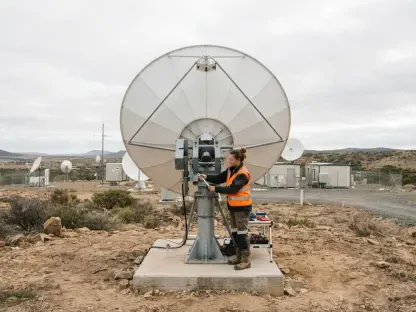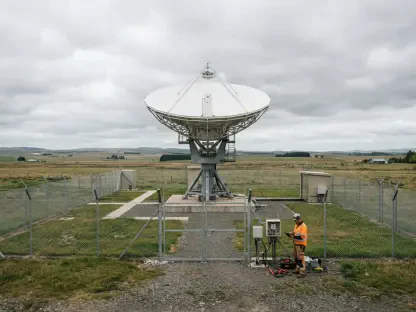

The newly introduced tiered fee structure for radio licenses in Pakistan sets specialized aircraft and maritime mobile station fees at 100,000 rupees. This financial adjustment marks a significant shift in the regulatory landscape, signaling a more structured approach to managing the nation's

A restrictive speed cap on Starlink terminals prevents Ukrainian drone operators from maintaining connectivity during high-speed interceptions of Russian munitions. This technical bottleneck is merely the visible tip of a much deeper strategic iceberg, where the survival of an entire nation relies

The transition of satellite connectivity from a niche emergency tool to a standard consumer expectation has forced traditional rivals into an unprecedented era of cooperation. As the digital divide shifts from terrestrial cables to the vacuum of low-Earth orbit, the European telecommunications

The Arctic Way project represents a significant leap forward in subsea technology, utilizing advanced optical networks to connect geographically isolated territories. Space Norway, a state-owned entity, is currently leading a transformative infrastructure overhaul to modernize the fiber-optic links

Modern tracking infrastructure must account for a ledger of orbiting objects that has doubled in size since the 2020 activation of more sensitive S-band radar arrays. The current orbital environment is no longer just a vacuum occupied by a few dozen government satellites; it has evolved into a

The Ministry of Communications is under increasing pressure to resolve network latency and speed issues as the government transitions essential services to local infrastructure. This mandate comes at a pivotal moment when the state is aggressively pursuing a doctrine of "managed sovereignty" to