
Although the cable is now fully operational again, the specific cause of the October 29 disruption—whether from maritime activity or seabed movement—remains unconfirmed by official reports. This event highlighted the immense pressure placed on coastal African infrastructure, where a single break in a subsea fiber-optic line can ripple through the entire economic landscape of the region. Submarine cables are the silent workhorses of the modern era, carrying the vast majority of international data traffic that powers everything from mobile banking to cloud-based government services. When the West Africa Cable System (WACS) encountered trouble in late October 2026, the potential for a localized digital blackout was high, yet the narrative that emerged was one of technical precision and effective redundancy. The restoration of this specific link is not just a success story for one operator but a critical case study in how modern networks must be built to withstand physical damage while maintaining the flow of global commerce.
1. Congo Telecom Restoration: A Swift Recovery Process
The official confirmation from Congo Telecom regarding the restoration of the WACS network arrived on November 16, 2026, signaling the end of an intensive technical recovery period. This recommissioning was a notable achievement for the regional operator, as the system returned to full operational status two days ahead of the original November 18 target date. While the announcement brought relief to local businesses and international partners, it was characterized by a distinct lack of granular data. Multiple reports corroborated the restoration date, but the company opted not to release specific figures regarding the total number of affected users or the precise volume of traffic that had to be rerouted during the repair window. This corporate approach to communication focuses on the ultimate resolution rather than the minute-by-minute impact, leaving some questions about the immediate customer experience unanswered in the official record.
The technical significance of this early restoration cannot be overstated, as every hour of reduced capacity on a major subsea link can translate into significant economic friction. Because no specific executives or lead engineers were quoted in the initial reports, the public is left to interpret the success through official corporate statements that emphasize the institutional capability of Congo Telecom. For enterprise-level clients and regional service providers, the key takeaway is that the primary international gateway is functional again, even if a detailed post-mortem regarding the internal handling of the fault has not been shared. This lack of transparency is common in the telecommunications industry, where security concerns and commercial sensitivities often prevent the disclosure of detailed traffic logs or cost-benefit analyses associated with emergency repairs. Nevertheless, the successful integration of the repaired segment back into the global network stands as a testament to the coordination between the operator and the broader WACS consortium.
2. Disruption Timeline: From Failure to Recommissioning
The sequence of events surrounding the WACS impairment began on October 29, 2026, when monitoring systems first identified a significant drop in signal quality and eventual connectivity loss. This initial failure triggered an immediate response from technical crews, who spent the following days performing complex optical measurements to pinpoint the location of the break. By analyzing light reflections within the fiber—a process known as optical time-domain reflectometry—engineers were able to trace the issue to a specific portion of the cable resting between the Republic of the Congo and the Democratic Republic of the Congo. This isolation phase is critical, as it dictates where expensive and specialized repair vessels must be deployed; any error in measurement can lead to days of wasted time at sea. The precision of this early diagnosis allowed the recovery project to proceed with a clear geographic focus, minimizing the period of uncertainty for the regional network.
Following the isolation of the fault, the arrival of a specialized repair ship on November 11, 2026, marked the transition from diagnosis to physical intervention. These vessels are highly specialized platforms equipped with sonar, robotics, and splicing gear necessary to work hundreds of meters beneath the ocean surface. Between the ship’s arrival and the official recommissioning on November 16, the maritime crew executed a delicate operation to retrieve, repair, and redeploy the damaged fiber. Finishing the task by November 16 allowed the operator to beat its own public deadline by a full forty-eight hours, an outcome that suggests either exceptionally favorable sea conditions or a highly efficient technical workflow. It is vital to recognize that while the primary cable was compromised for an 18-day period, this does not represent an equivalent period of downtime for the end user, as sophisticated backup systems were utilized to bridge the gap.
3. Geographic Context: The Segment Between the Two Congos
Technical teams narrowed the physical location of the damage to the undersea segment connecting the landing points of the Democratic Republic of the Congo and the Republic of the Congo. This particular stretch of the Atlantic coast is a vital corridor for digital traffic, serving as a gateway for much of Central Africa’s internet connectivity. Pinpointing a break from the shore involves sending light pulses through the fiber and measuring the time it takes for them to bounce back from the damaged end, a method that provides an estimated distance from the landing station. Once the ship arrived at the estimated coordinates, it used submersible equipment to visually and electronically confirm the site of the damage. Despite this technical clarity, the specific coordinates were never released to the public, a standard practice intended to protect the security and integrity of the subsea infrastructure from further interference.
The secrecy surrounding the exact location and the specific nature of the damage means that the ultimate cause of the break—whether it was maritime activity like a dragging anchor, natural seabed movement, or a rare internal equipment failure—remains a matter of speculation. Submarine cables are armored to resist many forms of physical stress, but they are not indestructible, and the waters off the West African coast are busy with both commercial shipping and fishing. Without an official report detailing the physical state of the recovered cable, the industry is left to wonder if the incident was avoidable human error or an act of nature. For the personnel at the Matombi and Muanda landing stations, the focus remained on the technical restoration of the link rather than the forensic investigation of its failure. Their role was to ensure that once the ship completed the physical splice, the signal was successfully synchronized with the terrestrial networks on both sides of the border.
4. Technical Execution: Maritime and Shore Coordination
The physical repair of a subsea cable like the WACS involves high-stakes coordination between deep-sea maritime operations and specialized shore-based facilities. At sea, the repair vessel must use a grapnel or a remotely operated vehicle (ROV) to find the cable on the seafloor, which can be a difficult task depending on the depth and currents. Once found, the cable is cut, and both ends are brought to the surface and secured to the ship’s deck. Engineers then perform a precise fiber-optic splice, joining the existing core with a new section of cable in a controlled environment to ensure the signal remains at peak strength. This process requires surgical precision, as even the smallest amount of dust or a minor misalignment can lead to signal loss that would necessitate starting the entire process over. The work at sea is physically demanding and technically exhausting, often continuing around the clock to capitalize on windows of calm weather.
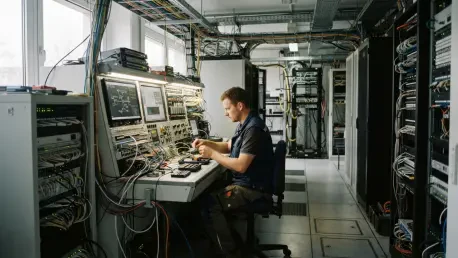
While maritime teams are engaged in the physical repair of the cable, personnel at the Matombi and Muanda landing stations provide the essential land-based support needed to verify the work. These stations act as the brains of the operation on shore, monitoring optical signal levels in real time and communicating constantly with the ship’s crew. They are responsible for powering the cable once the splice is complete, sending high-voltage electricity through the system to re-energize the underwater repeaters that boost the signal over long distances. This phase is particularly tense, as the first attempt to repower the system determines whether the repair was successful or if another fault exists elsewhere in the line. The seamless integration back into the terrestrial network depends entirely on the accuracy of the data exchanged between the ship and these landing sites, illustrating why the successful November 16 recommissioning was a multidisciplinary triumph.
5. Network Resilience: The Power of Failover Systems
One of the most significant takeaways from the WACS repair event was the relative stability of Congo Telecom’s network throughout the 18-day impairment period. By successfully rerouting international traffic to alternative paths, the operator managed to prevent a total digital blackout that would have been devastating for the regional economy. This capability highlights the critical importance of resilient network design, where “redundancy” is not just a buzzword but a necessary operational requirement. When the primary WACS route failed, automated switching systems or manual rerouting protocols moved data packets to other available links, which could include other subsea systems, terrestrial fiber through neighboring countries, or satellite constellations. This invisible transition allowed essential services, such as government portals and hospital databases, to remain functional, even if the general public experienced some degradation in peak speeds.
While the failover successfully kept the region connected, it remains unclear whether these backup routes were able to provide the same level of capacity and low latency as the primary WACS line. In many cases, backup paths are more circuitous or use older technology, which can lead to increased ping times and slower download speeds for data-intensive applications. For a bank processing thousands of transactions per second, even a slight increase in latency can cause significant operational friction. The Congo Telecom experience serves as a stark reminder that relying on a single international connection point is a gamble no modern operator can afford to take. The investment in redundant capacity is often viewed as an expensive insurance policy, but during the 18 days between October 29 and November 16, that investment proved its worth by maintaining the continuity of the digital economy in Central Africa.
6. Information Gaps: What Remains Unconfirmed
Despite the successful restoration of the cable, several key aspects of the incident remain shrouded in corporate secrecy, leaving a gap in the public’s understanding of the event’s true impact. For instance, the financial toll of the repair operation has never been disclosed, leaving industry analysts to estimate the costs of vessel mobilization, specialized labor, and the procurement of replacement fiber. Subsea repairs are notoriously expensive, often costing millions of dollars depending on the duration of the ship’s deployment and the complexity of the fault. Additionally, Congo Telecom has not released data concerning the number of users who experienced degraded service or the specific sectors of the economy that were most affected by the reduced capacity. Without these metrics, it is difficult to quantify the total economic loss associated with the 18-day impairment, making it harder for future planners to justify infrastructure investments.
The root cause of the cable break remains unconfirmed, which prevents the industry from learning how to avoid similar disruptions in the future. If the break was caused by a specific type of fishing gear or a particular anchor from a commercial vessel, that information could be used to advocate for better maritime zoning or stricter enforcement of “no-anchor” zones around cable landing sites. Similarly, the names of the technical leads and the specific engineering firms involved in the recovery were kept private. While this is common practice, it limits the broader tech community’s ability to celebrate the individual expertise that made the early restoration possible. This institutional approach to reporting prioritizes the final outcome over the process, ensuring the company maintains control over the narrative while protecting its staff from external scrutiny or poaching by competitors.
7. Operational Complexity: Why Repairs Move Slowly
The physical reality of repairing an underwater fiber-optic cable is inherently slow and fraught with logistical hurdles that are often invisible to the average internet user. Unlike a land-based fiber break, which a technician in a van can often reach within hours, a subsea fault requires the mobilization of a specialized fleet that may be stationed hundreds or thousands of miles away. These ships must be stocked with the correct type of replacement cable, which must match the electrical and optical specifications of the original line. Furthermore, the mobilization process includes clearing customs, securing maritime permits, and assembling a crew of highly trained specialists available to spend weeks at sea. The mere act of reaching the fault site can take several days, during which time the network remains in an impaired state, highlighting the geographic vulnerability of coastal infrastructure.
Once on-site, the repair timeline is heavily dictated by the whims of the Atlantic Ocean, where weather conditions and surface currents can halt operations without warning. Delicate splicing work cannot be performed on a ship’s deck if the vessel is tossing in heavy swells, as the microscopic fibers are too fragile to handle in a moving environment. Beating a repair target by two days, as Congo Telecom did, suggests that the technical team encountered exceptionally favorable conditions or that the operator had built a significant buffer into its public schedule to account for potential delays. This conservative approach to scheduling is a standard industry tactic, allowing companies to manage expectations while providing room for the unexpected challenges that always arise when working in the deep ocean. The success of the WACS repair is therefore a combination of technical skill and environmental good fortune.
8. Strategic Resilience: Evaluating Diverse Connectivity Options
To mitigate the risks associated with a major subsea cable failure, regional operators must evaluate and implement various resilience strategies that offer layers of protection. One of the most effective methods is using secondary submarine cables that follow entirely different geographic paths. If an operator has capacity on both WACS and another system like Equiano or 2Africa, a break in one does not paralyze the entire network. However, the high installation costs and long lead times for these multibillion-dollar projects make them a long-term strategy rather than a quick fix. For many countries in Central Africa, the cost of participating in multiple subsea consortia is a significant financial burden, yet it remains the gold standard for ensuring that international traffic remains uninterrupted regardless of physical accidents on the seafloor.
Beyond underwater cables, satellite links and cross-border terrestrial fiber offer alternative insurance policies for regional connectivity. Satellite technology has evolved rapidly, providing a layer of protection that is entirely independent of the seabed, which is particularly useful for emergency government communications and basic internet access during a total subsea failure. The trade-off is typically higher latency and lower total capacity compared to fiber, making it a “fail-safe” rather than a primary replacement. Meanwhile, terrestrial fiber routes that cross through neighboring countries to reach different coastal landing stations can bypass localized sea-based risks entirely. This approach depends heavily on stable cross-border political agreements and the physical security of land-based fiber, but when combined with subsea and satellite options, it creates a robust, multimodal network that can survive almost any single point of failure.
9. Market Realities: Impact on Enterprise and Data Centers
The WACS disruption and its subsequent repair have profound implications for the regional market, particularly for enterprise clients who require constant uptime for their operations. Banks, international trading firms, and cloud service providers are now increasingly likely to scrutinize their service level agreements (SLAs) to ensure they are not dependent on a single physical cable. This event has reinforced the need for “path diversity,” where a business demands that its traffic be split across multiple cable systems to ensure that a break in one does not result in a loss of service. For many large organizations, the cost of paying for redundant routes is viewed as a necessary business expense, much like a backup generator for a data center. Those who lacked this diversity during the WACS repair likely experienced firsthand the frustration of degraded performance and the potential for lost revenue.
Data center operators and mobile network providers also face a wake-up call regarding their backhaul infrastructure. As the region adopts faster radio technologies and more sophisticated cloud computing services, the demand for international bandwidth continues to skyrocket. However, this front-end technology is only as reliable as the back-end fiber that connects it to the rest of the world. A data center that advertises high availability but relies on a single subsea link is vulnerable to the same 18-day outages that affected the WACS segment. Consequently, we are seeing a shift in the market where “carrier neutrality” and “route diversity” are becoming primary selling points for infrastructure providers. The successful restoration by Congo Telecom is a positive sign, but for the market at large, the focus is moving toward building networks that do not need a “success story” repair because they never lose connectivity in the first place.
10. Infrastructure Integrity: Hardware and Landing Station Roles
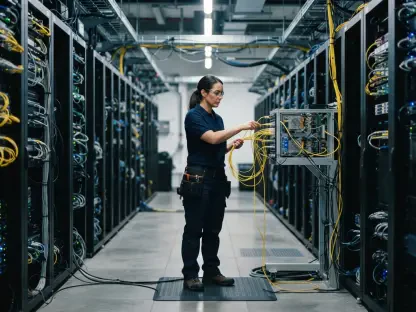
The integrity of a subsea network depends heavily on the sophisticated hardware housed within landing stations like Matombi and Muanda. These facilities serve as the interface between the undersea world and the terrestrial internet, housing high-speed optical line termination equipment (OLTE) and intelligent routers. These devices are designed to monitor signal health 24 hours a day, and they are the first to detect the slight signal degradation that precedes a total failure. In the event of a break, these routers must be programmed to automatically detect the loss of light and redirect traffic to a backup path in a matter of milliseconds. This automated failover prevents a physical cable break from becoming a noticeable outage for the end user, and the success of Congo Telecom’s response indicates that the hardware at these sites performed exactly as intended during the October 29 event.
Furthermore, the landing stations play a vital role in the physical security and maintenance of the cable system. They house the power feed equipment (PFE) that sends high-voltage electricity through the cable’s internal copper layer to power the repeaters located every 50 to 100 kilometers along the seafloor. Without this power, the optical signal would fade long before it reached the other side of the ocean. During the repair process, the teams at Matombi and Muanda had to carefully manage these power levels to ensure the safety of the divers and technicians working on the cable at sea. The hardware reliability in these facilities is a critical component of regional stability, and the ability of the staff to coordinate with maritime teams demonstrates a high level of technical maturity. While the focus is often on the dramatic work of the ships at sea, the quiet, precise operation of the hardware on land is what truly keeps the digital world spinning.
11. Geographic Reality: Historical Context of Coastal Faults
Cable breaks are a recurring and expected reality for the West Coast of Africa, a region where the seabed is geologically active and maritime traffic is dense. Historically, these incidents have served as a harsh divider between countries with mature, redundant infrastructure and those with limited connection points. In the past, a single break could plunge an entire nation into a digital dark age for weeks, causing significant disruption to air travel, banking, and communications. However, the recent WACS repair highlights a positive shift in regional trends, as operators like Congo Telecom have invested in enough alternative connectivity to mitigate the most severe impacts of physical damage. The 18-day period of disruption was managed with professional efficiency, reflecting a broader regional commitment to building a more resilient and interconnected digital landscape that can withstand the inherent risks of the Atlantic.
The successful restoration on November 16, 2026, was a definitive step forward in the ongoing effort to secure the region’s digital future. Looking back at the event, it is clear that the technical crews and the operator took the necessary steps to restore the link ahead of schedule while maintaining a stable network for their clients. For businesses operating in Central Africa, the actionable next step is to conduct a thorough audit of their own connectivity paths and ensure they are not vulnerable to a single point of failure. This may involve diversifying service providers or investing in dedicated backup links that utilize different physical routes. The WACS repair proved that while infrastructure can be broken, a well-planned network can remain functional through a crisis. Moving forward, the focus must remain on expanding these redundant layers to ensure that the next physical break is even less impactful than the one that began on October 29.