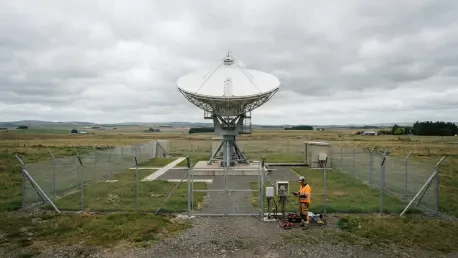

The strategic struggle over Taiwan’s 28GHz millimeter-wave spectrum represents more than just a regulatory dispute; it is a fundamental collision between the established terrestrial 5G infrastructure and the rapidly ascending orbit of Low Earth Orbit satellite communications. As 2026 progresses, the telecommunications landscape in Taiwan finds itself at a critical crossroads where the management of limited frequency resources will dictate the nation’s connectivity resilience for the next decade. Major operators like Chunghwa Telecom and Far EasTone are currently engaged in a high-stakes dialogue regarding the allocation of the 28GHz band, which serves as a primary gateway for satellite data transmission. This frequency range is essential for bridging the gap between urban density and remote accessibility, yet it remains occupied by existing 5G licenses that have seen varied levels of commercial deployment since their initial auction.
The current environment demands a delicate balance between protecting past capital investments and facilitating the entry of global satellite giants. The debate involves established telecom giants and regulators who are now forced to reevaluate frequency allocations to balance legacy investments with the necessity of future-proof technological adoption. This conflict is not merely a local regulatory hurdle but a critical juncture that will determine Taiwan’s role in the global 6G and Non-Terrestrial Network ecosystem. As the demand for disaster resilience and global connectivity surges, the resolution of this turf war will establish the blueprint for how the island nation integrates space-based assets into its existing high-speed mobile fabric.
The Emerging Battlefield for Millimeter-Wave Spectrum
The emerging battlefield for millimeter-wave spectrum is defined by a finite availability of bands that can support the high throughput required for a modern digital economy. In the 6G and Non-Terrestrial Network ecosystem, the 28GHz band is often referred to as a golden lane for its ability to handle massive data loads between satellites and ground stations. However, the legacy of 5G licensing in Taiwan created an overlap where mobile operators hold rights to frequencies that global satellite constellations now require to operate efficiently. This clash is driving a massive reevaluation of how spectrum is partitioned, pushing the industry toward a moment of decisive structural change that will affect everything from consumer smartphones to national defense systems.
The current telecommunications landscape in Taiwan is defined by this strategic turf war over the 28GHz band, which sits at the heart of the collision between terrestrial 5G networks and Low Earth Orbit satellites. While the auction of these frequencies was originally intended to spark a revolution in ultrafast urban 5G services, the actual rollout has faced technical and economic headwinds. Now, as satellite technology matures, the value of this spectrum has shifted, making it a focal point for international operators looking to establish a foothold in the region. Regulators are tasked with navigating these competing interests to ensure that the infrastructure remains robust enough to handle future demands without stifling the growth of either sector.
Strategic Market Drivers and the Path to 6G Integration
The industry is pivoting toward the integration of artificial intelligence, high-performance computing, and space technology to define the 6G era. This evolution is being propelled by the realization that terrestrial networks alone cannot guarantee total coverage during environmental disasters or unexpected disruptions to undersea cables. The strategic shift toward a multilayered connectivity model is now a primary driver for investment, as companies look to diversify their service portfolios beyond traditional mobile subscriptions.
Trends Reshaping Taiwan’s Connectivity Landscape
Taiwan’s connectivity landscape is shifting toward a model where standard smartphones can maintain connectivity regardless of cellular tower proximity. Direct-to-cell technology is a primary catalyst for this shift, forcing telecom giants to reconsider how terrestrial frequencies interact with overhead satellite signals. This trend necessitates advanced frequency planning to mitigate interference while ensuring that the 6G era begins on a foundation of seamless integration. The rise of these technologies is also encouraging a move toward more flexible spectrum management, where software-defined radio and dynamic allocation become the norm rather than the exception.
Furthermore, the integration of Non-Terrestrial Networks is becoming essential for providing critical communication backups in the event of terrestrial infrastructure failure. As the industry moves toward 2027, the focus is increasingly on building a redundant system that can survive localized outages. This involves not only the satellites themselves but also a dense network of ground stations that can relay information with minimal latency. Consequently, the industry is witnessing a surge in research and development aimed at optimizing the handoff between terrestrial base stations and satellite links, ensuring that the user experience remains consistent regardless of the underlying hardware.
Growth Projections and Satellite Market Potential
Market data suggests a significant shift as global satellite operators like Amazon’s Project Kuiper prepare to enter the region by 2027. Taiwan’s strengths in semiconductor and ICT manufacturing position local players to capture a substantial share of the global satellite hardware market. Forecasts indicate that aligning domestic spectrum policy with international standards, such as the Ka-band, will be the primary catalyst for scaling domestic production of terminal and ground equipment. This alignment is crucial because it allows Taiwanese manufacturers to produce standardized components that can be exported to satellite operators worldwide, rather than focusing on niche domestic frequencies.
The potential for growth in this sector is bolstered by the increasing demand for high-speed internet in maritime and aviation industries, where satellite connectivity is the only viable option. As local manufacturers ramp up production, the cost of satellite terminals is expected to decrease, further driving adoption among specialized enterprise clients. By securing a dominant position in the satellite supply chain, Taiwan can ensure its continued relevance in the global technology sector even as the traditional smartphone market reaches saturation. The strategic focus is therefore on leveraging domestic spectrum harmony to create a springboard for international market expansion.
Navigating the Technical and Commercial Challenges
The industry faces a complex standoff between the migration and sharing philosophies that currently divide the major players. One major obstacle is the current overlap between 5G millimeter-wave services and the international satellite golden lane of 27.5 to 30GHz. While migrating to the 26GHz band offers long-term global compatibility, the immediate capital expenditure required to replace or reconfigure existing equipment poses a significant financial hurdle for operators. This financial burden is compounded by the fact that many 5G base stations have only recently been deployed, making an early retirement of that hardware a difficult proposition for shareholders to accept.
Conversely, technical sharing models require sophisticated interference coordination and may limit the performance of both satellite and terrestrial cells. Developing the algorithms and hardware necessary to manage this sharing in real time is a daunting technical task that requires close cooperation between competitors. If the coordination is not perfect, users may experience dropped calls or reduced data speeds, undermining the very reliability that these networks are supposed to provide. Therefore, the choice between migrating to a new band or sharing the current one is not just a matter of cost, but a fundamental question of network quality and long-term technical viability.
The Evolving Regulatory Landscape and Compliance Standards
The role of regulators is shifting from simple license distribution to the complex management of dynamic interference environments. As the boundaries between space and earth communications blur, the legal frameworks governing these interactions must become more agile and technically informed. Regulators are now moving toward a more collaborative model, where industry alliances play a larger role in shaping the standards that will govern the next generation of connectivity.
Proposed Frameworks for Spectrum Harmony
The Taiwan Next-Generation Communications Industry Alliance is advocating for a digitalized spectrum review process to streamline satellite applications. This includes the development of harmonious sharing protocols that prioritize the rights of incumbent license holders while facilitating the entry of new satellite providers. By using automated tools to assess potential interference, the regulator can provide faster approvals and more predictable outcomes for businesses looking to invest in new technologies. This shift toward digitalization is seen as a necessary step in keeping pace with the rapid innovation cycles of the aerospace industry.
Regulatory focus is also shifting toward establishing end-to-end testing environments to ensure domestic hardware complies with international 3GPP standards. These facilities allow companies to validate their products in a controlled setting before bringing them to market, reducing the risk of technical failure or regulatory non-compliance. By providing this infrastructure, the government can support the domestic manufacturing sector and ensure that Taiwan remains at the forefront of global telecommunications standards. Such initiatives are vital for maintaining a competitive edge in an increasingly crowded international marketplace.
Balancing Legal Entitlements with National Interest
Regulators are tasked with mediating between the protection of existing spectrum rights and the strategic necessity of freeing up bands for satellite dominance. Compliance measures must now account for geographic separation and technical field tests to prevent mutual interference between terrestrial towers and satellite gateways. This requires a nuanced approach that respects the legal contracts signed during 5G auctions while acknowledging that the technological landscape has changed significantly since those agreements were made. The role of the regulator is evolving from a central planner to a mediator that uses market mechanisms and technical protocols to ensure the efficient use of public resources.
In this context, the protection of national interests often means ensuring that the communication infrastructure is as resilient as possible. This goal sometimes conflicts with the private interests of telecom operators who may prefer to maintain the status quo to avoid additional costs. To resolve these tensions, the government is exploring various incentive structures, such as tax credits for hardware upgrades or extended license terms for those who cooperate with spectrum reorganization. Ultimately, the objective is to create a regulatory environment where innovation can thrive without compromising the stability of the existing network.
Future Outlook for Integrated Space-Terrestrial Networks
The industry is headed toward a unified integrated space-terrestrial network where the boundaries between mobile and satellite services blur. Future growth will be driven by the adoption of the 26GHz ecosystem, which offers a more mature supply chain for base stations and handsets. This transition is expected to gain momentum as more global markets move toward the n258 band, creating economies of scale that will eventually make the migration financially attractive for even the most cautious operators. Innovation in satellite-to-handset communications and the expansion of global satellite constellations will remain the primary market disruptors, forcing continuous evolution in how Taiwan manages its millimeter-wave assets.
As these networks become more integrated, the focus will shift from simple connectivity to the delivery of advanced services such as real-time remote surgery, autonomous vehicle coordination, and immersive augmented reality. These applications require the low latency of 5G and the ubiquitous coverage of satellites working in perfect harmony. The ability to switch between these two modes of transmission without the user ever noticing will be the hallmark of a successful 6G implementation. Taiwan’s position as a manufacturing powerhouse means it is well-placed to provide the underlying technology that will make this seamless integration possible.
Strategic Recommendations for Industry Resilience
The resolution of the 28GHz dispute determined the technological standing of the region for the following decade. Stakeholders recognized that a dual-track strategy was the most effective way to facilitate a gradual migration to globally standard bands while refining technical sharing protocols for immediate needs. This approach allowed the industry to maintain current services while preparing for the arrival of new satellite constellations in 2027. Investing in standardized testing grounds and aligning with international frequency standards provided the certainty needed for local manufacturers to thrive in a competitive global market.
The development of a cohesive spectrum policy proved essential to ensure that the communication infrastructure remained resilient and globally integrated. Operators discovered that by prioritizing long-term compatibility over short-term savings, they could unlock new revenue streams in the burgeoning satellite-to-cell market. The regulatory landscape shifted toward a more dynamic model that successfully balanced the rights of incumbent license holders with the national strategic interest. Ultimately, these actions established a foundation for a unified network that successfully bridged the gap between earth and space, ensuring that the connectivity ecosystem was prepared for the demands of a high-tech future.