
The development of Starlink Mobile targets the growing demand for persistent connectivity in autonomous systems like delivery drones and self-driving trucks. This strategic move represents a massive paradigm shift in the global telecommunications industry, led by the aerospace giant SpaceX as it transitions from a niche satellite internet provider into a dominant force in the mobile phone market. By creating a hybrid network that blends a vast low-Earth orbit satellite constellation with a nationwide terrestrial 5G infrastructure, the company is positioning itself to challenge the long-standing dominance of established carriers. The often-cited one hundred billion dollar figure is not merely a headline but an industry estimate of the total capital required to secure wireless spectrum, launch advanced satellites, and construct thousands of traditional cell towers across the globe. This staggering investment signals an intent to move beyond providing “space internet” for rural homes, aiming instead for a direct entry into the daily lives of billions of smartphone users and the operation of mission-critical machinery.
The Financial Blueprint for Global Disruption
Analyzing the Magnitude of the Wireless Investment
The sheer scale of the projected one hundred billion dollar investment highlights the audacity of the current roadmap, functioning more as a long-term strategic guide than an immediate cash outlay. Industry analysts view this figure as a comprehensive ceiling for a multi-year build-out, encompassing the acquisition of licensed frequencies and the manufacturing of sophisticated orbital hardware. In the high-stakes world of telecommunications, licensed spectrum is the essential real estate that allows for the legal transmission of data to consumer devices. Without this foundational asset, even the most advanced satellite technology remains effectively silenced, necessitating billions in expenditure just to gain a seat at the table. This financial commitment reflects a belief that the future of connectivity lies in a unified network that does not differentiate between ground-based signals and those descending from the sky.
Beyond the initial costs of spectrum, the financial framework accounts for the immense logistical burden of maintaining a healthy orbital presence while simultaneously erecting a massive terrestrial footprint. This dual-pronged investment strategy is designed to mitigate the inherent weaknesses of both satellite and traditional cellular technologies. While satellite coverage is theoretically universal, it often lacks the density required for high-traffic urban areas, whereas traditional cell towers struggle to provide cost-effective coverage in remote regions. By spending at this level, SpaceX is attempting to build a system where these two components act as a single, cohesive entity. This approach requires not only the capital to build the infrastructure but also the financial resilience to navigate the years of development before the network reaches full operational capacity and starts generating significant subscriber revenue.
Capital Allocation Across Physical Assets
The distribution of these billions of dollars is meticulously divided into three primary cost centers that define the physical reality of the proposed network. The first major expense is the continuous cycle of launching and upgrading thousands of satellites to ensure the constellation remains technologically relevant and physically operational. Although the company possesses a significant cost advantage by utilizing internal launch services, the sheer volume of hardware required for a global 5G network remains a multi-billion dollar endeavor. Each satellite represents a complex piece of engineering that must be manufactured, tested, and placed into a precise orbit to contribute to the overall capacity of the system. This ongoing orbital refresh is a permanent fixture of the business model, ensuring that the network can handle increasing data demands from a growing user base.
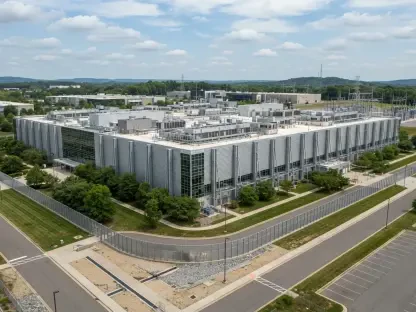
The second and third pillars of the investment involve the terrestrial hardware and the regulatory costs associated with operating on specific frequencies. Building macro cell sites—the traditional towers seen along highways and atop buildings—is a labor-intensive process that involves dealing with local zoning laws, power installation, and physical maintenance. Unlike the existing broadband model that relies on consumer-owned dishes, the mobile strategy requires a dense network of ground stations to provide reliable service inside buildings and in crowded city centers. This shift toward a ground-based infrastructure represents a significant departure from the company’s aerospace roots, requiring a new set of logistical skills and a massive influx of capital to compete with the established physical footprints of traditional telecommunications giants who have spent decades perfecting their tower networks.
The Foundation of a New Network
Integrating Hardware and Standardized 5G Technology
A cornerstone of this wireless strategy involves a deep technological integration with established industry leaders to ensure broad market compatibility. By selecting the Qualcomm Dragonwing cellular infrastructure platform, the network is being built on a foundation of standardization rather than proprietary technology. This decision is critical because it signals a move toward a system that will eventually be compatible with standard consumer smartphones, rather than requiring users to purchase specialized, high-cost hardware. For the network to succeed on a global scale, it must be accessible to the devices people already carry in their pockets. This partnership allows for the deployment of tens of thousands of radio units that adhere to mainstream 5G standards, bridging the gap between innovative satellite delivery and the practical needs of the mobile market.
Furthermore, this technological alliance reflects a preference for vertical integration that extends from the silicon in the towers to the rockets in the sky. Controlling the core technology stack allows for a more efficient optimization of the network, enabling a level of performance that third-party vendors often struggle to match. For Qualcomm, the agreement provides a stable and high-profile revenue stream that diversifies its business away from the volatile handset market and into the critical infrastructure sector. This synergy between aerospace innovation and semiconductor expertise is what makes the hybrid network a viable competitor. By utilizing standardized protocols, the company can scale its ground-based infrastructure at a much faster pace, ensuring that the terrestrial layer of the network is ready to support the massive data loads expected as the service goes live in more regions.
Securing the Vital 800 MHz Spectrum
The physical limitations of wireless communication dictate that not all frequencies are created equal, and the acquisition of the 800 MHz band is a masterclass in strategic resource planning. This specific block of low-band spectrum is often described as beachfront property because its long wavelengths allow it to travel great distances and penetrate physical obstacles like walls, trees, and dense urban structures. For a network that aims to provide “always-on” connectivity, having a foundational layer of low-band spectrum is non-negotiable. While the amount of spectrum being sought is relatively small compared to the massive holdings of industry incumbents, its role is to act as a reliable anchor that maintains a connection when higher-frequency signals fail or when a user moves indoors where satellite signals struggle to reach.
The regulatory process for securing these frequencies is currently a primary focus, as the pending approval from the Federal Communications Commission represents a major milestone. This spectrum serves as the glue that binds the orbital and terrestrial layers together, allowing for a seamless handoff between a satellite in orbit and a cell tower on the ground. Strategic use of the 800 MHz band ensures that the network remains functional even in challenging environments, which is essential for the reliability required by both consumer users and industrial applications. This move into licensed spectrum also marks a transition into a more traditional telecommunications role, where the company must navigate the complex political and regulatory landscape that governs how airwaves are used and shared among competing interests in the United States and abroad.
Advancing Satellite and Robotic Connectivity
Direct-to-Cell Innovation via Gen2 Satellites
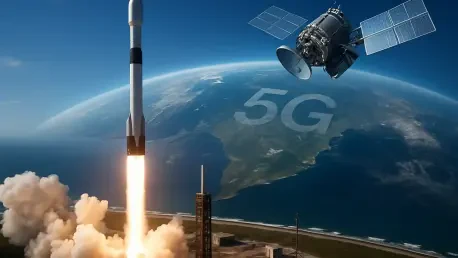
The success of the orbital portion of the mobile plan rests on the deployment of second-generation satellites, which represent a significant leap in communication technology. These V2 units are specifically designed to handle the complexities of direct-to-cell communication, a task that was previously thought to be nearly impossible for standard consumer devices. The challenge lies in the immense distance the signal must travel from a satellite in low-Earth orbit to the tiny antenna housed inside a modern smartphone. To overcome this, the new satellites are equipped with much larger and more sensitive antennas, along with advanced beamforming technology that can target individual devices with high precision. This innovation is intended to transform satellite connectivity from a slow, emergency-only texting service into a high-speed data pipe capable of delivering true 5G performance.
Current authorizations for 15,000 of these advanced satellites provide the necessary scale to ensure global coverage and high capacity. SpaceX has indicated that these units will offer up to one hundred times the bandwidth of the previous generation, a requirement for supporting a large number of simultaneous users. This technological evolution is not just about raw speed; it is about reducing latency and increasing the reliability of the link between the sky and the ground. As more of these satellites are launched using the next generation of heavy-lift rockets, the network’s ability to provide a consistent 5G experience will grow exponentially. This capability is what distinguishes the current initiative from past satellite phone ventures, which were often hampered by expensive, bulky hardware and limited data speeds that made them impractical for the mass market.
Empowering the Next Generation of Autonomous Systems
Beyond the consumer smartphone market, the hybrid network is being specifically engineered to serve as the primary communication layer for a new era of autonomous machines. Systems such as delivery drones, sidewalk robots, and autonomous trucks require a level of connectivity that traditional cellular networks have struggled to provide consistently across wide geographic areas. These machines often operate in environments where cell signals are weak or non-existent, yet they require constant updates and real-time control to function safely and efficiently. A network that can seamlessly transition a connection from a ground tower in a city to a satellite in a rural area provides the persistent uptime that autonomous logistics companies demand. This industrial application represents a massive and less price-sensitive market than the consumer sector.
While formal partnerships in the robotics sector are still maturing, the technical requirements for these systems align perfectly with the capabilities of a hybrid 5G network. For a self-driving truck crossing a desert or a drone delivering medical supplies to a remote location, a drop in connectivity is not just an inconvenience but a operational failure. The machine-to-machine market prioritizes total geographic coverage and reliability above all else, making the hybrid model an ideal solution. By positioning itself as the backbone for the robotics revolution, the company is tapping into a sector that is expected to grow rapidly throughout the late 2020s. This focus on “persistent connectivity” ensures that the network is seen as an essential utility for the future of global logistics and autonomous transportation, rather than just a luxury for mobile phone users.
Projecting the Future of Global Connectivity
A Long-Term Roadmap for Deployment
Establishing a global wireless network is a physical endeavor that requires years of logistical planning and execution, with a clear roadmap extending toward the end of the decade. The physical deployment of macro cell sites and ground infrastructure is scheduled to begin in 2027, a timeline that reflects the reality of building out “boots on the ground” technology. Unlike launching a rocket, which can be done from a single location, building a tower network involves securing permits from thousands of local municipalities, navigating diverse environmental regulations, and managing the physical installation of power and fiber backhaul. This phase of the project is where the aerospace giant will face its most significant logistical challenges, as it moves from the fast-paced world of satellite deployment into the often-slow world of local government and civil engineering.
By early 2028, the goal is for the network to reach a state of operational maturity where it can reliably offer 5G speeds to a wide range of users. This period will be a critical test for the company’s ability to manage a hybrid system at scale, balancing the data loads between the sky and the ground. The late 2020s are expected to be the timeframe when the service becomes a truly viable alternative to traditional mobile carriers, offering a unique value proposition of universal coverage that its competitors cannot match without their own satellite partnerships. This long-term approach demonstrates a commitment to building a permanent and robust infrastructure, acknowledging that the transition to a global wireless power cannot happen overnight. Success will depend on the company’s ability to maintain its pace of satellite launches while simultaneously scaling its terrestrial footprint to meet growing demand.
Navigating Regulatory and Technical Risks
The path toward a one hundred billion dollar network is fraught with significant hurdles that could slow or even derail the project’s momentum. Regulatory approval remains the most immediate and unpredictable risk, as the company must satisfy the requirements of the Federal Communications Commission regarding spectrum usage and potential interference with existing services. The political climate surrounding high-profile technology leaders often adds a layer of complexity to these proceedings, with competitors and advocacy groups frequently challenging new spectrum deals. Furthermore, the technical challenge of ensuring that satellite signals do not interfere with ground-based 5G services is a complex engineering problem that requires constant monitoring and adjustment. Failure to resolve these issues could lead to conditional approvals or long delays in deployment.
Logistical and financial risks also loom large, as the capital requirements for this project are immense even for a company with a high valuation. Proving that there is sufficient subscriber demand to justify a one hundred billion dollar investment is essential for maintaining investor confidence and securing future funding. Additionally, the need for hardware compatibility means that the network must work flawlessly with existing smartphones to gain widespread adoption. If users are required to buy specialized devices or if the connection quality is inconsistent, the move into the mass market will be significantly more difficult. Navigating these risks requires a combination of technical brilliance, political savvy, and financial discipline, as the company works to turn its ambitious wireless vision into a functional and profitable reality for users around the world.
The Converging World of Satellite and Mobile Service
The ultimate objective of this massive investment is the total convergence of two industries that were once entirely separate. In the past, satellite services were specialized tools for mariners, explorers, and rural residents, while mobile cellular service was the standard for everyone else. This project is attempting to erase that boundary, creating a unified narrative where a device is “always on” regardless of its proximity to a traditional tower. This convergence means that the very definition of a mobile network is changing, moving from a collection of ground-based “cells” to a layered system that uses every available path to deliver data. For the end user, the technology behind the connection should be invisible; the only thing that matters is that the phone or the robot remains connected at high speeds everywhere on the planet.
For stakeholders in the technology and telecommunications sectors, the key takeaway is that the era of geographic “dead zones” is coming to an end. As the division between satellite and cellular service disappears, developers and engineers must rethink how devices and applications are designed for a world of ubiquitous connectivity. The infrastructure being assembled today is the precursor to a future where high-speed data is treated as a universal utility, much like electricity or water. While the project is still in a high-stakes engineering phase, the progress made in 2026 suggests that the transition is well underway. If successful, this hybrid model will set a new standard for the global telecommunications industry, forcing competitors to adapt to a world where the sky is no longer a limit but a critical part of the network’s architecture.
Strategies for a Unified Connectivity Era
The strategic expansion of high-speed wireless infrastructure into the orbital plane has effectively redefined the boundaries of the telecommunications market. By successfully integrating standardized 5G technology with advanced low-Earth orbit satellites, the groundwork was laid for a world where geographic isolation no longer dictated the quality of digital access. This evolution necessitated a shift in how hardware manufacturers and software developers approached connectivity, moving away from intermittent sync cycles toward “always-on” architectures that took advantage of the hybrid network’s unique resilience. The massive capital injection into 800 MHz spectrum and terrestrial macro sites ensured that the network remained robust even in the most challenging environments, providing a level of reliability that supported the rapid growth of autonomous logistics and remote industrial operations.
Forward-looking organizations and technology leaders viewed this transition as a prompt to accelerate the deployment of mobile-first and robot-first solutions that were previously limited by network coverage gaps. The successful demonstration of direct-to-cell capabilities across standard devices proved that the massive financial bet was grounded in attainable engineering milestones rather than just speculative ambition. As the industry moved toward 2028, the convergence of satellite and terrestrial services became the new baseline for global communication, prompting a wave of consolidation and partnership among traditional carriers looking to maintain their relevance. Stakeholders who prioritized compatibility with these unified standards found themselves at the forefront of a more connected and efficient global economy, where the infrastructure in the sky and on the ground worked in perfect harmony.