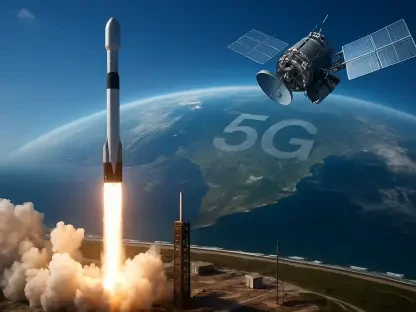

While cargo resupply missions to the International Space Station often carry numerous small satellites, they are excluded from rideshare rankings due to their primary logistics purpose. This distinction is vital because it separates utilitarian delivery runs from the competitive commercial missions that have revolutionized orbital access over the last decade. The shift from massive, government-sponsored satellites to prolific small-satellite constellations has fundamentally altered the economics of space. This revolution is powered by the rideshare model, which operates similarly to a public transit system for the stars. Instead of a single entity bearing the entire cost of a Falcon 9 or a PSLV rocket, dozens of organizations share the payload capacity, dramatically lowering the financial barrier for startups and academic institutions. SpaceX’s Transporter program has effectively commoditized this process, offering regular “bus runs” that allow manufacturers to synchronize their hardware production with reliable launch dates.
Early Milestones: The Rise of the SpaceX Monopoly
Transporter-1 currently stands as the reigning champion of high-volume rideshare missions, having successfully deployed 143 reported payloads into orbit during its landmark flight in January 2021. This mission served as a definitive statement of intent from the commercial sector, proving that a single rocket could manage a diverse manifest ranging from Earth-imaging platforms like Planet’s Dove satellites to the tiny communication nodes known as SpaceBEEs. Closely following this achievement is the Transporter-15 mission, which recently launched from Vandenberg Space Force Base carrying 140 payloads. The success of these flights demonstrates a rapid scaling of launch operations and a growing appetite for frequent, high-density access to Sun-synchronous orbits. By packing such a vast number of payloads into a single fairing, launch providers have managed to drive down the cost per kilogram, enabling a density of orbital hardware that would have been unthinkable just a short generation ago.
A significant factor in the success of these record-breaking missions is the evolution of “last-mile” delivery technology in space. Rather than simply releasing all satellites into a single bulk orbit, modern rideshare missions like Transporter-15 frequently utilize Orbital Transfer Vehicles, or OTVs. These vehicles act as sophisticated space tugs, taking custody of multiple smaller satellites after they separate from the main rocket and ferrying them to precise altitudes or inclinations. This capability is essential for operators who require specific orbital parameters that a primary rideshare trajectory might not perfectly match. The integration of these tugs complicates the official satellite count, as a single OTV might be listed as one payload initially but later deploy several independent spacecraft over the following weeks. This layered deployment strategy ensures that even within a shared launch, customers can achieve bespoke mission profiles that were once only available to those who could afford a dedicated, private rocket.
Logistical Complexity: Coordinating Massive Manifests
Managing the logistics of over a hundred different customers on a single mission presents a monumental coordination challenge that requires precision engineering and diplomatic finesse. Transporter-12, which carried 131 payloads, highlighted the intense complexity of this process, as technicians had to integrate hardware from dozens of different countries and organizations. This mission was particularly notable for the role played by third-party brokers who manage the physical integration of diverse canisters and deployment sequencers. Similarly, the Transporter-18 mission, which launched with 130 payloads, pushed the boundaries of rideshare utility by including reentry vehicles alongside traditional communication satellites. By carrying the W-Series reentry craft, SpaceX demonstrated that rideshare missions could facilitate materials science and orbital manufacturing experiments that require a return to the surface. This expansion of cargo variety shows that the market is maturing beyond simple data collection.
The concept of the “sub-rideshare” has emerged as a clever solution to the logistical bottlenecks of high-volume missions, particularly evident in the Transporter-11 flight. This mission carried 116 payloads but utilized a “Russian Nesting Doll” approach where certain primary payloads acted as carriers for even smaller startup projects. For instance, the Waratah Seed WS-1 mission served as a host for six different startup payloads, allowing them to share the costs of a single slot on the Falcon 9. This strategy further democratizes space access by allowing very small entities to hitch a ride on a mission that is already a shared endeavor. However, this layering of cargo makes it increasingly difficult for tracking agencies to maintain accurate records. When a single object on a manifest actually contains several others, the distinction between a “payload” and a “satellite” becomes blurred, leading to the frequent discrepancies seen in orbital catalogs where the number of tracked objects often exceeds the reported manifest total.
Deployment Strategies: From Direct Release to Orbital Tugs
Innovation in deployment timing has also become a hallmark of recent record-breaking missions, such as Transporter-16, which carried 119 payloads. SpaceX’s documentation for this specific flight introduced the “delayed deployment” model, where several spacecraft remained attached to the upper stage or a transfer vehicle for release days or even weeks after the initial launch. This approach provides satellite operators with more flexibility in timing their entry into service, but it creates a headache for ground-based tracking stations that must distinguish between active satellites and spent hardware in real-time. Similarly, Transporter-9 faced significant data confusion due to its split deployment schedule. While the launch provider cited 113 payloads, deployment brokers reported only 109, a gap that stems from different methods of categorizing hosted instruments and transfer vehicles. These missions prove that as the density of launches increases, the industry must develop better ways to communicate deployment status to ensure safe operations.
Transporter-6 stands out in the history of rideshare missions for its use of the Vigoride 5 transfer vehicle, which successfully moved several satellites into custom orbits after separating from the Falcon 9. With 114 payloads, this mission was a rare instance where the reported manifest and the official satellite catalogs aligned perfectly, providing a clear picture of the orbital population. The success of the Vigoride vehicle demonstrated the viability of high-thrust chemical propulsion for small-satellite tugs, allowing them to make rapid orbital changes that electric propulsion might take months to achieve. This capability is becoming increasingly valuable as more companies seek to fill specific slots in their constellations quickly to begin generating revenue. The ability to “drop off” a cluster of satellites and then ferry them to diverse destinations makes the large-scale rideshare model much more attractive to established commercial players who require more than just a basic orbit, bridging the gap between low-cost transit and high-precision mission requirements.
Legacy Successes: The International Perspective and Data Tracking
The historical context of these missions is incomplete without acknowledging the groundbreaking success of India’s PSLV-C37, which launched 104 satellites back in 2017. For four years, this mission held the world record and proved to the global community that the high-volume rideshare model was not just a theoretical possibility but a viable commercial strategy. While SpaceX has since claimed nine of the top ten spots in the rankings, the legacy of the Indian Space Research Organisation’s achievement remains a vital milestone. It showed that the demand for small-satellite launches was massive and that the market was ready for dedicated “bus runs” to Sun-synchronous orbit. Even missions like Transporter-3, which carried 105 spacecraft, owe their success to the deployment strategies pioneered during that 2017 launch. Interestingly, Transporter-3 is often cited in tracking debates because its orbital catalog entries frequently exceed its reported payload count due to the tracking of deployment rings and spacers that become debris.
The discrepancy between manifested payloads and cataloged objects highlights a persistent technical hurdle in the space industry: the lack of a unified metric for mission success. When a mission like Transporter-3 shows 110 entries in a database despite only claiming 105 satellites, it is often because ground-based radar systems are picking up non-functional hardware like adapter plates and separation springs. These objects, while not satellites, occupy space and must be tracked to avoid potential collisions with active spacecraft. This ambiguity is exacerbated by the use of hosted payloads—instruments that remain permanently attached to the rocket’s upper stage to perform their missions. Because these instruments never fly independently, they are often excluded from satellite counts but included in payload manifests. Reconciling these different data points is essential for long-term orbital sustainability, as the sheer volume of objects launched during these record-breaking missions continues to push the limits of existing space situational awareness systems.
Forward Progress: Addressing the Crowded Orbital Environment
The era of record-breaking rideshare missions effectively democratized the orbital environment, allowing an unprecedented variety of actors to participate in the space economy. From the standardization of Sun-synchronous orbits to the rise of specialized deployment brokers, the infrastructure supporting these high-volume missions became remarkably sophisticated. The dominance of the Transporter program underscored a significant shift in how launch services were sold, moving away from bespoke contracts toward a more predictable, commodity-based model. As more organizations adopted this carpool approach, the cost of entry continued to fall, which sparked a wave of innovation in Earth observation and orbital manufacturing. These missions did more than just break records; they established a new baseline for what was possible when the global space community collaborated to share the immense costs of launch. The transition from massive satellites to distributed constellations created a more resilient and versatile presence in the stars during this period of rapid expansion.
As the industry progressed, the primary challenge transitioned from the technical feat of launching satellites to the logistical necessity of managing the crowded orbits they inhabited. Stakeholders prioritized the development of more transparent reporting protocols to bridge the gap between manifest counts and real-time tracking data. Establishing a universal definition for what constituted a tracked object versus a functional payload significantly improved the accuracy of collision avoidance models. Furthermore, the integration of automated deorbiting systems was identified as a critical next step for maintaining the long-term viability of popular orbits. By focusing on these protective measures, the commercial sector ensured that the record-breaking success of recent rideshare missions did not lead to a future of orbital congestion. The path to sustainable space access required a decisive shift in focus from simply reaching orbit to responsibly managing the vast amount of technology that resided there, ensuring the environment remained open for the next generation.