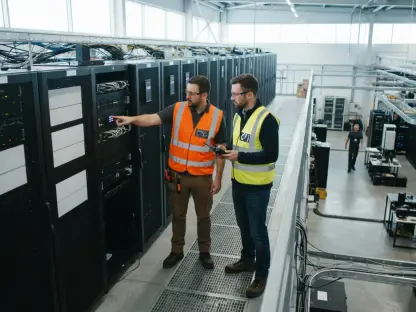

Standalone 5G technology is expected to account for over 80 percent of total private network spending by the end of the decade, growing at twice the rate of the overall market. The global landscape for private cellular networks is undergoing a period of rapid expansion and fundamental transformation as installations reach new heights across 135 countries. According to the latest market research, documented private 5G and 4G LTE projects have hit a significant milestone of 9,600 sites, a sharp rise from the 8,800 entries recorded just a year ago. This surge signals that private cellular technology has successfully transitioned from experimental pilot programs into the mainstream of industrial operations. These networks are no longer confined to small laboratory settings; they serve as critical infrastructure for global sectors ranging from heavy industry and logistics to healthcare. Enterprises like Nestlé and Chick-fil-A Supply use these networks for factory automation, while Google deploys them within AI data center campuses to manage throughput.
Industrial Drivers
Strategic Adoption Factors
The surge in adoption across various sectors is fueled by the recognition of private 5G and LTE as all-inclusive connectivity platforms that bridge the gap between human and machine communication. These systems are uniquely capable of supporting mission-critical data, industrial automation, and enterprise intelligence on a single, unified architecture. A primary catalyst for this shift is the proactive stance taken by national regulators who are increasingly providing dedicated, local-area licensed spectrum for specific industrial verticals. This regulatory support lowers the barrier to entry for enterprises that previously struggled with the limitations of public carrier coverage or the unreliability of traditional Wi-Fi in dense environments. Furthermore, the inherent security and predictable performance of these dedicated networks offer a level of control that is essential for modern business continuity. As more industries gain access to localized spectrum, the move toward private cellular becomes a standard operational requirement.
Physical AI Integration
Beyond simple connectivity, the integration of Physical AI is a recurring theme driving the current market expansion. Private standalone 5G networks have become the preferred medium for autonomous material transportation, fulfillment center robotics, and the operation of remote-controlled heavy machinery in the mining and construction sectors. These specific applications demand the ultra-low latency and high reliability that only dedicated 5G infrastructure can deliver consistently. For instance, high-bay inventory counting and real-time robotic coordination require instantaneous data processing to prevent collisions and maintain high-speed workflows. By utilizing private 5G, companies can bypass the congestion of public networks, ensuring that their AI-driven assets function at peak efficiency regardless of external traffic. This capability is transforming traditional warehouses and production floors into fully intelligent environments where every movement is tracked and optimized by local edge computing systems.
Shifting Vendor Landscape
As the market matures, the vendor ecosystem is experiencing a significant reorganization to meet the demands of diverse enterprise needs. Traditional Western Radio Access Network giants, such as Nokia and Ericsson, are restructuring their approaches by divesting or reorganizing business units to focus on higher-value public mobile operator infrastructure. While these established vendors continue to dominate massive, mission-critical wide-area network contracts valued at millions of dollars, their strategic shift has created a vacuum in the localized campus segment. This gap is being filled by a new wave of competitors, including private 5G startups, Open RAN vendors, and specialized providers. Organizations like Walmart, BMW, and Toyota are increasingly turning to these alternative suppliers to build tailored connectivity solutions for their specific facility footprints. This bifurcation allows major players to focus on national infrastructure while agile startups provide the customized support required for complex deployments.
Market Outlook
Financial Growth Projections
The financial trajectory of the private network market remains exceptionally robust, with global spending projected to grow at a compound annual rate of 18 percent through 2029. By the end of this period, the total market valuation is expected to exceed 7.8 billion dollars, marking it as one of the fastest-growing segments in the telecommunications industry. A significant majority of this investment—over 80 percent—is concentrated in standalone private 5G networks, reflecting a strategic shift away from legacy 4G LTE systems. Organizations are increasingly prioritizing the advanced capabilities of standalone 5G, such as network slicing and massive machine-type communications, to future-proof their operations. This investment trend is particularly strong in sectors where digital transformation is tied to long-term sustainability and efficiency goals. As the cost of hardware decreases and the ecosystem of compatible devices expands, the financial barrier for smaller enterprises will continue to fall, further accelerating growth.
Global Infrastructure Initiatives
The scale of these projects varies from localized campus deployments to massive infrastructure initiatives that redefine regional connectivity. In Sweden, the VGR initiative provides indoor 5G for over 500 properties and hospitals, demonstrating how large-scale public infrastructure can benefit from private cellular technology. Similarly, multi-site contracts in the chemical industry are reaching values of 20 million dollars for production facility upgrades that enhance safety and environmental monitoring. Public safety and defense projects also remain high-value segments as agencies transition from aging narrowband systems, like TETRA, to modern mission-critical broadband. This transition ensures that emergency responders and military personnel have access to high-speed data and video streaming in real time. These diverse projects highlight the versatile nature of private 5G as it replaces legacy systems that can no longer keep pace with the data demands of modern institutional and industrial operations across the globe.
Strategic Resilience Planning
To ensure long-term operational resilience, enterprises evaluate their spectrum options and vendor partnerships with a focus on interoperability and scalability. The transition toward standalone 5G provides a unique opportunity to integrate Physical AI and advanced analytics into the core of the business, which requires a clear roadmap for infrastructure upgrades. Decision-makers prioritize vendors that offer flexible software-defined solutions capable of adapting to future technological shifts, including the early development stages of next-generation standards. Collaborative efforts between IT and operational technology departments are essential in identifying the specific performance metrics required for each unique site. By focusing on modular architectures, companies scale their private networks from a single pilot facility to a global footprint without facing significant technical debt. The shift toward private cellular connectivity is a decisive step in the fourth industrial revolution, securing a foundation for a more automated global economy.