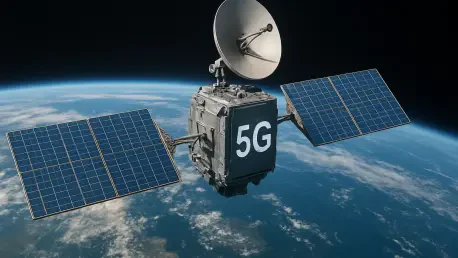

The global telecommunications landscape in 2026 has reached a pivotal juncture where the orbit of satellites is no longer the primary constraint for universal 5G coverage. While the aerospace industry has successfully deployed massive constellations of Low Earth Orbit (LEO) satellites, the burden of connectivity has shifted squarely onto the smartphone in the palm of the user. This transition toward Non-Terrestrial Networks (NTN) represents one of the most ambitious leaps in the history of mobile technology, promising a future of ubiquitous connectivity regardless of geography. However, as the industry moves from conceptual marketing to field implementation, a critical consensus has emerged: the primary challenge is not the space-borne infrastructure, but the extreme complexity concentrated within the user equipment (UE).
The technical reality reveals that the handset is the specific site where roaming, spectrum management, and the gaps between 5G and 6G must be resolved. Current analysis explores the multifaceted integration of terrestrial and non-terrestrial networks, focusing on the bottlenecks occurring at the device level. This includes the physical limitations of hardware, the inadequacy of current standards for multi-provider roaming, and the intense computational requirements for maintaining session continuity as devices move between stationary cell towers and satellites traveling at orbital velocities. By setting these expectations, it becomes clear why the smartphone, rather than the rocket, dictates the pace of progress.
The Centrality of User Equipment in the NTN Paradigm Shift
The integration of satellites into the 5G ecosystem has fundamentally altered the role of the mobile device from a simple radio receiver to a sophisticated, spatially aware terminal. In the traditional terrestrial model, the user equipment remains relatively passive, responding to signals from fixed base stations with known locations. In the NTN paradigm, the handset must now navigate a multi-dimensional environment where the “base station” is moving at several kilometers per second at an altitude of hundreds of kilometers. This shift necessitates a complete overhaul of the device’s internal logic, requiring it to process orbital data and satellite ephemeris in real time to even begin the process of network attachment.
Furthermore, the centrality of the handset arises from the consumer demand for a “zero-touch” experience. Users expect their devices to transition from a suburban 5G tower to a satellite link in a remote national park without manual intervention or a loss of service. This expectation places immense pressure on the device’s operating system and modem to manage complex handover protocols that were never designed for the extreme latencies and frequency shifts inherent in space-based communication. Consequently, the handset has become the primary laboratory for solving the interoperability issues that currently fragment the satellite-to-cell market.
The industry is also grappling with the reality that the “coverage from space” narrative often oversimplifies the link budget requirements. For a standard smartphone to communicate with a satellite, the device must maintain a precise timing advance and frequency offset that accounts for the massive distance. This is not merely a software update; it is a fundamental shift in how the radio frequency (RF) front-end interacts with the physical layer of the network. As such, the success of the NTN ecosystem is currently tethered to the ability of chipset manufacturers to pack these advanced capabilities into consumer-grade hardware without compromising the form factor or price point.
Bridging the Gap: Marketing Myths and Technical Realities
To understand the current market landscape, one must look at the historical discrepancy between the seamless connectivity promised in corporate presentations and the technical hurdles faced by network operators. Historically, satellite communication was a niche industry requiring bulky, specialized terminals with large, external antennas. The modern push to integrate this into mainstream 5G involves moving from a static network model to an incredibly dynamic one. While initial device attachment—simply getting a phone to see a satellite—is largely considered a solved problem, the industry continues to struggle with Quality-of-Service (QoS) assurance and reliable session handovers.
The difficulty resides primarily in session continuity and the physics of moving cells. When a user moves from a mature terrestrial network to a satellite network, the handover is not merely a change of frequency; it is a transition between two entirely different physics environments. Satellites in LEO move at incredible speeds, creating a dynamic environment where cell sites are constantly in motion relative to the user. Ensuring that a voice call or high-priority data session does not drop during this transition remains a significant hurdle. These factors redefine the role of the network operator from a provider of signal to a manager of complex, policy-driven handoffs that must account for cost, capacity, and throughput in real time.
Moreover, the “always-on” marketing of satellite 5G often ignores the limitations of the link itself. Unlike terrestrial 5G, which can offer multi-gigabit speeds, satellite-to-handset links are currently constrained by narrow bandwidth and high interference. The industry is forced to manage a “bottleneck of expectations,” where the consumer expects a fiber-like experience from a signal traveling through the ionosphere. This gap between the myth of space-based broadband and the reality of narrowband messaging services is a critical tension point that operators must navigate as they roll out these services from 2026 to 2028.
The Handset: The Primary Technical Bottleneck
Managing Signal Delay: The Role of Doppler Compensation
The handset identifies as the focal point for nearly all integration hurdles because it must perform high-complexity tasks never required for terrestrial-only operation. Because satellites move at such high velocities, they induce a massive Doppler shift—a change in frequency caused by the relative motion between the transmitter and the receiver. In terrestrial networks, Doppler is negligible at walking or driving speeds, but at orbital speeds, it can push the signal entirely out of the receiver’s window. To solve this, the device must use Global Navigation Satellite System (GNSS) data to “pre-compensate” for the shift, essentially predicting where the frequency will be before it even receives the signal.
This requirement for constant spatial awareness adds a significant layer of computational overhead. The device must not only know its own location but also the exact trajectory of the satellite constellation it is attempting to reach. If the GNSS data is inaccurate or if the device experiences high levels of jitter, the connection fails. This necessitates a more powerful digital signal processor (DSP) within the modem, which in turn increases the heat signature and power demands of the phone. The need for precise timing and frequency synchronization means the handset is no longer just a communication tool; it is a sophisticated navigational instrument.
Overcoming Hardware Limitations: Antenna and Power Constraints
The physical architecture of the smartphone must also undergo a radical evolution to support NTN. Handsets must now house filters and antennas for specific frequency bands, such as the L and S bands, which are common for satellite use but often require larger physical dimensions to be efficient. There is a significant engineering challenge in co-locating traditional terrestrial antennas with the electronically steered or high-gain antennas required for satellite communication within a slim smartphone form factor. Without sufficient gain, the signal from the satellite—which may be as weak as a single photon by the time it reaches the ground—is lost in the background noise of the urban environment.
Power consumption remains a critical risk to the adoption of these technologies. Currently, many NTN-capable devices must keep their GNSS receivers active for long periods to stay synchronized with the satellite’s moving “spot beam.” This hardware requirement drains batteries significantly faster than standard cellular operations, threatening the long-life promise of mobile technology. For IoT devices in the field, this could mean the difference between a ten-year battery life and a two-year one. Engineering a radio that can talk to space without killing the battery is the “holy grail” of the current hardware cycle.
Regional Variances: The Roaming and Standards Gap
Beyond the physical device, additional complexities arise from a lack of global standardization and regional regulatory disparities. While 3GPP Release 17 and 18 have established a technical foundation, there is currently no universal standard for roaming and load-sharing between competing satellite providers. This forces operators into non-standard, proprietary integrations that hinder the goal of an interoperable network. A device designed for one satellite constellation may not be able to “roam” onto another, creating a fragmented ecosystem where the user is locked into a specific provider’s hardware.
Misconceptions often suggest that any 5G phone will eventually work on any satellite network, but the reality is a landscape of “black box” problems. Testing across different regions reveals that local spectrum regulations often conflict with satellite footprints, leading to interference that the handset must somehow filter out. The lack of a unified “inter-satellite link” standard also means that the ground segment must handle the routing of data, adding latency that the handset’s software must compensate for. This fragmentation makes the development of a “global phone” increasingly difficult for manufacturers who must cater to dozens of different satellite-terrestrial combinations.
Future Trends: The Evolution Toward 6G Native NTN
The roadmap for the next few years is defined by the evolution of 3GPP standards, moving toward a future where satellite connectivity is native rather than an afterthought. Emerging trends suggest that Release 20 and the subsequent shift to 6G will aim to unpick the heavy GNSS dependency that currently plagues the industry. The goal is to allow devices to connect to a satellite without a dedicated location fix, which would drastically save battery life and provide a safeguard against GNSS jamming. This “location-less” attachment is seen as a requirement for the mass-market scaling of NTN services in the late 2020s.
Furthermore, the transition to 6G is expected to introduce “regenerative” satellite payloads, where the satellite itself acts as a full gNodeB (base station) rather than a simple mirror in the sky. This would shift some of the processing burden away from the handset and back into the space segment, allowing for thinner, more efficient devices. Expert predictions suggest that while basic messaging and emergency services are the current standard, high-speed New Radio NTN (NR-NTN) will likely not be commercially viable for widespread handset use until the window between 2027 and 2028. This delay is largely due to the time needed to standardize the higher frequency Ka and Ku bands for consumer mobile use.
As we look toward 2028, the industry is also exploring the use of Artificial Intelligence (AI) at the edge to manage the complexities of the radio link. AI-driven modems could predict signal blockage from buildings or foliage and switch to satellite links proactively. This level of intelligence would finally deliver the “seamless” experience that marketing has promised for years. However, the integration of AI into the RF front-end represents yet another hurdle for handset manufacturers, who must balance the increased silicon cost against the benefits of improved connectivity.
Strategic Recommendations: Building an Integrated Ecosystem
For businesses and professionals navigating this shift, several actionable strategies are essential to avoid the pitfalls of early-stage NTN. First, stakeholders must prioritize interoperability testing; devices will likely not work out of the box across different satellite networks for several years. Utilizing digital twins and advanced simulation environments to model the unique characteristics of orbital channels is a best practice for chipset and device manufacturers. This allows for the testing of extreme Doppler and delay scenarios that are impossible to replicate in a standard terrestrial lab.
Second, network operators should move toward a “neighbor cell” philosophy, where the terrestrial network views a satellite simply as another adjacent cell. By hiding the complexity of the space link within the core network, operators can reduce the processing requirements on the handset. This requires deep integration between terrestrial and satellite cores, moving away from the siloed architectures of the past. Finally, enterprises should remain aware of the cost-per-bit economics. Because of limited spectrum in the lower L and S bands, early satellite 5G services will remain a premium tier. Strategic planning should focus on “hybrid” models where satellite is used only for critical data or in areas where terrestrial backhaul is physically impossible.
Additionally, manufacturers should focus on the modularization of the RF front-end. By creating flexible antenna architectures that can be tuned to different regional satellite frequencies, they can reduce the number of stock-keeping units (SKUs) required for a global rollout. This modular approach also allows for faster iteration as new 3GPP releases are finalized. For the consumer market, the focus should remain on “emergency and essential” services initially, gradually scaling to full data services as the hardware matures and the cost of orbital capacity decreases.
Conclusion: The Ground Segment as the Final Frontier
The analysis of the satellite 5G landscape demonstrated that the most significant challenge was not the space segment, but the ground segment—specifically the device in the user’s hand. The transition from 5G to 6G was defined by how successfully the industry hid immense technical complexity, such as Doppler compensation and multi-orbit roaming, from the consumer. The topic remained significant because, in a modern economy, no connectivity was no longer an acceptable option. The commercial success of NTN ultimately depended on whether the industry delivered a device that just worked, bridging the final frontier of telecommunications through hardware innovation and global cooperation.
Moving forward, the industry must look beyond the basic connectivity fix and focus on the sustainability of the device ecosystem. Future considerations include the development of “satellite-first” IoT sensors that can operate for decades on a single charge and the implementation of global spectrum sharing agreements that prevent interference between terrestrial towers and orbital beams. As the technology matures, the focus will likely shift toward high-altitude platform systems (HAPS) to fill the gaps between terrestrial towers and satellites. The ultimate realization of a truly global network will be found not in the stars, but in the efficiency of the silicon and the elegance of the standards that govern the device in the user’s pocket.