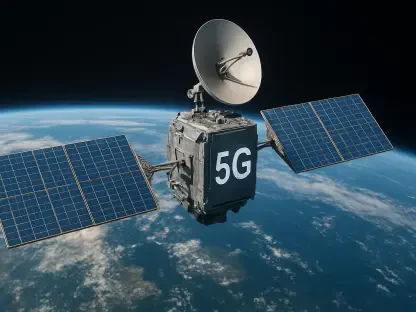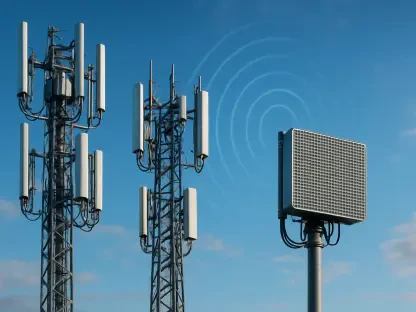

Shifting BeiDou augmentation data from the user plane to the 5G control plane allows for efficient point-to-multipoint broadcasting across massive device networks. This technological pivot addresses a fundamental bottleneck in high-precision positioning, where the sheer volume of users previously threatened to overwhelm standard data channels. As the global digital economy moves deeper into an era of automation, the reliance on the BeiDou Navigation Satellite System has grown exponentially, necessitating a more robust infrastructure than standalone satellite signals can provide. By merging 5G telecommunications with satellite-based spatiotemporal services, engineers have created a framework where the network is no longer a passive pipe but an active manager of precision. This integration represents a departure from fragmented solutions toward a unified digital backbone, ensuring that every connected device from a smartphone to an industrial sensor can access reliable and highly accurate timing and location data.
Architectural Shifts: Building a Unified Foundation
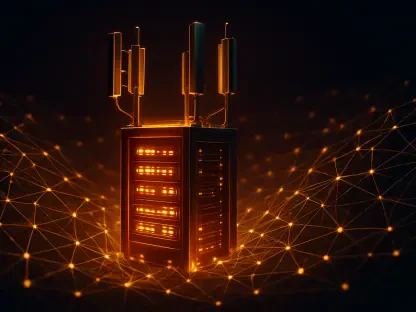
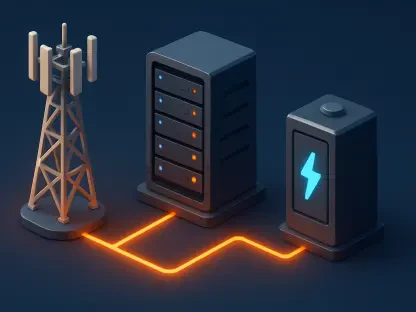
The physical evolution of this system begins with the deployment of integrated base stations that serve as both telecommunications hubs and satellite reference points. By co-locating BDS signal-receiving modules with existing 5G infrastructure, network operators can reuse established power supplies, physical sites, and maintenance frameworks. This consolidation dramatically lowers the financial and logistical barriers to expanding high-precision networks, allowing for a much higher density of reference stations across both urban and rural landscapes. In cities where tall buildings often obstruct satellite views, a dense network of these integrated stations provides the necessary corrections to maintain centimeter-level accuracy. This structural synergy ensures that the physical layer of the network supports the growing demand for spatiotemporal services without requiring a redundant and expensive secondary infrastructure. Consequently, the convergence of these two technologies creates a more resilient and sustainable ecosystem.
At the logical layer, the transition from the user plane to the control plane represents a paradigm shift in how information is disseminated to end-users. Traditionally, augmentation data was sent via unicast connections, which required a dedicated stream for every single device, an approach that is inherently unscalable as the number of autonomous systems grows. By leveraging the 5G control plane, specifically the Location Management Function and Access Management Function, the network can broadcast correction data to all devices within a specific geographic cell simultaneously. This point-to-multipoint delivery model effectively bypasses the congestion issues associated with massive Machine-Type Communications, ensuring that millions of devices can receive real-time updates without taxing the user-plane bandwidth. This optimization is critical for maintaining the responsiveness of the network, particularly during peak usage periods when data traffic from other applications is at its highest.
Ensuring Reliability: Quality of Service and Monitoring
Beyond the gains in efficiency, the utilization of the 5G control plane introduces sophisticated mechanisms for monitoring the Quality of Service and maintaining strict Service-Level Agreements. In the proposed framework, the network does not merely transmit data; it actively monitors the integrity and accuracy of the spatiotemporal information before it reaches the terminal. This capability is paramount for life-critical applications, such as autonomous aviation or remote robotic surgery, where even a slight error in positioning could have catastrophic consequences. By incorporating fine-grained monitoring tools directly into the signaling logic, the system can issue warnings or switch to backup data streams the moment a signal degradation is detected. This level of oversight provides a layer of trust that was previously missing from generic satellite services, turning BDS into a managed utility that can meet the rigorous safety standards required by modern industrial and medical sectors.
The integration also addresses the technical challenges of operating in complex electromagnetic environments, where interference and multipath reflections can compromise signal quality. Because 5G base stations are strategically positioned within the urban fabric, they can act as local anchors that verify satellite data against known terrestrial coordinates. This dual-verification process helps to mitigate common issues like the urban canyon effect, where satellite signals bounce off glass and steel, leading to significant positioning errors. Furthermore, the 5G control plane allows for the dynamic adjustment of data frequency and volume based on the specific needs of the local environment. For instance, in a busy logistics hub, the network can increase the update rate for high-speed automated guided vehicles while maintaining a lower rate for static sensors. This flexibility ensures that resources are allocated where they are needed most, optimizing the overall performance of the spatiotemporal network.
Industry Applications: Strategic Implementation and Next Steps
The impact of these technological breakthroughs is already being felt across several high-growth sectors, most notably in the burgeoning low-altitude economy. Integrated communication-sensing-navigation base stations are providing the essential infrastructure for managing unmanned aerial vehicle traffic, enabling safe and efficient drone operations for delivery and infrastructure inspection. Similarly, in the realm of precision agriculture, the system delivers the centimeter-level accuracy required for autonomous machinery to plant and harvest crops with minimal waste. Industrial settings also benefit from the nanosecond-level timing provided by the 5G-BDS synergy, which is crucial for the synchronization of time-sensitive networking in smart factories. By providing a unified spatiotemporal service, the 5G control plane allows these diverse industries to operate with a level of coordination and precision that was once technically impossible, paving the way for the next stage of the industrial revolution.
To achieve large-scale commercial success, stakeholders prioritized several key strategic actions to ensure the long-term viability of the integrated 5G-BDS architecture. Addressing cross-domain security became a central focus, as the convergence of satellite and terrestrial networks introduced new vulnerabilities that required robust encryption and authentication protocols. Organizations also conducted extensive testing to validate electromagnetic compatibility, ensuring that high-frequency 5G signals did not interfere with sensitive satellite reception. These efforts laid the groundwork for a standardized framework that allowed for seamless interoperability between different hardware vendors and service providers. It was determined that the industry needed to invest in the development of hybrid delivery models that intelligently switched between control-plane and user-plane transmission based on real-time application demands. This balanced approach proved essential for managing the growing complexity of the global spatiotemporal ecosystem.