
Income investors must weigh the allure of yields ranging from 4.5% to 6.1% against the necessity of managing high corporate debt loads and shifting pressures. For decades, the telecommunications sector has been viewed as a proxy for the utility market, providing a defensive haven during periods of

The Strategic Imperative of Global Connectivity and Route Diversity Global digital infrastructure is undergoing a radical transformation as the demand for high-capacity subsea networks surges to support the sophisticated requirements of modern artificial intelligence systems. The global digital

Town meetings saw an overwhelming two-thirds majority vote in favor of creating a Municipal Light Plant, signaling deep dissatisfaction with existing internet options. The arrival of high-speed, fiber-to-the-home connectivity in Falmouth, Massachusetts, represents a landmark shift in the

By mid-2026, 4G technology remained the dominant force in the Nigerian market, accounting for over fifty-four percent of all mobile connections. This statistic highlights the steep climb ahead for the nation as it attempts to pivot toward a more sophisticated fifth-generation (5G)

As consumer behavior shifts permanently toward mobile voice and over-the-top calling, telecommunications firms are forced to pivot their revenue strategies away from traditional fixed telephony services. This transition marks a fundamental change in how network operators in the Asia-Pacific region

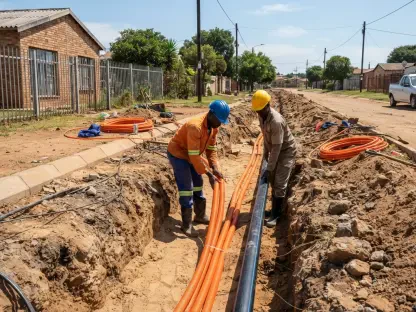
The telecommunications landscape in South Africa is undergoing a profound structural shift as private capital increasingly moves toward hard infrastructure assets that promise both stability and scale. The success of the Vox-Frogfoot-Hypa deal rests on a management team’s ability to leverage