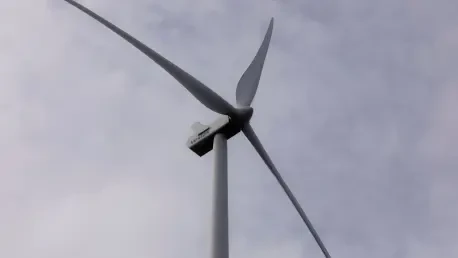

The high-altitude winds of northern Greece provide a robust source of renewable power, yet the harsh winter conditions in regions like Zoodochos Pigi present a formidable operational obstacle for wind farm management. In these mountainous areas, the accumulation of ice on turbine blades significantly hampers efficiency, creates safety hazards, and necessitates frequent, often unnecessary, operational shutdowns to prevent mechanical failure. This specific challenge led to the implementation of an advanced monitoring project on three turbines near Kozani, spearheaded by Enel Green Power to evaluate new sensing technologies. The initiative represents a critical shift toward using data-driven solutions to manage the inherent unpredictability of mountain climates where standard weather patterns are often misleading. By installing high-precision sensors directly on the equipment, engineers have sought to bridge the gap between environmental theory and actual mechanical performance, ensuring that energy production remains stable even as temperatures drop below freezing across the Greek landscape.
Addressing the Limitations of Conventional Monitoring
Traditional methods of monitoring wind turbine health during the winter months have historically relied upon external meteorological stations that measure ambient temperature, humidity, and wind speed. While these metrics provide a general sense of the environment, they frequently fail to provide a localized or accurate representation of what is occurring on the surface of the rotor blades themselves. Consequently, operators often find themselves in a reactive position, shutting down expensive machinery based on the mere possibility of ice formation rather than confirmed accumulation. These false alarms lead to substantial revenue losses and reduce the overall reliability of the grid, as clean energy production is halted during times when demand might be at its peak. The financial impact of such precautionary measures has pushed the industry to seek more granular data streams that can distinguish between harmless sub-zero temperatures and the actual physical buildup of ice that threatens the structural integrity of the wind turbines.
Beyond the economic implications of downtime, the physical presence of ice on a turbine blade introduces a cascade of mechanical complications that can lead to catastrophic failure if left unmanaged. When ice adheres to the aerodynamic surfaces of the blades, it alters their profile, causing a loss of lift and increasing drag, which fundamentally compromises the power conversion efficiency of the unit. More critically, uneven ice distribution creates significant mass imbalances that subject the main shaft, bearings, and gearbox to intense vibrational stress and cyclic loading beyond their design specifications. Furthermore, the risk of ice throw, where large frozen fragments are shed from rotating blades, poses a severe safety threat to maintenance personnel and nearby infrastructure. Addressing these risks requires a monitoring system that does not simply guess at conditions based on the surroundings but instead provides an immediate and precise assessment of the structural state of the blades during active rotation in freezing air.
Technical Precision and the Role of Fiber Optics
To overcome the limitations of distance-based weather monitoring, engineers have turned to the installation of fiber-optic sensors that function essentially like biological nerve endings distributed across the turbine blades. These sensors utilize pulses of light to detect microscopic changes in strain and vibration, transmitting high-speed data that allows for the real-time identification of ice accumulation as it happens. Unlike older sensor technologies that might be susceptible to electromagnetic interference or environmental degradation, fiber optics provide a durable and highly sensitive medium for data transmission in extreme conditions. This technological leap allows the control systems to distinguish between the normal flexing of a blade under wind load and the specific signature of added mass from ice buildup. By moving the point of data collection from the surrounding air to the internal structure of the blade, the system provides a level of fidelity that was previously unattainable, allowing for smarter, more targeted interventions during the coldest months of the year.
The integration of these advanced sensors with automated de-icing protocols established a new standard for operational resilience in the renewable energy sector during the 2026 winter season. Facility managers prioritized the deployment of internal heating elements and high-fidelity monitoring to ensure that maintenance cycles were based on actual wear patterns rather than generic schedules. Experts suggested that the transition toward such intelligent infrastructure would be essential for expanding wind power into even more volatile climates, similar to the extreme environments monitored by the British Antarctic Survey. Moving forward, the industry adopted these fiber-optic solutions as a primary method for reducing the levelized cost of energy in cold regions. By shifting the focus toward predictive structural health monitoring, operators successfully minimized unnecessary downtime and maximized the life span of critical components. This proactive approach provided a clear roadmap for future clean energy developments, demonstrating that technical precision remained the most effective tool for overcoming the unpredictability of nature.