
A new subsea cable spanning the Indian Ocean is expected to provide the foundational infrastructure required for Kenya to implement its national AI strategy. As digital transformation accelerates across the continent, the current reliance on legacy network systems has reached a critical breaking point where bandwidth demands far outpace available throughput. High-performance computing and machine learning initiatives require a level of data fluidity that aging copper and early-generation fiber optics cannot sustain. This ambitious project represents a necessary evolution for a nation positioning itself as a regional technology leader. By establishing a direct, high-capacity link to international markets, the project aims to eliminate the latency issues that currently stifle real-time data processing and cloud integration. The shift toward a digital-first economy necessitates a move away from sporadic connectivity toward a robust stream of information that can support the next generation of technological innovation in the region.
Infrastructure Expansion: Transoceanic Connectivity
Project Scope: Seacom Cable Links
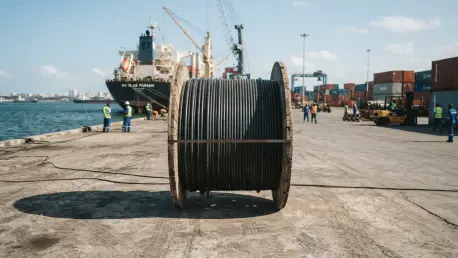
The initiative is being spearheaded by Seacom, which has committed roughly $2 billion to the construction of a cutting-edge subsea cable connecting the African coast to Asian technology hubs. This massive undertaking is designed to deliver elastic connectivity, offering capacity upgrades that range from tens to hundreds of gigabits per second. Scheduled to become fully operational by 2030, the network will utilize advanced fiber-optic technology to ensure that the physical infrastructure can scale alongside the increasing demands of generative artificial intelligence and big data analytics. Unlike previous iterations of maritime cables, this system is being built with redundancy and high-volume traffic in mind, catering to the specific needs of modern software development. By bypassing older routes, the new cable provides a streamlined pathway for information, which is essential for businesses that rely on split-second execution and massive data transfers across various global jurisdictions.
Regional Impact: Mombasa Gateway
Strategic positioning is central to the success of this infrastructure, with Mombasa serving as the primary landing station and gateway for internet traffic across East Africa. This location allows Kenya to act as a central distribution point for neighboring nations, further solidifying its role as a regional leader in digital commerce. The investment environment is bolstered by the presence of global technology firms like Google and Meta, which continue to deploy their own subsea systems to manage rising operational costs and improve user experiences. By creating a competitive landscape with multiple high-capacity cables, the cost of data is expected to decrease significantly, making high-speed internet more accessible to local entrepreneurs. This influx of international capital and technical expertise creates a symbiotic relationship where infrastructure supports the ecosystem, and the ecosystem justifies further expansion of the physical network capacity required for future development.
Institutional Readiness: Regulation and Safety
Policy Hurdles: Legislative Friction
While the physical foundation is being laid, the legislative environment and security landscape remain complex hurdles for the Kenyan technology sector to navigate. Recently, the Senate moved to reject the Artificial Intelligence Bill 2026, citing significant concerns that the proposed legal framework included penalties so severe they might discourage innovation. This policy friction coincides with a dramatic 114.3% increase in Distributed Denial of Service attacks, highlighting the vulnerability of critical systems. In response, the government established the National Cybersecurity Agency to oversee the protection of essential information infrastructure. Industry leaders are also exploring the implementation of post-quantum cryptography to safeguard sensitive data against the potential threat of quantum-enabled breaches. This proactive stance on both policy and security is essential for maintaining the integrity of the data flowing through the new subsea cable, ensuring that the transition to an AI-driven society does not come at the cost of national security.
Strategic Outcomes: Digital Resilience
Industry leaders correctly identified that high-speed internet transitioned from a luxury to an essential utility, necessitating a shift in how digital resources were managed and deployed. To maximize the benefits of the new subsea cable, stakeholders prioritized the integration of robust security protocols and the creation of a harmonized regulatory framework that encouraged local investment. Organizations shifted their focus toward developing specialized talent pools capable of leveraging high-capacity networks for advanced machine learning applications. Furthermore, the collaborative efforts between private enterprises and government agencies ensured that the physical infrastructure was matched by a resilient digital ecosystem. Moving forward, the emphasis remained on maintaining this momentum by periodically reviewing cybersecurity measures and ensuring that the legislative environment evolved alongside technological breakthroughs. By treating connectivity as a foundational right, the region successfully bridged the digital divide.