
Venture capital interest in maritime defense has spiked following high-profile security incidents involving the sabotage of sensitive underwater cables and pipelines. As geopolitical tensions escalate, the vulnerability of subsea infrastructure has moved to the top of national security agendas worldwide. Traditionally, navies have relied on piezoelectric sonar systems, which convert physical pressure waves into electrical signals. However, these systems are approaching their physical limits in terms of sensitivity and the ability to detect increasingly quiet modern submarines. Enter the era of optical-fiber sensing, a technology that uses light pulses to detect minute acoustic disturbances. Companies like Optics11 are leading this transition, offering hardware that provides a level of data fidelity previously thought impossible. This shift represents a broader movement where agile technology startups are becoming indispensable partners to major defense contractors. By integrating these sensors into existing naval architectures, states can now monitor vast underwater expanses with unprecedented precision, marking a new chapter in maritime intelligence and threat mitigation.
The Evolution: From Piezoelectric to Optical Sensing
The fundamental difference between traditional sensors and modern fiber-optic arrays lies in the medium of detection. While conventional passive sonar utilizes ceramic elements that generate electricity under pressure, fiber-optic systems utilize the interference of light within a glass cable. When a sound wave strikes the cable, it causes microscopic changes in the fiber’s structure, which in turn alters the light traveling through it. This method allows for the creation of sensors that are not only more sensitive but also immune to electromagnetic interference, a common hurdle for electronic components in salt water. Products such as OptiBarrier exemplify this innovation, providing a persistent stationary sensing solution for harbor security and critical energy infrastructure. Meanwhile, the OptiArray offers a flexible alternative, functioning as a towed sensor that can be deployed by surface ships or autonomous underwater vehicles. This versatility ensures that whether a mission involves protecting a fixed port or conducting an active search in the open ocean, the acoustic resolution remains high enough to identify the specific signatures of stealthy threats.
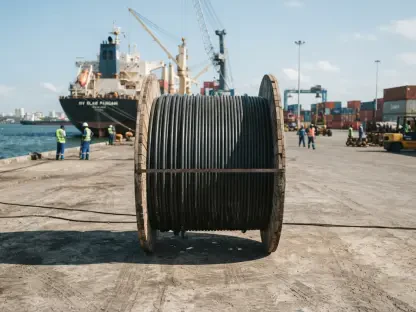
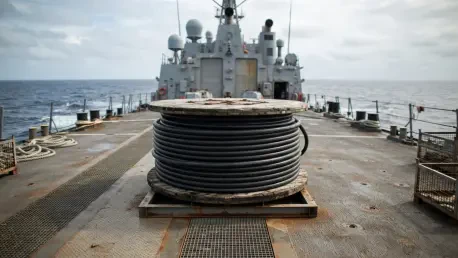
Beyond the physical hardware, the move toward fiber-optic sensing enables the deployment of massive sensor networks that operate with minimal power requirements over extremely long distances. Traditional electronic arrays often face signal degradation as the length of the cable increases, requiring repeaters and complex power management systems. Fiber optics, however, can carry high-fidelity acoustic data over miles with negligible loss, making them ideal for wide-area surveillance. This capability has led to a surge in the development of unmanned underwater vehicles that act as mobile sensing platforms. By equipping these drones with optical arrays, naval forces can extend their sensory reach far beyond the hull of a traditional submarine. This decentralization of sensing assets makes it much harder for adversaries to evade detection, as they are no longer just avoiding a single vessel but rather navigating a dense web of high-sensitivity “ears” scattered throughout the water column. The ability to distinguish between environmental noise and the low-frequency hum of a modern electric motor is the primary factor driving this technological migration across global fleets.
Strategic Adoption: Naval Powers and Industrial Alliances
Global naval powers have recognized that maintaining maritime superiority now requires the rapid integration of these advanced optical sensors into their existing platforms. Countries such as the United Kingdom, Germany, Sweden, and France are actively conducting large-scale trials to validate the performance of fiber-optic arrays in diverse environments, from the shallow brackish waters of the Baltic Sea to the deep corridors of the North Atlantic. These trials are often structured as collaborative efforts between government agencies and private defense “primes” like Saab, Thales, and Rheinmetall. For instance, the selection of optical-fiber technology for the Royal Netherlands Navy’s new Orka-class submarines demonstrates a clear institutional commitment to this sensing modality. By embedding startup-driven innovation within large-scale procurement programs, navies ensure they remain at the cutting edge of anti-submarine warfare. This collaborative approach also facilitates the standardization of data formats, allowing different nations to share acoustic intelligence more effectively during joint operations, which is critical for maintaining a cohesive defensive posture in contested regions.
A significant driver of this adoption is the British-led Atlantic Bastion initiative, which focuses on securing the northern maritime routes against sophisticated submarine incursions. Projects like these rely on a combination of stationary seabed sensors and mobile arrays to create a comprehensive picture of underwater activity. The integration of technology from specialists like Optics11 into these broader frameworks highlights the changing nature of defense procurement, where specialized hardware is valued for its ability to plug into diverse platforms, including the newest generations of unmanned surface vessels. These vessels act as motherships for the sensors, staying at sea for months and providing a constant stream of acoustic data back to command centers. As the complexity of underwater threats grows, the reliance on single-mode sensing is being phased out in favor of multi-layered architectures that combine fiber optics with other intelligence sources. This shift is not just about better hardware; it is about creating a resilient ecosystem where every asset contributes to a shared understanding of the undersea domain, ensuring that no stealthy actor can operate without being detected.
Financial Growth: Scaling Defense Technology Globally
The financial landscape surrounding underwater defense has transformed into a high-growth sector, attracting significant institutional capital and venture debt. Within the current cycle from 2026 to 2028, the influx of funding from entities like the European Investment Bank has provided the necessary runway for research-intensive firms to scale their operations globally. This capital is being used to establish a physical presence in strategic hubs across the Middle East and Southeast Asia, where the demand for localized maritime security is skyrocketing. The goal for many of these companies is to achieve “unicorn” status, a valuation exceeding one billion dollars, by capitalizing on the urgent need to protect subsea data cables and energy pipelines. While many startups in this space are not yet profitable due to high development costs, their market potential is anchored by long-term government contracts and the high barriers to entry inherent in defense manufacturing. Investors view these firms as long-term strategic assets rather than mere technology providers, recognizing that the transition from electronic to optical sensing is a generational shift that will define naval budgets for the next decade.
This economic momentum is further bolstered by the trend toward regionalizing defense supply chains. In response to global logistics challenges, companies are increasingly setting up local maintenance and manufacturing centers to support their naval clients in various territories. This decentralized operational model not only creates jobs but also ensures that critical sensor technology can be serviced and updated without relying on vulnerable international shipping lanes. The expansion into markets like Singapore and the United Arab Emirates reflects a strategic push to diversify revenue streams while addressing the unique security challenges of these regions. By embedding technical staff directly within the local defense ecosystems, firms can tailor their optical sensing solutions to the specific acoustic profiles of different oceanic basins. This localized expertise is becoming a major competitive advantage, as the effectiveness of a sonar system depends heavily on understanding the local salinity, temperature, and seabed composition. Consequently, the financial success of these companies is increasingly tied to their ability to act as both technology innovators and regional defense partners.
Operational Security: The Intersection of Secrecy and AI
Protecting the integrity of fiber-optic sensor technology requires a sophisticated approach to operational security that goes beyond traditional patent filings. Because detailed technical specifications could reveal the vulnerabilities or range limits of a sensor, many firms choose to protect their core innovations as trade secrets. This ensures that the specific light-modulation techniques and signal-processing algorithms remain classified, preventing adversaries from developing effective countermeasures. This culture of secrecy is supported by government agencies that provide rigorous vetting for employees and secure environments for data storage. In this environment, the role of Artificial Intelligence has become pivotal, particularly in the realm of edge computing. The volume of data generated by a single high-sensitivity fiber-optic cable is immense, far exceeding the processing capacity of traditional shipboard computers. AI-driven software allows for the real-time filtering of background noise, such as marine life or weather events, isolating the specific acoustic signatures of interest. This automated analysis ensures that operators are only alerted to genuine threats, significantly reducing the cognitive load on sonar teams.
The development of proprietary software platforms in-house has become a necessity for firms in this space, as external software often lacks the specialized capabilities required for high-bandwidth underwater sensing. By leveraging machine learning models trained on vast libraries of acoustic data, these systems can identify and categorize vessels with remarkable accuracy. This capability is especially critical for identifying “dark vessels” that have disabled their identification transponders or submarines operating in ultra-quiet modes. The synergy between high-fidelity hardware and intelligent software creates a defensive layer that is both passive and highly effective. Furthermore, the use of AI allows smaller companies to punch above their weight, as automated systems can perform tasks that would otherwise require hundreds of human analysts. As we look toward the 2026 to 2028 period, the focus is shifting toward predictive maintenance, where AI monitors the health of the fiber-optic cables themselves, predicting potential failures before they occur. This proactive approach ensures that critical surveillance networks remain operational even in the harshest underwater conditions, maintaining the integrity of the coastal defense shield.
Moving Forward: Sustaining Maritime Security via Integration
The successful deployment of fiber-optic sensing across international navies established a new standard for underwater surveillance and tactical awareness. Early pioneers in the field demonstrated that light-based detection could outperform traditional sonar in every key metric, from sensitivity to operational longevity. This technological transition was supported by a robust financial ecosystem that recognized the strategic importance of subsea infrastructure protection. By moving away from piezoelectric sensors and toward integrated optical arrays, defense forces effectively narrowed the window of opportunity for stealthy adversaries. The integration of Artificial Intelligence into these systems proved to be a force multiplier, allowing for the rapid processing of complex acoustic data in real time. This combination of hardware and software excellence provided a blueprint for future defense acquisitions, emphasizing the need for modularity and localized expertise. The path forward now involves expanding these networks to cover even larger areas of the global seabed, ensuring that the protection of sensitive pipelines and data cables remains a core capability of modern naval power.
To maintain this defensive edge, nations must prioritize the continuous modernization of their acoustic databases and the training of personnel in advanced signal analysis. The focus should shift from merely detecting threats to predicting adversary behavior through the analysis of long-term acoustic patterns. Furthermore, the industry must develop standardized protocols for sensor interoperability to allow for the rapid formation of ad-hoc surveillance networks during crises. This will require closer cooperation between private technology firms and national security agencies to ensure that software updates can be pushed to remote sensor arrays securely. As the undersea domain becomes increasingly crowded with both military and commercial assets, the ability to maintain a clear and persistent picture of subsea activity will be the deciding factor in maritime stability. By fostering an environment where innovation can flourish under strict security protocols, the defense community can ensure that fiber-optic technology continues to serve as a resilient backbone for global maritime security, effectively neutralizing threats before they can impact critical national interests or international trade routes.