Advanced 5G networks are being repositioned as industrial platforms for automation and real-time data processing rather than just faster mobile internet for consumers. This strategic shift reflects a broader metamorphosis within Vodafone Romania, which is actively moving away from its legacy as a

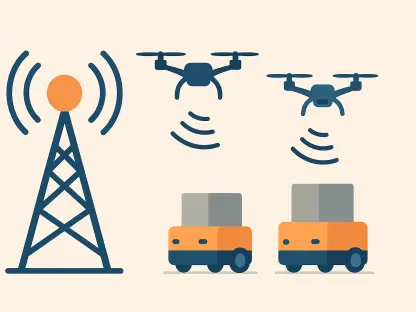
Testing drone and vehicle monitoring at the San Diego campus proves that cellular networks can function as sophisticated radar systems for urban environments. This development marks a pivotal shift in how telecommunications giants view their infrastructure, moving beyond the simple delivery of bits
Vladislav Zaimov is a seasoned figure in the telecommunications landscape, known for his deep technical grasp of enterprise networks and his rigorous approach to risk management in vulnerable infrastructures. As we move through 2026, the boundaries between different communication technologies are

The financial sector is witnessing a shift in digital asset management as Bitmine Immersion Technologies nears a 5% ownership stake in the total circulating supply of Ethereum. This milestone serves as a centerpiece for a broader industrial transformation that is currently reshaping how the world’s

The ambitious growth of South Korean data centers and GPU clusters faces a hard physical limit imposed by the country’s surprisingly thin international network capacity. As the global race for artificial intelligence dominance accelerates in 2026, the physical infrastructure of the internet has

The announcement on September 10, 2026, by STL, formerly known as Sterlite Technologies, represents a pivotal turning point for the North American data center infrastructure market. The move toward 48F-to-576F fiber counts reflects the shifting traffic patterns within AI facilities where east-west