
The rapid expansion of artificial intelligence and cloud computing has transformed unassuming warehouses into the backbones of the global economy, yet the fiscal honeymoon between local governments and tech giants is beginning to wane. The massive investment required for computer chips and server hardware has turned state sales tax exemptions into a recurring financial lifeline for the tech industry. Currently, thirty-eight states utilize these specific abatements to lure massive capital projects, hoping that the presence of a trillion-dollar company will translate into local prosperity. However, as the physical footprint of these facilities grows, so does the scrutiny from policymakers who are now weighing the multi-billion-dollar cost of lost tax revenue against the actual community benefits provided. This shifting landscape reflects a broader realization that the digital economy requires a different set of rules than traditional manufacturing, especially when the primary assets within these buildings are replaced every few years.
The Economic Friction of Digital Infrastructure
Analyzing the Cost: High-Tech Hardware Cycles
One of the most significant points of contention involves the frequency with which data centers must refresh their internal components to remain competitive in a fast-moving technological market. Nicholas Miller of the National Council of State Legislatures has observed that roughly two-thirds of a typical data center’s annual operating budget is dedicated to the procurement of high-end computer chips and server hardware. Unlike a traditional factory where machinery might last for decades, these digital components typically reach obsolescence within three years due to the relentless pace of innovation. Consequently, a sales tax exemption is not merely a one-time incentive to break ground; it functions as a perpetual subsidy that allows companies to avoid paying millions in taxes every time they upgrade their server racks. This recurring nature of the benefit has led state auditors to question whether the long-term fiscal trade-off remains sustainable as the scale of these deployments increases exponentially.
Beyond the recurring hardware costs, the disparity between massive capital investment and local employment figures has become a central argument for those advocating for a reduction in tax breaks. While the construction phase of a mega-scale data center generates a significant surge in temporary jobs and localized spending, the operational phase tells a very different story for the surrounding community. Once the facility is fully powered and integrated into the global network, it often requires only ten to twenty full-time employees to manage the entire site, most of whom may be specialized technicians brought in from out of state. Critics argue that the billions of dollars in waived sales tax revenue represent an inefficient use of public funds when the resulting permanent job creation is so minimal compared to other industries. This imbalance has prompted a more critical look at the “cost per job” metrics that have historically justified these aggressive incentive packages.
Shifting Public Sentiment: Social and Environmental Costs
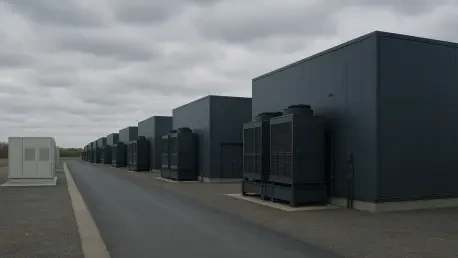
Public opposition to data center expansion is no longer limited to fiscal hawks but has expanded to include a wide range of community activists concerned with environmental and social impacts. Residents living near these facilities frequently complain about persistent noise pollution generated by massive cooling fans and backup generators that must run constantly to prevent hardware failure. Furthermore, the sheer volume of electricity required to power these sites has begun to strain local utility grids, leading to concerns that residential utility rates will rise to fund the necessary infrastructure upgrades. This mounting backlash has already influenced the political climate in at least thirteen states, where lawmakers are currently debating the total repeal of existing incentives or the implementation of strict moratoriums on new permits. The conversation has shifted from how to attract these facilities to how to protect the existing quality of life for the people who live in their shadow.
Rather than pursuing an outright ban on development, several jurisdictions are exploring more nuanced “off-ramps” or “repeal-light” strategies that aim to recalibrate the relationship between the state and tech companies. These measures often involve tightening the eligibility requirements for tax breaks, such as implementing higher investment minimums or requiring companies to prove they are using sustainable energy sources. Some states are also considering pausing new development projects while grandfathering in older facilities to honor existing contracts while preventing uncontrolled growth in saturated regions. This tactical pivot allows states to retain a level of competitiveness while ensuring that the industry pays a fairer share toward the infrastructure it relies upon so heavily. By creating these regulatory guardrails, policymakers hope to foster a more predictable environment that balances the undeniable need for digital growth with the fiscal responsibility owed to the broader tax-paying public.
Emerging Regulatory Frameworks and Compromises
The Virginia Model: Innovations in Revenue Generation
Virginia’s famous “data center alley” has recently become a testing ground for creative legislative compromises that could serve as a blueprint for the rest of the country. Faced with the risk of losing major investments to neighboring states, Virginia lawmakers recently reached a landmark agreement that extends existing sales tax exemptions until 2035 but adds significant new conditions. The centerpiece of this deal is the introduction of a pioneering 1.1-cent excise tax on every kilowatt-hour consumed by these massive facilities, marking a shift toward taxing consumption rather than just physical property or equipment. This approach acknowledges the high resource usage of data centers and provides a steady stream of revenue that is independent of hardware upgrade cycles. It represents a transition from a passive incentive structure to an active partnership where the industry contributes directly to the state’s coffers in proportion to its actual impact on the energy grid.
The revenue generated from these newly implemented excise taxes is increasingly being earmarked for specific public benefits, helping to soften political opposition and provide tangible value to residents. In many cases, these funds are being funneled into renewable energy projects, the expansion of state parks, and homestead tax credits that directly lower the property tax burden for local homeowners. By creating a direct link between data center operations and community improvements, states are finding a way to make the presence of these industrial giants more palatable to the public. This model also encourages tech companies to become more energy-efficient, as a lower power consumption profile directly leads to a reduced tax bill under the new excise structures. This alignment of fiscal policy with environmental goals suggests a more mature phase of industrial development where corporate interests and public welfare are no longer viewed as being at permanent odds with each other.
Future Considerations: Performance-Based Agreements and Integration
Looking ahead, the next generation of data center agreements will likely focus on performance-based metrics that hold companies accountable for their long-term impact on local ecosystems. States are beginning to demand more than just a large capital expenditure; they are looking for commitments regarding water usage efficiency, the use of carbon-free energy sources, and the integration of facility architecture into the local landscape. These performance-based agreements ensure that the tax incentives provided are earned through continuous compliance with high standards rather than being granted as a blanket reward for simply building a facility. For instance, some regions are now exploring tax tier systems where the level of exemption is tied to the percentage of local labor used during both the construction and maintenance phases. This strategy aims to maximize the local economic multiplier effect, ensuring that the wealth generated by the digital economy circulates more effectively within the communities hosting these centers.
The era of unconditional tax breaks for digital infrastructure has effectively ended as states transitioned toward more sophisticated and balanced fiscal policies. Leaders recognized that while the cloud was essential for modern life, its physical manifestations required a regulatory framework that reflected their unique operational realities. By implementing excise taxes and performance-based incentives, many jurisdictions successfully decoupled their economic growth from the loss of vital sales tax revenue. Future strategies focused on the deep integration of data centers into local power grids, ensuring that these facilities served as stable anchors rather than drains on resources. Companies that proactively engaged with community concerns and invested in local sustainability projects found themselves in a much stronger position to secure long-term operational certainty. Ultimately, the shift toward regulated growth provided a sustainable path forward that protected the public interest while allowing the technological foundations of the modern world to continue their evolution.