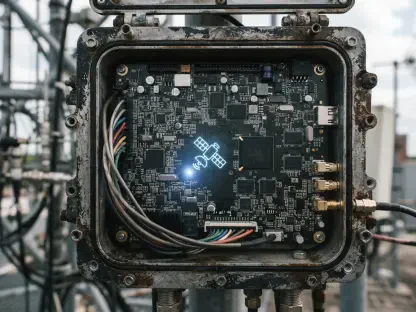

Modern wireless sensor networks function as a digital nervous system, yet their decentralized nature makes them the primary target for sophisticated signal jamming and data theft. These networks, composed of thousands of tiny, battery-powered nodes, now underpin critical infrastructure ranging from precision agriculture to automated industrial complexes. However, their physical exposure in remote locations often leaves them vulnerable to unauthorized access and signal interference. Recent research published by Walaa M. Elsayed in the journal Neural Computing and Applications introduces a transformative solution that addresses these persistent vulnerabilities. By merging unsupervised machine learning with a specialized, lightweight blockchain architecture, the study presents a dual-layered defense capable of identifying threats with 99.83 percent accuracy. This system overcomes the traditional limitations of sensor hardware, such as minimal memory and low power capacity, which previously made sophisticated security protocols impossible to implement in such environments.
Resilience Against Emerging Threats Through Unsupervised Learning
The core of this security framework is a detection engine powered by three distinct unsupervised machine learning techniques. Because the system is unsupervised, it does not need a library of past attacks to recognize danger; instead, it learns to identify “zero-day” threats that have never been seen before. This ensemble approach ensures that even the most subtle deviations in network behavior are caught before they can cause significant damage to the infrastructure. At the heart of this ensemble, K-Means Clustering groups data into predictable patterns, marking any outliers as potential risks. Simultaneously, an Isolation Forest algorithm quickly partitions data to isolate rare anomalies, while an Autoencoder neural network monitors traffic patterns. When the Autoencoder fails to accurately reconstruct a data packet, it signals a high-fidelity alert of an intrusion. This triple-check system ensures that malicious activity, such as data injection or flooding, is flagged with extreme precision.
Building on this foundation, the integration of these three algorithms creates a robust barrier against the evolving landscape of cyberattacks. Unlike traditional signature-based systems that only recognize known viruses, this model focuses on behavioral shifts within the network itself. For instance, if a node suddenly starts transmitting data at an unusual frequency or with altered packet structures, the unsupervised logic flags the event immediately. This is particularly vital in 2026, where automated attack scripts can modify their signatures in real-time to evade standard firewalls. By utilizing an ensemble rather than a single model, the framework minimizes the risk of false positives, which can be just as damaging as actual breaches in high-stakes environments like military surveillance or medical monitoring. The system maintains a constant state of vigilance, processing environmental data stream inputs to distinguish between natural noise and deliberate interference, thereby ensuring continuous operational uptime for the entire network.
Enhancing Data Integrity With Lightweight Blockchain Protocols
Once a threat is identified by the AI, the framework utilizes a localized blockchain layer to verify and store the alert. In a typical blockchain, verifying data requires immense processing power that would instantly kill a sensor’s battery. To solve this, the study introduces a majority-voting consensus mechanism based on “Byzantine fault tolerance.” This allows a group of neighboring sensors to vote on a potential threat, confirming the intrusion only if the majority observes the same irregularity. This decentralized approach eliminates the single point of failure inherent in centralized security servers. By distributing the decision-making process across the local neighborhood of nodes, the system ensures that a single compromised sensor cannot trigger a false alarm or hide its own malicious behavior. This localized validation protocol provides a highly efficient way to maintain security without the massive energy overhead usually associated with distributed ledger technologies, making it perfectly suited for energy-constrained hardware.
Confirmed alerts are encrypted using the SHA-256 algorithm and recorded on a decentralized ledger. This creates an immutable history of the attack, preventing hackers from erasing evidence of their presence even if they gain control of a specific device. This synergy between AI and blockchain transforms a vulnerable sensor network into a self-defending entity that maintains its integrity even when individual components are compromised. Furthermore, the cryptographic hashing ensures that any attempt to alter the security logs would be immediately detected by other nodes in the network. This provides a level of forensic auditability that was previously unavailable to sensor-based deployments. In the event of a successful intrusion, network administrators can trace the exact timeline and entry point of the breach using the tamper-proof blockchain records. This integration of a permanent memory layer with a smart detection brain creates a comprehensive security umbrella that protects both the data flow and the long-term operational history of the wireless infrastructure.
Practical Implementation and Performance Benchmarking
The practical success of this framework is measured by its ability to operate within the strict energy and memory limits of IoT hardware. Testing reveals that the system consumes a negligible amount of power, ranging from 0.92 to 1.48 millijoules, and requires only a few kilobytes of memory, leaving the sensor free to perform its primary tasks. With a detection time measured in microseconds, the system offers real-time protection against Distributed Denial of Service (DDoS) and other sophisticated cyberattacks. Specifically, the memory footprint remains between 2.1 and 3.8 kilobytes per node, ensuring compatibility even with legacy sensor systems deployed over the last few years. This efficiency is crucial for the longevity of remote installations where battery replacement is physically or economically unfeasible. By optimizing the computational paths for both the machine learning ensemble and the blockchain voting, the framework achieves high-speed processing without sacrificing the defensive depth required to stop modern, high-velocity digital threats.
As smart cities and industrial automation continue to expand through 2026 and beyond, the need for lightweight yet robust security has never been greater. This research provided a blueprint for the future of cybersecurity, proving that even the smallest devices could host sophisticated defense systems. By combining the analytical “brain” of machine learning with the permanent “memory” of blockchain, the framework offered a powerful shield against the evolving tactics of modern digital adversaries. Moving forward, organizations prioritized the adoption of decentralized security architectures to mitigate the risks of physical tampering and signal manipulation. Future developments likely focused on refining these algorithms to handle complex radio interference while further reducing the computational overhead. The successful fusion of these technologies demonstrated that autonomous, self-healing networks were no longer a theoretical concept but a practical reality. Implementing such synergistic defenses became a critical step toward global resilience.