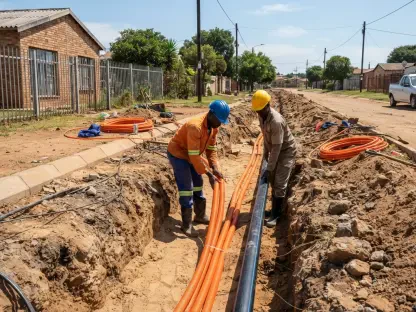

Verizon Communications is navigating a complex landscape as it approaches a critical ex-dividend date and its third-quarter financial report while balancing massive infrastructure debt. This period serves as a defining moment for the telecommunications giant, as investors scrutinize its ability to

Healthcare networks utilize triple-encrypted tunnels to move sensitive patient data without exposing internal systems to the wider public internet. This specific implementation is a primary example of how modern infrastructure must evolve to combat an environment where traditional perimeters have

Success in Malaysia’s digital transition depends on the ability of private carriers to balance joint ownership with the high capital expenditures required for 5G-Advanced. This pivot marks a definitive end to the era where high-speed connectivity was viewed solely as a state-funded utility. By

A comprehensive study of 2.5 million devices revealed that only 16% of operational technology in hospitals is prepared for the transition to post-quantum cryptography. This startling figure highlights a critical vulnerability in the global medical infrastructure, where the digital systems used to

Town meetings saw an overwhelming two-thirds majority vote in favor of creating a Municipal Light Plant, signaling deep dissatisfaction with existing internet options. The arrival of high-speed, fiber-to-the-home connectivity in Falmouth, Massachusetts, represents a landmark shift in the

The total valuation of StarHub’s latest acquisition remains fluid, as it is tied to performance metrics like 5G subscriber volume and average revenue per user. This strategic pivot marks a defining moment in a saturated market where digital infrastructure demands are skyrocketing while profit