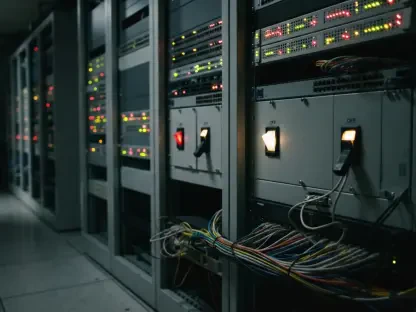

The $99.6 million financial package enables Africell to bypass Chinese hardware vendors in favor of American and allied technology suppliers for its network expansion in Angola. This substantial capital infusion, orchestrated through the U.S. Export-Import Bank, represents a pivotal moment in the ongoing tech-centric competition, moving beyond mere diplomatic posturing into the realm of direct financial rivalry. Africell remains the only American-owned mobile operator on the continent, making it a unique vessel for Washington’s strategic ambitions in the sub-Saharan digital landscape. This move aims to dismantle the regional monopoly held by firms like Huawei and ZTE, which have benefited from state-backed financing for many years. By providing competitive and high-quality alternatives, the United States seeks to redefine the terms of digital engagement in emerging markets while reclaiming territory lost to years of Beijing-led development. The investment is a clear declaration of intent to provide a secure, transparent, and Western-aligned infrastructure.
Strategic Financial Interventions
Reclaiming the Digital Landscape: Challenging Huawei
For nearly two decades, Huawei has systematically built a massive footprint across Africa, currently controlling more than half of the continent’s 5G infrastructure through aggressive market entry and favorable financing terms. The U.S. government views this near-monopoly as a major national security risk, repeatedly alleging that Chinese-built networks could serve as a conduit for state-sponsored espionage and unauthorized data harvesting. These concerns are supported by various legal actions and investigations into misappropriation of trade secrets and technology theft by Chinese entities. By providing Africell with the necessary capital to avoid these vendors, Washington is actively promoting a Clean Network initiative that prioritizes transparency and security. This strategy offers African governments a tangible way to build their digital systems without the potential vulnerabilities inherent in equipment from manufacturers that are legally bound to cooperate with foreign intelligence services, thereby safeguarding their national interests.
Bolstering the American High-Tech Economy
Furthermore, this strategic investment is designed to bolster the American high-tech economy by ensuring that capital from the Export-Import Bank flows directly to U.S.-based technology suppliers and their allies. By mandating the use of Western hardware and software, the loan creates a closed-loop system where geopolitical goals and domestic job creation work in tandem. This approach contrasts sharply with other infrastructure models that often export foreign labor alongside technology, failing to integrate deeply into the local or global economic standards. For the U.S., supporting Africell is a way to maintain leadership in telecommunications innovation while asserting its influence in a region that is rapidly becoming a central node of the global digital economy. The promotion of high-performance standards through these projects ensures that American firms remain competitive in emerging markets, fostering a sustainable ecosystem where technological integrity and economic growth are mutually reinforcing across the entire sub-Saharan landscape.
Modernizing the Angolan Digital Landscape
Angola has emerged as the primary focus of this immediate investment, as the country seeks to modernize its communication networks and diversify its list of international technology partners. The infusion of $99.6 million allows Africell to deploy sophisticated 5G and fiber-optic technologies that provide a high-performance alternative to legacy systems. This expansion is critical for helping the nation move away from vendor lock-in, a scenario where a country becomes overly dependent on a single provider for its vital infrastructure, limiting its future sovereignty and technical flexibility. By introducing American and European equipment into the Angolan market, Africell is creating a more competitive environment that drives innovation and improves the quality of service for millions of subscribers. This diversification is not merely about competition; it is about building a resilient and secure digital backbone that can support Angola’s long-term economic development goals without the risks associated with a monoculture of foreign-supplied technology.
Encouraging Regional Technical Diversity
The success of the Angolan project signals a broader shift to neighboring nations that Western-backed telecommunications solutions are both financially viable and technologically superior. As Africell expands its footprint in other key markets like the Democratic Republic of Congo and Sierra Leone, the ripple effect of this investment is expected to encourage a more balanced digital landscape across West and Central Africa. This trend is essential for regional stability, as it prevents any single global power from exerting undue influence over the continent’s information architecture. Additionally, the presence of a strong American operator encourages further private sector investment from the West, as other firms gain confidence in the security and transparency of the local regulatory environment. By establishing a high standard for network performance and data protection, Africell is effectively setting the stage for a new era of connectivity that prioritizes the needs of African consumers while maintaining the highest levels of global security compliance.
Securing Supply Chains and Resource Access
The broader geopolitical struggle for influence in Africa extends significantly beyond cell towers, touching upon the control of critical minerals and the protection of national data sovereignty. Many of the rare earth elements essential for modern hardware, such as cobalt and lithium, are found in abundance within African borders, making the surrounding digital infrastructure a matter of strategic resource security. By ensuring that American-backed networks handle the logistical and communication data of these mining hubs, Washington aims to protect vital supply chains from foreign surveillance or disruption. This integrated approach recognizes that technological infrastructure is a prerequisite for economic security in an age where hardware manufacturing and data flows are inseparable. Furthermore, securing the privacy of African governments and citizens from external monitoring is a key part of the U.S. value proposition, offering a model of digital governance that respects individual rights and national confidentiality while fostering a secure environment for international trade.
Establishing Long-Term Global Standards
The $99.6 million loan to Africell ultimately established a new precedent for how financial statecraft could be used to achieve long-term geopolitical and technological goals in emerging markets. By successfully integrating American technical standards into the foundational layers of Angola’s network, the U.S. government ensured that future digital growth in the region would naturally align with Western security frameworks. This move transitioned telecommunications from a neutral utility into a strategic asset that linked African economic prosperity directly to Western innovation and data protection standards. For regional leaders, the most effective next step involved prioritizing the adoption of open-access architectures that prevented any future return to a single-vendor dependency. Moving forward, stakeholders should invest in local technical training programs to ensure that African engineers can maintain and expand these high-standard networks independently. This proactive engagement proved that providing high-quality alternatives was the most durable way to ensure a secure and diversified global connectivity landscape.