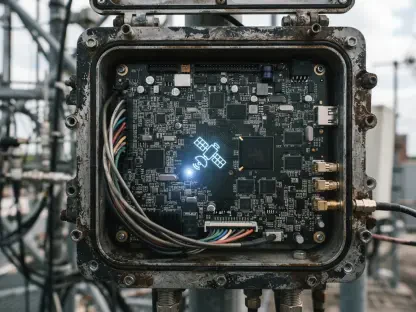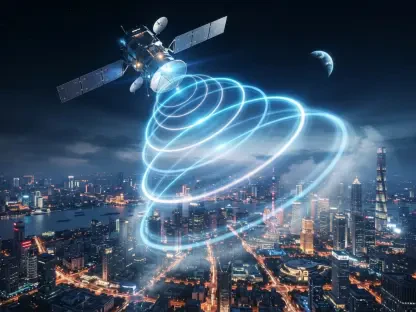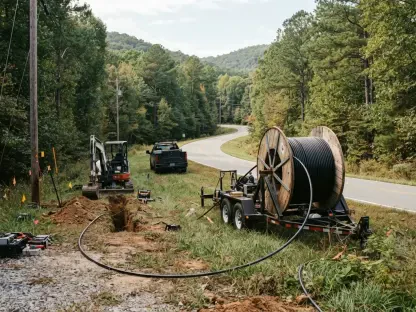

Mobile productions in remote areas like the Scottish Highlands benefit from network APIs that provide prioritized connectivity where fixed infrastructure is nonexistent. This shift represents a fundamental transformation in how live media interacts with telecommunications infrastructure as the industry navigates the complexities of the 2026 landscape. For decades, high-stakes sports and news productions were tethered to heavy, hardwired setups or prohibitively expensive private networks to guarantee signal stability. The promise of 5G has long teased a more mobile, wireless future, yet the practical application often struggled to bridge the gap between theoretical speed and real-world reliability. In crowded environments like stadiums or city centers, network congestion remains a constant threat to signal integrity. To mitigate this, the media sector is evolving toward a model where the network serves as a programmable resource rather than a static utility. By integrating standardized network control directly into the production workflow, broadcasters are managing wireless signals with the same precision they once applied to physical copper and fiber cables. This evolution is driven by a critical need for consistency across various providers and geographic locations, ensuring that a camera operator in one city can rely on the same performance benchmarks as they would in another.
Overcoming Technical Fragmentation: Shifting From Best-Effort Delivery
The transition to wireless production has historically been stalled by significant technical fragmentation and the unreliable nature of public mobile networks. In previous iterations of wireless deployment, solutions frequently relied on proprietary tools that lacked cross-carrier compatibility, forcing production teams to engineer custom, one-off setups for every new location. This lack of uniformity served as a massive barrier to scaling 5G usage for large-scale events, as there was no inherent guarantee that connectivity would remain stable once thousands of fans began saturating local cell sites with their own mobile devices.
Standardized APIs are emerging as the primary solution to this unpredictability, effectively moving the industry away from a “best-effort” delivery model and toward a “guaranteed quality” service. Instead of competing for bandwidth alongside the general public, professional broadcast equipment now communicates directly with the network layer to claim and protect the resources it specifically requires. This shift is vital for live sports, where even a few seconds of latency or a minor drop in signal quality can ruin a broadcast and alienate a global audience. By utilizing these standardized interfaces, broadcasters can finally treat the public network as a reliable component of their core production chain.
Standardized Frameworks: The Role of GSMA Open Gateway and CAMARA
A central pillar of this technological revolution is the widespread adoption of the GSMA Open Gateway initiative, working in tandem with the CAMARA Project. These organizations have successfully created a universal language for telecommunications networks, allowing software developers and broadcast engineers to access deep network capabilities through standardized APIs. By utilizing these common frameworks, the broadcast industry ensures that its tools and applications function seamlessly across any participating telecom operator’s network, regardless of the country or the specific carrier providing the local signal.
The most significant feature within this technical framework is the Quality on Demand (QoD) API. This tool allows a broadcast application to request specific performance traits, such as high upload speeds or ultra-low latency, for a specific hardware device or data stream. For instance, a 4K camera feed can be prioritized over all other traffic on a congested network, ensuring that the footage remains crisp and uninterrupted throughout the live event. This ability to dynamically adjust network resources on the fly is what transforms a standard 5G connection into a professional broadcast tool that meets the rigorous demands of modern media delivery.
Operational Agility: Enhancing Flexibility Through Wireless Integration
For modern media organizations, the push for standardized 5G APIs is fueled by a desire for greater operational flexibility and a significant reduction in logistical overhead. By utilizing public mobile networks that offer predictable, high-tier performance, broadcasters are significantly reducing their reliance on heavy physical infrastructure and miles of complex cabling. This newfound mobility allows for more creative camera angles, such as roaming handhelds in the stands or high-speed tracking shots, and faster response times for breaking news. It brings the audience closer to the action without the logistical nightmare of a traditional wired setup.
Predictability is the ultimate prerequisite for professional broadcasting, and the industry has finally reached a tipping point. While 5G has been used for basic newsgathering for years, it is only recently that the technology has become robust enough to support complex, multi-camera remote productions. With standardized APIs providing a “safe way” to manage connectivity, broadcasters are now able to take full professional responsibility for delivering high-quality live content to millions of viewers over a wireless link. They can do so with the confidence that the connection will not fail under the pressure of a major live event.
The Telecom Evolution: Scalable Models and Quality on Demand
From the perspective of telecommunications operators, the move toward standardized APIs is centered on simplifying how they package and sell network quality to high-end clients. In the past, providing a guaranteed service level often required complex engineering workarounds or the deployment of bespoke private networks, which were both expensive to maintain and difficult to scale. By offering “Quality on Demand” as a simple, software-driven request, operators can provide a much more elegant and flexible product to their media clients while maximizing the efficiency of their existing infrastructure.
This new commercial model allows for a more efficient use of network resources, where broadcasters can “book” specific network characteristics for the duration of an event, similar to making a hotel or travel reservation. This is particularly useful for temporary or remote locations—such as a rural news story or a pop-up sporting event—where permanent infrastructure is nonexistent or too costly to install. It creates a scalable system where operators can monetize their network’s high-performance capabilities without needing to build custom, hardware-heavy solutions for every single project that comes across their desk.
Addressing Production Needs: Prioritizing Communication and Reliability
While high-quality video is the most obvious requirement for any broadcast, network control is equally important for other critical production elements that often go unnoticed by the viewer. One of the most significant pain points identified by industry experts is the reliability of wireless intercom systems. If a director cannot communicate with a camera operator because the intercom has failed due to network congestion, the entire production comes to a halt, regardless of the video feed’s quality. Ensuring these secondary but vital data streams remain active is a top priority for modern crews.
Standardized APIs allow operators to tailor network priorities to meet these varied needs, ensuring that low-bandwidth but high-priority data like intercom audio and tally lights are protected alongside high-bandwidth video feeds. This holistic approach to network management ensures that every part of the production ecosystem—from the cameras to the crew communications—functions in perfect harmony. By solving these practical, ground-level challenges, the technology has gained the trust of the technical crews who rely on it every day to execute flawless live broadcasts under demanding conditions.
Industry Consensus: Establishing Global Benchmarks for 5G Production
The consensus among broadcasters, telecom operators, and technology partners is clear: the future of live production is wireless, and standardization is the only viable path forward. There is a collective understanding that open technology is the primary driver of widespread adoption. Without a unified set of APIs, the industry would remain stuck in a fragmented landscape where every production requires a unique, one-off technical solution that is both expensive and difficult to replicate across different regions or network providers.
When production equipment and the network are able to “talk” to one another through a common, standardized language, the result is a truly integrated and dynamic system. This creates a positive cycle where increased trust in 5G leads to more investment in wireless tools, which in turn encourages operators to develop even more advanced network control features. This unified vision ensures that the industry is not just chasing a passing trend, but building a sustainable, long-term foundation for the next generation of media production and distribution on a global scale.
Future Implementation: Driving Scalable Innovation in Media Landscapes
The industry successfully transitioned toward an API-centric model, effectively proving that software-defined networking is the key to unlocking the full potential of 5G for media. Broadcasters recognized that the “snowball effect” of these standardized tools would continue to transform the media landscape as they were tested and refined across different regions. The ability to deploy a professional broadcast team with minimal equipment and guaranteed connectivity democratized high-end production, making it accessible for a wider range of events and independent creators who previously lacked the budget for traditional satellite or fiber links.
Moving forward, organizations should prioritize the integration of CAMARA-based APIs into their standard equipment refresh cycles to ensure full compatibility with global network standards. Technical teams must also focus on training staff to manage these programmable resources, shifting the focus from hardware troubleshooting to software-defined signal management. The revolution of 5G broadcasting through standardized APIs ultimately empowered broadcasters to innovate without being held back by the limitations of their physical environment. This transition ensured that the current era of live sports and news became more agile, more creative, and significantly more reliable than the hardware-dependent era that preceded it.