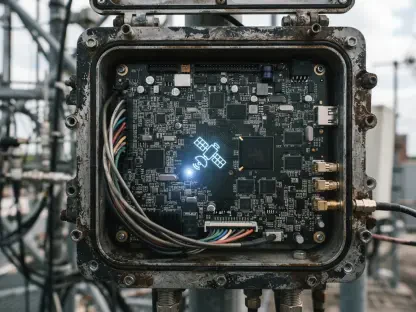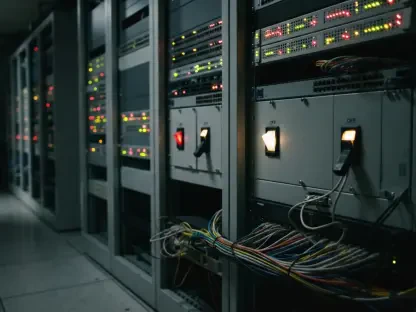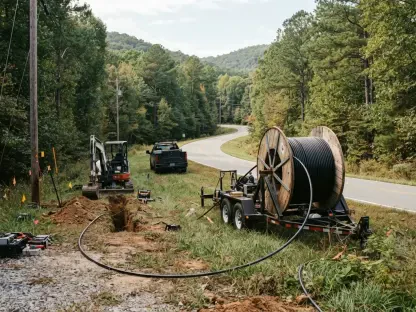

The announcement on September 10, 2026, by STL, formerly known as Sterlite Technologies, represents a pivotal turning point for the North American data center infrastructure market. The move toward 48F-to-576F fiber counts reflects the shifting traffic patterns within AI facilities where east-west data movement is the primary performance driver. As an Indian-based fiber and networking supplier, STL has successfully navigated the complex regulatory landscape of the United States to offer a new line of plenum-rated fiber trunk assemblies that meet the most stringent safety and performance requirements. This certification is not merely a formality but a necessary strategic maneuver in an era where the global supply chain for optical components is under extreme duress. Hyperscale technology companies are currently deploying capital at an unprecedented rate, while structural shortages in raw materials like germanium have created significant hurdles for traditional vendors. By securing the Optical Fiber Nonconductive Plenum rating, STL has effectively positioned itself as a primary alternative for builders of high-density AI data centers who require immediate, reliable, and compliant connectivity solutions.
Advancements in Fiber Architecture and Deployment
High-Density Ribbon Technology: Innovation in Fiber Packing
The rapid expansion of artificial intelligence clusters has forced a complete rethink of how fiber optic cables are physically constructed to accommodate higher density in limited spaces. STL’s product range utilizes Intermittently Bonded Ribbon technology, a design that addresses the inherent rigidity and bulkiness of traditional ribbon cables. Conventional ribbons are continuously bonded along their length, making them difficult to manipulate in tight corners or narrow conduits found in modern server racks. In contrast, intermittently bonded designs bond the fibers at specific intervals, allowing the ribbon to be folded, bundled, or rolled with significantly more flexibility. This architectural shift enables engineers to pack hundreds of fibers into a footprint that would have previously only held a fraction of that capacity. The flexibility of these ribbons ensures that they can be routed through dense cable management systems without risking micro-bends or signal attenuation, which are critical concerns when operating at the high speeds required for massive GPU interconnects.
Beyond the physical flexibility, the intermittently bonded approach facilitates much easier handling for technicians during the preparation process. Because the fibers are only joined at specific points, they can be separated easily for individual splicing or termination when necessary, although the primary goal of this product line is to provide a comprehensive ribbon-based solution. The move to fiber counts ranging from 48 to 576 reflects the sheer scale of the bandwidth required to support modern neural network training. In these environments, thousands of processing units must communicate simultaneously, creating a physical layer bottleneck that only high-density ribbon technology can effectively alleviate. By focusing on this specific mechanical innovation, the manufacturer has ensured that its cables can fit into existing data center footprints while providing a massive upgrade in total throughput capacity. This balance of physical compactness and high-performance throughput is the cornerstone of the next generation of AI-ready infrastructure.
Efficiency Through Pre-Termination: Reducing Field Bottlenecks
In the high-pressure environment of data center construction, the speed at which a facility can be brought online is directly tied to its eventual return on investment. Historically, the installation of high-count fiber trunks was a labor-intensive process that relied heavily on field splicing, where specialized technicians fused individual glass fibers together on-site. This method is increasingly becoming a liability due to the persistent shortage of skilled labor and the sheer volume of connections required in an AI-centric facility. STL has addressed this challenge by offering pre-terminated trunk assemblies, which arrive at the construction site with connectors already installed, polished, and rigorously factory-tested. This “plug and play” approach eliminates the need for time-consuming and error-prone field work, allowing general contractors to deploy complex networking fabrics in a fraction of the time it previously took. For hyperscalers, where every day of delay represents millions of dollars in lost compute revenue, this efficiency is a critical competitive advantage.
Furthermore, factory-terminated assemblies provide a level of performance consistency that is difficult to achieve in the field. Every connector is tested in a controlled environment to ensure it meets strict insertion loss and return loss standards before it ever leaves the manufacturing floor. In an AI environment where data is moving at 800G and beyond, even minor imperfections in a fiber connection can lead to retransmissions and latency spikes that degrade the performance of the entire cluster. By moving the termination process into a precision manufacturing facility, the risks associated with dust, humidity, and human error are significantly mitigated. This reliability, combined with the rapid deployment timelines enabled by pre-termination, makes these trunk assemblies an essential component for any organization looking to scale its AI capabilities quickly. The reduction in on-site labor requirements also helps to lower the overall project risk, as there are fewer variables to manage during the final stages of the build-out.
Economic Drivers: The Fuel for the AI Infrastructure Boom
The Explosion of Capital Expenditure: Scaling Hyperscale Investments
The current technological landscape is defined by a historic surge in capital expenditure as the world’s largest technology companies race to secure dominance in the artificial intelligence sector. Projections for late 2026 suggest that hyperscale spending on AI and cloud infrastructure will exceed $700 billion, representing a massive leap from the already high levels seen in previous years. This financial commitment is led by a small group of giants, including Amazon, Google, Meta, and Microsoft, all of whom are investing heavily in the physical foundations of the digital economy. A significant portion of this capital is no longer going toward traditional server hardware but is instead being diverted into the massive networking fabrics required to link tens of thousands of GPUs together. This shift has transformed fiber optic cabling from a secondary utility into a primary strategic asset, as the network is now the literal backbone of AI performance.
This influx of capital has created a unique market dynamic where demand for high-quality, certified fiber components far outstrips the available supply. Traditional manufacturers are struggling to keep pace with the sheer volume of orders, leading to extended lead times that can disrupt multi-billion-dollar construction schedules. STL’s entry into the North American market with a certified product line provides these hyperscalers with a much-needed additional source of supply. The concentration of investment into a few massive players also means that these companies have the power to dictate standards and push for innovations that suit their specific needs, such as the high-fiber-count trunks now being certified. As these companies continue to build out larger and more complex facilities, the demand for specialized, plenum-rated connectivity will only grow, cementing the role of suppliers who can meet these rigorous industrial requirements at scale.
Transitioning to 800G: Meeting Modern Networking Standards
The transition to higher networking speeds is another primary driver behind the demand for advanced fiber solutions. By the end of 2026, 800G optical modules and even higher-speed iterations are expected to account for more than 60% of total optical transceiver shipments. These high-speed modules are necessary to handle the immense data throughput required by modern AI models, but they also bring significant physical challenges. Higher speeds typically result in increased heat generation within the server racks, which in turn places more stress on the cooling and airflow systems of the data center. This is why the plenum rating of fiber trunks has become so critical; cables installed in the air-handling spaces must be able to withstand higher temperatures and meet strict fire safety codes to ensure they do not become a hazard in these high-power environments.
The move to 800G also necessitates a much denser cabling configuration to manage the increased number of lanes required for data transmission. Traditional cabling methods simply cannot keep up with the physical space requirements of these high-speed clusters. The introduction of 48F-to-576F trunk assemblies allows data center operators to streamline their architecture, reducing the total number of cables that need to be managed while simultaneously increasing the bandwidth available to each rack. This synergy between the optical transceiver market and the physical fiber infrastructure market is essential for the continued evolution of AI compute. Without the corresponding advancements in fiber density and fire-rated jacketing, the hardware transition to 800G would be stalled by physical limitations within the data hall. STL’s focus on providing a certified solution that specifically addresses these high-speed networking needs ensures that its products remain relevant as the industry pushes toward even faster standards.
Identifying and Overcoming Critical Supply Chain Obstacles
Resource Scarcity: Navigating Germanium and Preform Constraints
One of the most significant challenges facing the fiber optic industry in 2026 is the acute shortage of essential raw materials, most notably germanium. This rare element is vital for controlling the refractive index of the glass used in high-performance optical fibers, and its scarcity has led to a dramatic spike in production costs. Over the past year, the industry has seen fiber prices increase by as much as 70%, driven by both resource shortages and the high energy costs associated with manufacturing. Furthermore, the production of optical preforms—the large glass cylinders from which fiber is drawn—is a highly specialized process with long lead times for capacity expansion. It typically takes between 18 and 24 months to build and commission a new preform manufacturing facility, meaning that the capacity being added today was planned nearly two years ago during the initial stages of the AI boom.
These constraints have created a bottleneck that threatens the construction schedules of data centers globally. Because STL maintains its own manufacturing capabilities and has strategically managed its supply chain, it is able to provide a degree of stability in a volatile market. The ability to produce high-count fiber trunks in-house allows the company to bypass some of the delays that plague smaller vendors who rely on third-party preform suppliers. As the industry moves through the end of 2026, the market is just beginning to see the relief from capacity expansions initiated in late 2024, but full supply stabilization is not expected until well into the next year. In this environment, having a reliable, certified supplier that can navigate these resource constraints is invaluable for hyperscale procurement teams who are trying to de-risk their infrastructure projects and maintain their aggressive growth targets.
Diversification of the Vendor Pool: Challenging Industry Incumbents
The structural shortages in the optical supply chain have forced hyperscale technology companies to rethink their procurement strategies entirely. In the past, these organizations might have relied on just two or three primary “blue-chip” suppliers like Corning or CommScope to fulfill their global needs. However, the current environment of scarcity has made such a narrow vendor base a significant risk. To mitigate this, major data center operators are now qualifying a much wider pool of specialized manufacturers, often expanding their approved vendor lists to include five to seven different companies. This shift toward vendor diversification has opened a major window of opportunity for STL to compete for massive contracts that were previously inaccessible to all but the largest incumbents. By securing the necessary US certifications, STL has removed the final barrier to entry for many of these procurement teams.
Competing with established giants requires more than just a lower price; it requires a commitment to the specific safety and performance standards of the North American market. The attainment of the NFPA 262 fire-safety standard is a direct challenge to the dominance of domestic incumbents, as it proves that an international supplier can meet the same rigorous criteria as a local manufacturer. This “certification-first” strategy allows the company to pitch itself as a direct, drop-in replacement for existing solutions, minimizing the friction for engineers and architects who are already familiar with US building codes. As the market continues to diversify, the presence of an agile and certified player like STL provides a “safety valve” for the industry, ensuring that a delay at one manufacturer does not bring an entire multibillion-dollar AI project to a standstill. This move toward a more competitive and diverse supply chain is a healthy development for the industry as a whole, driving innovation and providing more options for infrastructure builders.
Evolutionary Trends: The Path Forward for Connectivity
From Enterprise to the AI ErRedefining Networking Roles
The evolution of data center cabling reflects the broader transformation of the computing industry over the past two decades. In the early enterprise era, networking was characterized by relatively low fiber counts and a heavy reliance on field-spliced connections, as the primary goal was simply to connect individual servers to a central network. The subsequent cloud era introduced the concept of hyperscale modularity, where pre-terminated systems and standardized architectures became the norm to support the rapid scaling of web services. Today, the industry has entered the AI era, a phase defined by extreme density and a zero-tolerance policy for deployment delays. In this current environment, the networking fabric is no longer viewed as a separate utility but is instead integrated into the compute architecture itself, with its performance being just as critical as the speed of the processing chips.
This shift has changed the fundamental requirements for fiber optic trunks. In an AI data center, the volume of east-west traffic—data moving between processors—is an order of magnitude higher than the north-south traffic typical of traditional cloud environments. This necessitates a massive increase in the number of fiber strands connected to each rack, which is why the 48F-to-576F trunks have become the new industry standard. The network is now the primary factor determining how efficiently a large-scale training model can operate. If the physical infrastructure cannot support the required bandwidth or introduces too much latency, the expensive GPU clusters will sit idle, wasting valuable capital. STL’s focus on high-density ribbon technology is a direct response to this evolutionary pressure, providing the physical substrate required for the high-speed communications that define the AI era.
Qualification Cycles: Ensuring Performance and Risk Mitigation
While securing US certification is a landmark achievement, it is only the first step in a long and rigorous process to become a standard supplier for major technology firms. Hyperscalers maintain a detailed Approved Vendor List process that involves much more than just checking a box for safety standards. Potential suppliers must undergo extensive factory audits to ensure quality consistency, and their products are often subjected to months of sample testing and pilot deployments in non-critical environments before being cleared for use in primary data halls. This qualification phase is designed to identify any potential points of failure before a product is deployed at a scale involving millions of fibers. For STL, the next several months will be focused on navigating these audits and proving that their manufacturing processes can meet the extreme volume requirements of the world’s largest tech companies.
Despite the entry of new certified players, the economic landscape for fiber remains challenging. Analysts expect fiber prices to remain elevated through at least mid-2027 due to the lag in raw material production and the continued intensity of demand. However, the presence of an additional certified supplier provides a vital hedge for procurement teams against lead-time delays and supply chain shocks. By the time the first major North American design wins are announced for these new trunks, the industry will have a clearer picture of how well these products perform in live, high-pressure AI environments. This period of qualification and pilot testing is essential for building the trust required to displace long-standing incumbents. Ultimately, the successful integration of these trunks into the North American supply chain will provide a more resilient and flexible infrastructure for the global AI build-out.
Strategic Imperatives for Next-Generation Connectivity
The global infrastructure landscape in late 2026 was defined by a state of productive friction, where the desire for rapid technological expansion was constantly tested by the physical limitations of the supply chain. The industry recognized that every component of the artificial intelligence ecosystem, from high-bandwidth memory to power transformers and fiber optic trunks, represented a potential point of failure. Shortages in critical components meant that project timelines were often dictated by the slowest-moving part of the supply chain, creating a precarious environment for companies attempting to maintain aggressive construction schedules. In this context, the move by STL to secure US certification for its high-density plenum trunks was viewed as a strategic relief valve that offered hyperscalers a way to mitigate the risks associated with a crowded and underserved market.
The shifts that occurred in the physical layer of the network demonstrated that the success of AI was as much about civil engineering and material science as it was about software and silicon. By meeting the strict fire codes of the United States and offering pre-terminated, high-density solutions, the manufacturer addressed the primary bottlenecks of safety compliance and labor availability. These developments provided a clear roadmap for other international suppliers looking to enter the North American market, emphasizing that regulatory alignment and technical innovation were the only viable paths to competition. As the industry moved forward, the integration of these advanced fiber solutions became a standard requirement for any facility aiming to support the next generation of 800G and 1.6T networking. The proactive steps taken during this period ensured that the physical foundations of the digital economy were robust enough to sustain the ongoing surge in global compute demand.