
The move from centralized state-controlled satellite hubs to decentralized LEO frameworks marks a radical transformation in the Southern African telecommunications landscape. This shift represents more than a technological upgrade; it is a fundamental realignment of how data traverses the region, moving away from the legacy infrastructure established in 1985 at the Mazowe Earth Station. For decades, Zimbabwe relied on Geostationary Earth Orbit satellites that, while revolutionary at the time, were plagued by high latency and restricted capacity. In the early days of the digital age, international loads were managed through terminals offering a mere 1 Mbps, a bottleneck that stunted economic growth and digital literacy for a generation. Today, the introduction of advanced Low Earth Orbit technology has introduced terminals with throughput capabilities that exceed the nation’s entire late-1990s capacity by a factor of one hundred. This creates a powerful synergy between space-based assets and domestic networks.
Strategic Spectrum Allocation: Hardware and Efficiency
Maximizing the potential of modern LEO constellations requires a sophisticated shift toward high-frequency spectrum engineering, specifically targeting the Q/V bands. While standard Ku and Ka bands provided the initial groundwork for satellite broadband, they are rapidly reaching saturation as subscriber density increases across major hubs like Harare and Bulawayo. The adoption of Q/V band feeder allocations offers ultra-wide channel widths that enable arrayed tracking dishes to achieve capacities exceeding 100 Gbps per earth station cluster. This transition is particularly critical for supporting the latest generation of Starlink satellites, which boast internal switching capacities of over 1 Tbps. By leveraging these frequencies, ground stations can maintain stable, high-throughput links even during peak usage hours, ensuring that the surge in demand expected through 2027 does not degrade service quality for enterprise clients who depend on consistent performance.
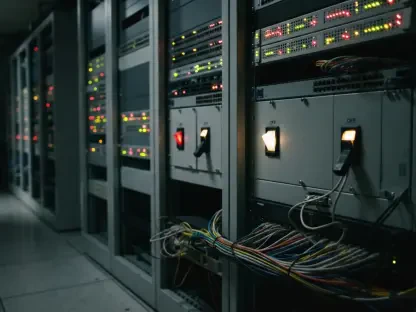
Deploying local Q/V band ground stations allows for the direct offloading of massive data volumes into Zimbabwe’s terrestrial fiber backbone, a method that is significantly more efficient than relying solely on inter-satellite laser links. Although laser-based communication between satellites is a marvel of modern physics, it can introduce unnecessary complexity and routing overhead when traffic is destined for local servers. Direct terrestrial offloading ensures that the vast capacity of orbiting platforms is immediately integrated into the national grid, creating a high-speed conduit for data flow. This technical architecture effectively turns the satellite constellation into a vertical extension of the existing fiber network rather than a separate, siloed entity. As hardware upgrades continue through the current deployment cycle, the focus remains on building these high-capacity gateways to serve as the primary interface between the vacuum of space and physical glass fibers.
Terrestrial Integration: Partnering with National Backbones
The success of this hybrid connectivity model hinges on a deep integration with established terrestrial providers, most notably Liquid Intelligent Technologies and TelOne. Liquid’s extensive network, stretching over 26,000 kilometers, serves as the primary long-haul routing layer that anchors satellite traffic to the physical geography of the region. A direct physical connection between the Starlink Point of Presence in Harare and Liquid’s regional backbone facilitates resilient transit across the Southern African Development Community. Meanwhile, the state-owned provider TelOne has focused on expanding its backbone to accommodate 100G+ wavelengths along critical corridors like the Beitbridge route. This expansion is vital for handling the backhaul requirements generated by thousands of new LEO terminals. By combining the agility of satellite deployment with the massive capacity of long-haul fiber, the country ensures its digital foundation is both flexible and robust.
Resilience and redundancy are further bolstered by the participation of secondary fiber networks, including those managed by PowerTel, Paratus, and Dark Fibre Africa. The high-capacity DWDM links between Plumtree and Bulawayo, currently operating at 800 Gbps with the potential to scale to 10 Tbps, provide a crucial cross-border conduit that connects the domestic grid to international gateways in Botswana and Zambia. Additionally, Dark Fibre Africa’s utilization of railway servitudes for its 1,500-kilometer open-access backbone offers an essential layer of security. If a primary fiber route experiences a technical failure, the integrated network can automatically reroute Starlink-originated traffic through these alternative paths without a perceptible drop in service. This multi-layered approach transforms the nation into a central hub for intercontinental data traffic, linking the local Starlink infrastructure to global subsea systems like the Google Umoja cable.
Localizing Content: Peering and Future Roadmap
To optimize the available satellite bandwidth, the implementation of Edge Content Delivery Networks within the Harare Point of Presence is a technical necessity. By hosting localized caches for high-traffic platforms such as Netflix, Meta, and Google, the network can serve up to 70% of routine data requests within the country’s borders. This edge approach means that when a user in Mutare streams a popular video, the data is pulled from a local server in Harare rather than being retrieved via an expensive and latency-inducing satellite link to a server in Europe. This significantly reduces the strain on the satellite feeder links, preserving that specialized capacity for unique, non-cached data requests and real-time communications. Furthermore, localized caching improves the overall user experience by providing nearly instantaneous load times for the most popular internet services, effectively making the satellite connection feel as fast as a direct fiber link.
The integration of space-based systems into the national grid concluded with the successful commissioning of the Harare Point of Presence. Engineering teams finalized the connection of tracking arrays to the existing terrestrial fiber, ensuring that data throughput remained stable throughout the recent expansion phase. This unified vision transitioned the country from a satellite-dependent state into a regional leader for hybrid connectivity. Looking forward, the next phase focuses on the deployment of specialized rural gateways to extend these high-speed benefits to underserved farming and mining communities. By maintaining a collaborative framework between private innovators and state regulators, the telecommunications sector established a foundation for sustained economic resilience. These efforts solidified the role of the network as a vital artery for the digital economy, providing the low-latency infrastructure required for next-generation financial and educational services across the region.