
The transition from the 'racetrack' geometry of micro-cavities to the 'highway' geometry of fibers represents a fundamental shift in the scalability of quantum networking. In a groundbreaking collaborative effort between the Max Planck Institute for the Science of Light and Leibniz University
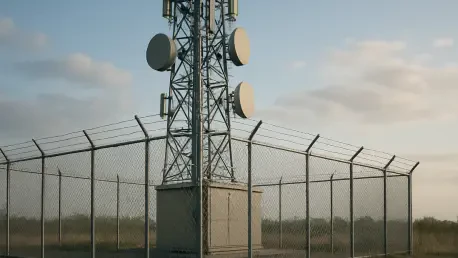
Emergency management officials are now working to eliminate single points of failure by contracting for independent internet paths from Comcast, Breezeline, or Verizon. This strategic shift in infrastructure management represents a critical pivot for St. Mary’s County as it seeks to fortify its

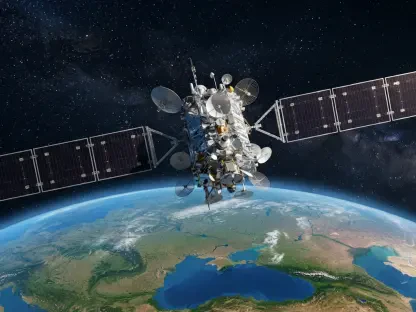
The transition of satellite connectivity from a niche emergency tool to a standard consumer expectation has forced traditional rivals into an unprecedented era of cooperation. As the digital divide shifts from terrestrial cables to the vacuum of low-Earth orbit, the European telecommunications

The Intersection of Silicon Architecture and Next-Generation Connectivity The invisible tug-of-war for wireless dominance is currently being fought not just across airwaves, but within the microscopic architecture of the silicon chips powering modern base stations. As the telecommunications

The speed at which telecommunications infrastructure has evolved from passive signal transmission to cognitive, self-aware systems is unprecedented in the history of industrial technology. A critical challenge in the radio access network involves bridging the gap between theoretical AI models and

State regulators are shifting their focus to the cumulative effects of technology campuses on Wisconsin’s water quality and the overall health of the local environment. This transition follows a landmark legal settlement that addresses the rapid expansion of massive infrastructure projects, most