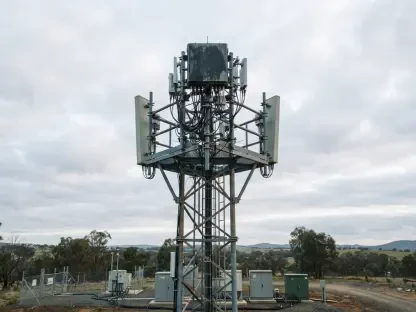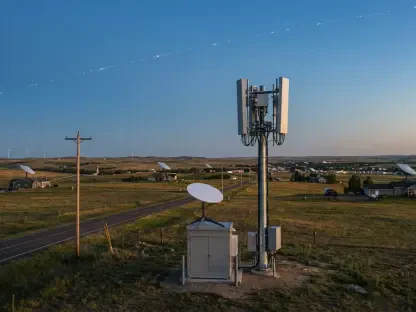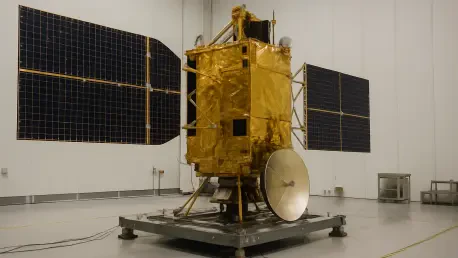

A new joint venture between Rakuten Group and AST SpaceMobile aims to eliminate dead zones across the Japanese archipelago by connecting standard smartphones directly to low Earth orbit satellites. This monumental initiative, formally established as Rakuten AST, represents a decisive pivot in how national telecommunications infrastructure is conceived and funded in the modern era. By securing a massive ¥148 billion grant from the Japanese Ministry of Internal Affairs and Communications, the project has transitioned from a theoretical partnership into a fully funded strategic priority. This capital injection, distributed through the Japan Low Earth Orbit Satellite Communications Project, underscores the government’s commitment to ensuring that every citizen remains connected, regardless of their proximity to traditional cellular towers. The venture serves as a high-stakes response to the inherent limitations of ground-based networks, which struggle to provide consistent coverage across Japan’s mountainous regions and remote island chains.
Strategic National Interests and Economic Security
Safeguarding Communication: Disaster Resilience and Sovereignty
One of the primary drivers for this initiative is Japan’s geographical vulnerability to frequent natural disasters, such as typhoons and earthquakes, which can instantly render terrestrial communication systems inoperable. The establishment of a satellite-based layer provides an essential emergency backup that operates independently of ground stations, ensuring that first responders and the general public maintain connectivity during the most critical moments. This framework represents more than just a technical upgrade; it is a fundamental shift toward a sovereign communication model where the nation is not solely dependent on a fragile network of physical towers. By utilizing low Earth orbit satellites that communicate directly with existing mobile devices, the venture creates a resilient umbrella of coverage that remains unaffected by seismic activity or extreme weather patterns. This approach ensures that emergency services can coordinate relief efforts even when the traditional grid is compromised, significantly enhancing the overall safety and security of the population.
Corporate Governance: Domestic Control and Regulatory Alignment
The corporate structure of the Rakuten AST venture is meticulously designed to protect Japan’s national interests while leveraging global technological expertise. With Rakuten Group holding a majority 51% stake in the voting rights, the network remains firmly under domestic control, ensuring that operational decisions align with Japanese regulatory standards and national security protocols. While the American firm AST SpaceMobile provides the sophisticated satellite hardware, the management of connectivity services and ground station equipment stays in the hands of Japanese leadership under CEO Ryoji Osaka. This balance of power is crucial for maintaining data privacy and ensuring that the network serves the specific needs of the Japanese market first. By fostering this collaborative yet domestically focused environment, the venture effectively mitigates the risks associated with total reliance on foreign-managed global constellations. This strategic alignment allows for a more integrated approach to spectrum management and domestic law enforcement requirements, providing a level of oversight that is often missing in international satellite agreements.
Technological Innovation and Network Performance
Satellite Engineering: High-Power Phased Arrays and AI Integration
At the technical core of the project lies AST SpaceMobile’s proprietary technology, which features the largest phased array antennas ever launched into low Earth orbit. These massive structures, covering approximately 223 square meters, are specifically engineered to capture the relatively weak signals emitted by standard smartphones from hundreds of miles above the planet. The ability to bridge this distance without specialized hardware on the ground is a groundbreaking achievement in aerospace engineering, effectively turning a satellite into a cell tower in space. Beyond the hardware, the integration of artificial intelligence plays a vital role in managing the complex task of signal distribution across shifting geographical terrains. AI-driven systems are used to optimize beamforming and spectrum allocation, ensuring that the network can handle high-capacity data traffic with minimal interference. This technological synergy allows the satellites to provide downlink speeds that rival traditional 4G LTE ground networks, marking a significant milestone in the pursuit of ubiquitous high-speed mobile connectivity for the entire nation.
Edge Computing: Enhancing Efficiency and Latency Reduction
The partnership is pushing the boundaries of satellite functionality by exploring the implementation of AI edge computing directly within the orbital constellation. By moving data processing tasks from ground-based servers to the satellites themselves, the network can significantly reduce latency and improve the overall efficiency of communication flows. This innovation is particularly important for real-time applications such as voice calls and interactive emergency services, where even a slight delay can be detrimental. The venture utilizes Rakuten’s 1.7GHz spectrum, allowing for a seamless transition between terrestrial and space-based signals without requiring any modifications to the user’s device. This sophisticated approach to network architecture ensures that the transition between towers and satellites is virtually invisible to the consumer, providing a unified experience. By focusing on low-latency performance and intelligent data handling, the project sets a new standard for how space-based infrastructure can complement existing cellular ecosystems, creating a more robust and responsive digital environment for users throughout the Japanese archipelago.
Market Positioning and Implementation Roadmap
Global Competition: Navigating the Direct-to-Device Landscape
The launch of the Rakuten AST project occurs within an increasingly competitive global landscape, where industry leaders like SpaceX and emerging firms such as Firefly Aerospace are racing to dominate the satellite-to-phone market. However, the Japanese venture distinguishes itself through its unique combination of private enterprise agility and substantial state-backed funding. The early procurement of significant capital through the J-LEO project has provided the venture with a first-mover advantage, allowing it to accelerate testing and procurement schedules. This strategy highlights a growing trend among nation-states to subsidize sovereign satellite layers as a means of protecting domestic telecommunications from the volatility of global market shifts. By securing its own dedicated constellation capacity, Japan is positioning itself as a leader in the next generation of mobile connectivity, creating a replicable model for other countries seeking technological independence. The project effectively demonstrates that success in the aerospace sector is no longer just about technical prowess, but also about the ability to align national security goals with commercial innovation.
Future Considerations: A Transformative Shift in Mobile Strategy
The conclusion of the initial phase of the Rakuten AST agreement marked a transformative moment for the Japanese telecommunications industry, as the roadmap for full operational deployment moved toward its final stages. By establishing a commercial-environment testing schedule for the current year, the venture effectively demonstrated its commitment to delivering tangible results within an ambitious timeframe. The project successfully integrated AST’s massive phased array technology with Rakuten’s domestic operational expertise, proving that space-based cellular service was a viable solution for achieving total geographical coverage. This initiative provided a coherent blueprint for how nations achieved technological sovereignty in an increasingly interconnected world, while also offering a scalable framework for global mobile network operators. Looking ahead, the focus shifted toward expanding these capabilities to support more advanced data applications and ensuring long-term sustainability in orbit. The successful deployment of this network served as a foundational element of Japan’s broader security strategy, proving that the integration of aerospace and telecommunications was essential for national resilience in the digital age.