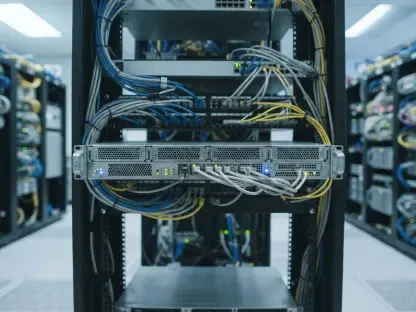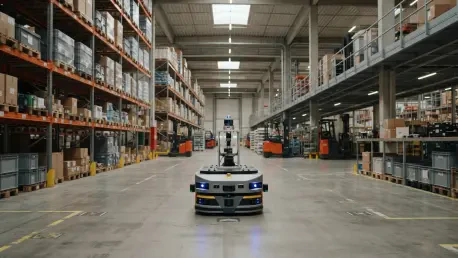

The integration of 5G technology provides the ultra-reliable, low-latency communication required for synchronizing robots with warehouse management systems. In the current industrial climate, the push toward full automation has accelerated significantly, transforming warehouse floors into high-tech hubs where manual labor is increasingly augmented or replaced by autonomous systems. This shift is driven by the necessity for precision and the persistent challenge of labor availability in the logistics sector. As facilities become more complex, the reliance on stable wireless connections becomes a fundamental requirement rather than a technological luxury. The success of these robotic deployments depends on an invisible web of connectivity that must withstand the harsh realities of an industrial environment. Without a robust strategy for wireless reliability, the physical capabilities of advanced robotics are hindered, leading to bottlenecks and safety concerns. Consequently, engineers are focusing on a holistic approach that merges mechanical design with advanced electromagnetic engineering to ensure continuous uptime and safe operations.
Navigating the Evolution of Transport Robotics
Comparing Distinctive Features: AGVs and AMRs
Industrial transport robotics are broadly categorized into two main groups, each serving a specific functional role within the factory. Automated Guided Vehicles, or AGVs, represent the foundational stage of this technology, moving along fixed and predictable paths. These systems rely on physical or semi-physical guidance mechanisms such as magnetic tape, wire sensors, or laser-reflective markers placed strategically around the facility. Their operation is characterized by consistency, making them ideal for repetitive tasks where the environment is static and the routing requirements do not change. However, because they are bound to these predefined tracks, they lack the flexibility to adapt to unexpected obstacles. If a pallet is left in its path, an AGV will typically stop and wait for manual intervention, which can halt production lines for significant periods. Despite this limitation, AGVs remain a staple in heavy manufacturing where high-volume, repetitive transport is the primary goal.
Integrating SLAM: Advanced Navigation Requirements
In contrast to the rigid nature of AGVs, Autonomous Mobile Robots, or AMRs, offer a sophisticated leap in navigation and intelligence. These machines utilize Simultaneous Localization and Mapping, commonly known as SLAM, to navigate through dynamic environments without the need for fixed markers. By using an array of on-board sensors, including high-resolution cameras and LiDAR systems, AMRs build and update internal maps of their surroundings in real time. This capability allows them to detect obstacles and calculate alternative routes instantly, ensuring that a single blocked aisle does not disrupt the entire workflow. The artificial intelligence integrated into these units enables them to interact safely with human workers and other machinery, making them the preferred choice for complex fulfillment centers. As global e-commerce continues to grow from 2026 to 2028, the agility provided by AMRs becomes indispensable for companies that must manage diverse inventories and rapidly shifting logistics demands across their facilities.
Architecting a Multi-Layered Connectivity Strategy
Implementing the Hierarchy: Wireless Technologies
A resilient robotic fleet requires a sophisticated hierarchy of wireless protocols to handle the diverse data streams generated during operation. At the base of this hierarchy, Bluetooth technology is frequently utilized for low-power sensor communications and short-range data exchanges between peripheral devices. This is complemented by Wireless LAN, or Wi-Fi, which remains the workhorse for high-bandwidth applications. Wi-Fi networks are essential for transmitting heavy data loads, such as live video feeds from on-board cameras and complex positioning telemetry. However, standard Wi-Fi can struggle with handoff issues as robots move between access points in a vast warehouse. To bridge these gaps, engineers are increasingly turning to low-power wide-area networks, such as LoRaWAN or cellular variants like LTE Cat.M1. These technologies provide long-range connectivity for sensors that require minimal power, ensuring that even isolated areas of a facility remain connected to the central control network.
Leveraging 5G: Real-Time Operational Control
The most critical layer of the modern connectivity stack is the implementation of 5G and Private 5G networks, which provide the backbone for real-time coordination. These networks offer Ultra-Reliable Low-Latency Communications, a feature that is absolutely vital for synchronizing autonomous fleets with Programmable Logic Controllers and Warehouse Management Systems. By reducing latency to a matter of milliseconds, 5G ensures that commands from a central server are executed by the robots with near-instantaneous precision. This level of synchronization is necessary for complex maneuvers, such as collaborative picking or the orchestration of hundreds of robots in a single zone. Private 5G networks, in particular, allow facility managers to maintain complete control over their spectrum, eliminating the congestion often found on public frequencies. This dedicated infrastructure provides the high throughput and security needed to protect sensitive operational data while maintaining a seamless flow of information.
Overcoming Environmental and Signal Obstacles
Managing Interference: Electromagnetic Challenges
The industrial floor is an inherently hostile environment for radio-frequency signals due to the prevalence of heavy machinery and metallic structures. These physical features often lead to signal shielding, where massive steel beams or storage racks block wireless waves entirely, creating dead zones for robotic communication. Additionally, the reflection of signals off metallic surfaces creates a phenomenon known as multipath interference. In this scenario, radio waves bounce off multiple surfaces and arrive at the receiver at slightly different times, which can lead to data corruption or signal cancellation. Beyond these external factors, robots often face intra-EMC challenges, or self-interference, where their own internal motors and electronic components generate electromagnetic noise. This internal interference can disrupt the robot’s sensitive wireless modules, leading to intermittent connectivity drops or slow response times. Managing these complex interactions requires specialized shielding and careful component layout.
Strategic Foundations: Building Resilient Infrastructures
To solve these persistent issues, organizations have implemented a comprehensive validation strategy that focuses on deep-layer spectrum analysis and global regulatory compliance. Engineers utilized real-time monitoring tools to identify transient interference sources that previously caused intermittent robot malfunctions. This approach allowed for the optimization of access point density and the hardening of robot chassis against internal electromagnetic noise. The industry successfully moved toward a model where wireless infrastructure was treated as a mission-critical utility rather than a secondary consideration. These efforts resulted in a significant increase in operational uptime and established the necessary foundation for scaling autonomous fleets across international borders. By prioritizing radio-frequency integrity, manufacturers ensured that their automated systems remained synchronized with the broader industrial ecosystem. This shift set the stage for a resilient automation framework that sustained productivity growth.