
Enterprises are increasingly moving toward a hybrid connectivity model that allows the same hardware to communicate with both cell towers and orbiting satellites. This transition represents a departure from the historical era of satellite Internet of Things (IoT), which was once defined by cumbersome, proprietary equipment and exorbitant service costs. By the end of 2025, the global subscriber base had already climbed past the 7 million mark, signaling a clear shift in how industries perceive remote data acquisition. As we move deeper into 2026, the technology is shedding its image as a niche fallback for extreme environments and is being reimagined as a foundational layer of the global communications grid. This structural evolution is fueled by a desire for ubiquitous coverage that terrestrial networks simply cannot provide on their own. With a projected compound annual growth rate of 43.1 percent, the path toward 42 million connections by 2030 looks increasingly achievable as barriers to entry dissolve and global demand for real-time asset visibility continues to intensify.
The Evolution of Connectivity Standards
Hybrid Integration: The 3GPP Revolution
The most significant technological leap in this sector is the recent convergence of satellite and terrestrial protocols under the 3GPP umbrella. Historically, satellite IoT was a siloed ecosystem where hardware from one provider could not function on another network, but the integration of Non-Terrestrial Networks (NTN) into 5G standards has changed the landscape entirely. Now, original equipment manufacturers are capable of producing standardized chipsets that treat a satellite essentially as a “tower in the sky” for global operations.
This means a single device can maintain a continuous data stream by switching between cellular signals in urban areas and satellite links in the open ocean or remote deserts without requiring manual reconfiguration. For global logistics firms, this reduces the total cost of ownership by eliminating the need for specialized dual-mode terminals. By streamlining the supply chain and using high-volume terrestrial components, the industry is effectively democratizing access to global connectivity, ensuring that even low-cost assets can be tracked across every corner of the planet.
Lowering Barriers: Direct-to-Satellite Bluetooth Connectivity
Beyond traditional cellular standards, the industry is witnessing the emergence of direct-to-satellite connectivity for short-range protocols like Bluetooth and LoRaWAN. Innovative startups have recently demonstrated that standard Bluetooth Low Energy chips, which are found in billions of consumer and industrial devices, can communicate directly with orbiting satellites. This breakthrough is transformative because it allows for the deployment of tiny, low-power sensors in locations where installing a local gateway was previously impossible or too expensive.
In sectors like remote agriculture, farmers can now scatter soil moisture sensors across thousands of acres and receive data directly via satellite without the overhead of terrestrial infrastructure. Similarly, the ability of standard smartphones to send emergency signals or basic telemetry via satellite highlights a massive shift toward consumer-grade accessibility. This democratization ensures that the satellite IoT market is no longer restricted to heavy machinery, but is instead becoming a standard feature for mass-market electronics and localized sensor networks.
Competitive Dynamics and Market Drivers
Emerging Networks: The Rise of LEO Constellations
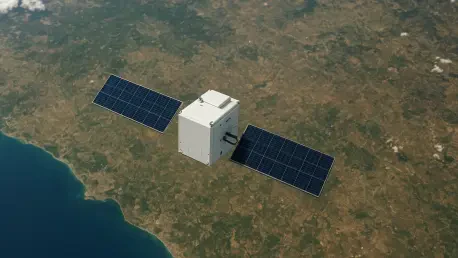
While legacy operators like Iridium and Globalstar continue to hold a significant share of the market with their established constellations, a new wave of Low-Earth-Orbit (LEO) initiatives is disrupting the status quo. These modern constellations orbit much closer to the Earth, which significantly reduces latency and allows for the use of smaller, less powerful antennas on the ground. Companies like Starlink and Swarm have introduced aggressive pricing models that challenge the high margins traditionally associated with satellite data services.
Meanwhile, entrants such as AST SpaceMobile are working toward providing broadband-level speeds directly to unmodified handsets, further blurring the line between satellite and cellular services. The competition among these forty-plus operators is driving rapid innovation in antenna design and power management, making it feasible to track even the smallest assets for years on a single battery. As these LEO networks become fully operational from 2026 to 2030, the increased bandwidth and lower costs will catalyze a surge in high-frequency data applications that were previously cost-prohibitive.
Strategic Alliances: Satellites as Towers in the Sky
The narrative of satellite versus terrestrial connectivity is being replaced by one of deep collaboration between satellite firms and traditional mobile network operators. Major telecommunications giants like Verizon, Deutsche Telekom, and Telefónica are increasingly partnering with satellite providers to offer a unified service layer to their enterprise customers. This “tower in the sky” approach allows a shipping company to manage its entire global fleet through a single management platform and a single SIM card regardless of the region.
Instead of negotiating separate contracts for different regions, businesses can now rely on their domestic carrier to provide seamless coverage extension via satellite partners. This model is vital for maritime and offshore energy sectors, where assets frequently transition between coastal cellular range and the open sea. By treating satellite links as just another roaming partner, carriers are making it easier for businesses to scale their IoT deployments globally, removing the friction of multi-carrier billing and the technical hurdles of managing complex network handoffs.
The trajectory toward 42 million satellite IoT connections by 2030 was established through a series of radical shifts in standardization and cooperative business models. Enterprises that once viewed satellite data as a luxury for emergency use only began to integrate it as a standard component of their operational resilience strategies. The maturation of LEO constellations and the widespread adoption of 3GPP standards effectively erased the technical and financial boundaries that previously isolated remote assets from the digital economy. As the distinction between terrestrial and non-terrestrial networks became nearly invisible to the end-user, the focus moved from the medium of transmission to the value of the data itself. To stay competitive, organizations prioritized hardware that offered inherent multi-network flexibility, ensuring that no asset remained in a dead zone for long. This era of unified connectivity proved that the most effective digital transformations were those that leveraged the strengths of both the Earth and the sky.