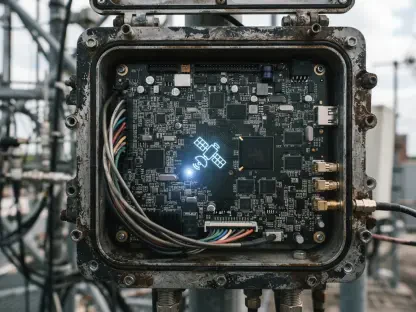
The T1TL-A mission represents the backbone of a military internet in space, designed to provide assured connectivity even in highly contested global environments. The recent launch of the SpaceX Falcon 9 rocket from Vandenberg Space Force Base, tasked with carrying this critical payload for the Space Development Agency, serves as a poignant reminder of the intricate precision required in modern aerospace logistics. Despite a brief technical postponement that halted the countdown in its final minute, the mission remains the centerpiece of a fundamental shift in national security strategy. This shift moves away from a reliance on few, vulnerable satellites toward a robust, distributed network in low-Earth orbit. This approach, known as the Proliferated Warfighter Space Architecture, is designed to ensure that the American military maintains its operational edge even if individual nodes are compromised. The resilience of this system is its greatest asset, providing a seamless flow of intelligence that bypasses traditional bottlenecks and remains impervious to many forms of electronic interference encountered in today’s digital theater.
Resilience through Orbital Proliferation
Expanding the Tranche 1 Transport Layer
Central to this mission is the deployment of 21 satellites manufactured by Northrop Grumman, which are specifically engineered to integrate into the existing Tranche 1 Transport Layer. This layer serves as the primary communications highway for the entire orbital constellation, acting as a high-speed router system in the sky. Unlike traditional satellites that focus on specialized sensing or static broadcast, these units are dedicated to the rapid movement of data across the globe. Once this phase is completed, the constellation will comprise 154 spacecraft, including over one hundred nodes dedicated solely to transport. By establishing such a dense network, the Space Development Agency ensures that the military can maintain persistent connectivity across vast distances without the lag associated with higher orbits. This infrastructure provides the foundation for advanced tactical operations, allowing commanders to receive and transmit critical mission data with a level of reliability that was previously unattainable in congested or contested zones.
The transition toward a proliferated architecture represents a significant departure from the legacy model of exquisite satellites—massive, multi-billion-dollar platforms that presented tempting and vulnerable targets for adversaries. In contrast, the current strategy emphasizes the strength of numbers and the speed of replacement. By utilizing smaller, standardized spacecraft, the military can rapidly replenish or expand the network as needed. This model of proliferation ensures that the loss of any single satellite, whether through mechanical failure or hostile action, has a negligible impact on the overall performance of the constellation. The network simply reroutes data through adjacent nodes, maintaining a constant stream of information to the tactical edge. This evolution reflects a broader recognition within the defense community that survivability in the modern era depends on agility and distribution rather than just heavy armor or distance. This architecture effectively democratizes space-based capabilities for the frontline warfighter.
Tactical Advantages: The Strategic Importance of Low-Latency Data
The strategic value of the T1TL-A satellites lies in their ability to provide low-latency communications to mobile units on the ground, at sea, and in the air. In the fast-paced environment of modern combat, every millisecond counts, particularly when dealing with high-speed threats such as hypersonic missiles. Traditional satellites operating in geostationary orbit introduce significant signal delays due to their distance from the Earth, which can be detrimental during time-sensitive intercepts. By operating in low-Earth orbit, the Tranche 1 Transport Layer drastically reduces this latency, facilitating the near-instantaneous transmission of targeting data. This capability is essential for beyond-line-of-sight operations, where units must act on information gathered by sensors located hundreds or thousands of miles away. The seamless integration of this data ensures that weapon systems can be deployed with maximum efficiency and precision, providing a decisive advantage in scenarios where response times are the primary factor.
Furthermore, the Transport Layer acts as the vital link that connects the Tracking Layer sensors to the rest of the military’s command and control infrastructure. While the Tracking Layer is specialized for infrared sensing and missile detection, it requires a robust mechanism to deliver that intelligence to the decision-makers. The 21 satellites in this mission bridge that gap, ensuring that the eyes of the military in space can effectively communicate with the muscles on the ground. This synergy is a cornerstone of the Proliferated Warfighter Space Architecture, creating a cohesive ecosystem where sensing and communication are inextricably linked. As these layers become more populated, the system’s ability to track and engage sophisticated threats improves exponentially. The end result is a highly responsive defense posture that can adapt to the shifting tactics of global adversaries. This interconnectedness transforms space from a passive observation post into an active, dynamic participant in the global battlespace.
Advanced Technologies in the High Frontier
Technical Evolution: Advancing Optical Links and Dynamic Networking
One of the most revolutionary aspects of the T1TL-A mission is the extensive use of optical communication terminals, which utilize laser technology to transmit data between satellites. This departure from traditional radio frequency communications offers several transformative advantages, including significantly higher bandwidth and enhanced security. Optical links are notoriously difficult to intercept or jam because they rely on narrow, directed beams of light rather than broad radio signals. This makes the entire mesh network far more resilient against electronic warfare tactics that might otherwise disrupt conventional satellite arrays. Each of the 21 satellites is equipped to form multiple simultaneous links with its neighbors, creating an autonomous web of connectivity. This high-throughput capability allows for the transfer of massive datasets, such as high-resolution imagery or complex targeting algorithms, in a fraction of the time required by older systems. This technological leap ensures that the military’s spaceborne internet remains fast and secure.
The creation of an optically interconnected mesh network also reduces the military’s dependence on ground-based relay stations, which can be vulnerable to physical or cyber attacks. By allowing satellites to communicate directly with one another in orbit, the system can bypass damaged or compromised ground infrastructure, ensuring that data reaches its destination through the most efficient path available. This level of autonomy is a critical component of the Space Development Agency’s vision for a self-healing and self-sustaining orbital network. Moreover, these satellites maintain compatibility with existing hardware through Link 16 tactical data links and Ka-band radio frequencies, ensuring a smooth transition as legacy systems are phased out. This dual-capability approach allows for immediate operational utility while setting the stage for a fully optical future. The result is a hybrid architecture that is both forward-looking and practical, providing a bridge between current military capabilities and the next generation of space technology.
Strategic Foresight: The Future Trajectory of Spaceborne Infrastructure
The T1TL-A mission served as a clear indicator of the trend toward rapid, iterative development within the aerospace sector. By launching satellites in distinct tranches, the Space Development Agency integrated the latest commercial innovations and technological breakthroughs far more quickly than the decade-long acquisition cycles of the past. In 2026, this pace of innovation became essential for staying ahead of global competitors who also invested heavily in space-based assets. This mission demonstrated that the military could successfully leverage commercial launch services and standardized satellite buses to build out a sophisticated defense network at a fraction of the traditional cost and timeline. The focus shifted from long-term, static projects to dynamic systems that could be updated and replenished every few years. This agile approach ensured that the United States was never locked into obsolete hardware, allowing the space architecture to evolve in lockstep with the rapidly changing technological landscape.
Ultimately, the successful integration of these 21 satellites into the Tranche 1 architecture provided a definitive blueprint for the future of global security. The deployment moved the concept of a space-based military internet from a theoretical goal to an operational reality, fundamentally altering how data was moved across the globe. By prioritizing proliferation and optical connectivity, the defense community established a resilient framework that significantly mitigated the risks of orbital conflict. Moving forward, the focus shifted toward expanding this model to include even more specialized layers, such as those dedicated to environmental monitoring and advanced signal intelligence. The precedent set by this mission encouraged deeper collaboration between commercial aerospace firms and national security agencies, fostering an ecosystem where innovation could be deployed at the speed of thought. As the constellation continued to grow, the reliance on high-latency legacy systems faded, leaving behind a robust network that secured the high ground.