
Amanda Eversole of the USDA plays a pivotal role by educating rural residents on the federal programs and resources available for infrastructure development. This outreach forms the backbone of the Redwood Rural Reach (R3) project, a strategic initiative launched to finally dismantle the digital divide that has historically isolated Northern California’s most rugged terrains. Unlike previous attempts that relied on temporary wireless patches or limited satellite coverage, the R3 project represents a massive collaborative effort between Brightscape Networks and Cal Poly Humboldt. By targeting specific pockets of Humboldt and Trinity Counties, the initiative aims to create a blueprint for high-speed fiber and advanced wireless networks that can withstand the unique environmental challenges of the North Coast. The focus here is not merely on connectivity but on providing a reliable foundation for economic stability, ensuring that rural businesses and schools can compete on a global scale while maintaining the cultural integrity of their remote locations.
Community-Centered Infrastructure Planning
Integrating Local Voices: Technical Architecture
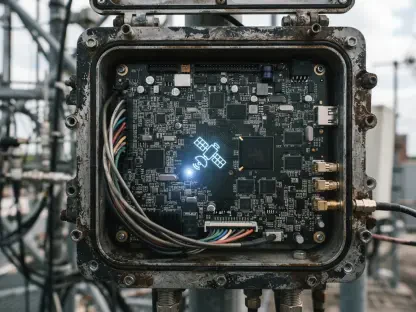
A primary focus of the R3 initiative is the complete rejection of predetermined, one-size-fits-all technological fixes that often fail in complex topographies. Project leaders like Brian Court of Brightscape Networks and Matthew Torres of Cal Poly Humboldt have emphasized that for a network to be truly effective, its design must reflect the actual lived experiences of the residents. This bottom-up methodology prioritizes local expertise, acknowledging that those navigating the dense forests and steep canyons of the Trinity Alps are best suited to identify persistent dead zones. By integrating these personal insights into the technical architecture, the team avoids the pitfalls of theoretical modeling that often overlooks local geography. The resulting plans are designed to be grant-ready, meaning they contain the specific engineering data required to secure major investments. This alignment between technical precision and local necessity ensures that the infrastructure serves the specific socio-economic needs of every household and small business involved.
Collaborative Framework: Federal Support
The ongoing partnership between a private technical firm and a public academic institution provides a balanced foundation for regional planning that is rarely seen in rural infrastructure projects. This collaboration is further bolstered by the USDA’s Rural Utilities Service, which provides necessary federal oversight and ensures that all planning efforts align with national standards for resource accessibility. By working directly with federal agencies, the R3 project creates a direct pipeline for these 23 communities to access the Broadband Technical Assistance program. This strategic positioning is vital for areas that lack the administrative capacity to navigate complex federal applications on their own. The technical assistance provided by Cal Poly Humboldt researchers offers a layer of academic rigor, while Brightscape Networks delivers the practical engineering expertise required to turn data into a physical network. Together, these entities have fostered a regional environment where federal funding is no longer a distant possibility but an actionable goal.
Strategy for Regional Engagement: Data Collection
Gathering Empirical DatPublic Forums
To ensure the planning process remains transparent and inclusive, the R3 project established a series of public forums across Humboldt and Trinity Counties earlier this year. These meetings, held in locations such as the Redwood Playhouse in Garberville and the North Fork Grange in Junction City, allowed residents to voice specific concerns regarding internet reliability and costs. Beyond these face-to-face discussions, the project utilized a comprehensive community broadband survey to collect hard data on household connectivity. This survey functioned as a critical diagnostic tool, revealing the stark reality of price gouging and service failures that many residents had simply accepted as inevitable. The empirical evidence gathered through these channels provided the statistical weight needed to prove the urgent requirement for public investment to state agencies. By documenting the gap between advertised speeds and actual performance, the project created a factual record that serves as the primary evidence in upcoming grant applications.
Overcoming Geographic Barriers: Targeted Zones
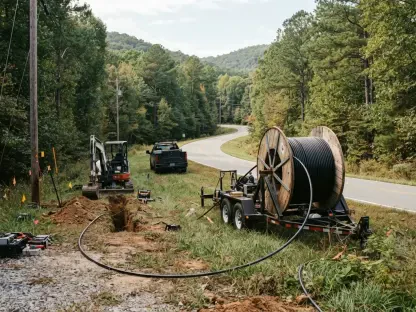
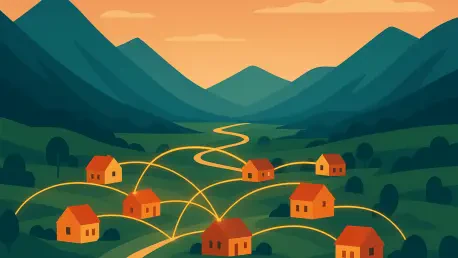
The R3 project’s scope is vast, covering 23 isolated communities ranging from the redwood forests of Petrolia and Orick to the mountain canyons of Trinity Center and Hyampom. These areas have historically been neglected by private service providers because the high cost of navigating rugged terrain posed a significant financial risk. By handling the preliminary engineering and financial modeling, the R3 team effectively lowered these barriers and paved the way for high-speed fiber or wireless deployments in regions previously left behind by the digital age. This technical groundwork includes identifying optimal routes for fiber optic cables and determining the best locations for wireless towers to ensure maximum coverage with minimal environmental impact. By providing a clear roadmap for construction, the project reduces the uncertainty that often deters private investment. This systematic approach ensures that even the most remote residents in the North Coast and Trinity Alps regions are included in the state’s broader digital expansion.
Future Implementation: Regional Economic Growth
The project successfully mapped the intricate engineering requirements for all targeted zones, ensuring that every identified community possessed a viable path toward modern connectivity. These efforts allowed local leaders to implement a structured roadmap for long-term digital growth, moving beyond the planning phase into the active procurement of necessary construction materials. Stakeholders took the necessary steps to secure regional easements and established a framework for localized maintenance crews to handle future technical repairs. This proactive strategy shifted the regional focus from mere survival to digital thriving, providing residents with the permanent tools needed for modern healthcare and education. By finalizing the technical and financial blueprints, the R3 initiative ensured that the North Coast was prepared for the next phase of physical infrastructure deployment. The collaborative work performed by the USDA, Cal Poly Humboldt, and Brightscape Networks finalized a clear pathway for all rural residents to integrate into the modern economy.