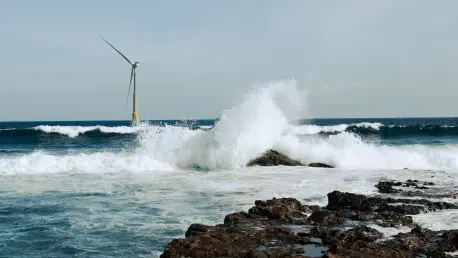

A significant portion of the world’s major data center markets are located in coastal regions with direct access to subsea fiber-optic cables and existing maritime infrastructure. This geographical reality is becoming a cornerstone of the industry’s strategy as the global digital economy rapidly approaches a critical electricity bottleneck driven by the explosion of artificial intelligence and high-performance computing. As server farms expand to meet these technological demands, projections indicate that global data center energy consumption will double by 2030, reaching nearly 945 Terawatt-hours annually. This massive surge has forced developers to look beyond traditional power sources to find sustainable and scalable alternatives. While solar and wind power have led the renewable transition, their intermittent nature presents significant challenges for an industry that requires a steady, 24/7 “baseload” power profile. Wave energy is emerging as a compelling solution due to its inherent consistency and reliability, providing a predictable generation curve that aligns with the constant operational requirements of modern computing clusters. By harvesting the kinetic energy of the ocean, developers can tap into a resource that is far more energy-dense and consistent than atmospheric alternatives, offering a potential path to decarbonize the backbone of the internet without compromising on uptime or operational stability.
Strategic Advantages of Marine Power
The Reliability of Ocean Motion as a Constant Baseload
The primary challenge in powering digital infrastructure with renewables is the persistent load-factor mismatch that characterizes traditional wind and solar assets. Data centers draw a constant, unwavering amount of electricity regardless of weather or time of day, a demand that matches the ocean’s near-constant motion. Wave energy offers a smoother and more predictable generation curve than other renewables, drastically reducing the necessity for massive on-site battery systems to “firm up” the power supply. Unlike solar power, which ceases at night, or wind power, which can disappear for days during high-pressure weather events, wave patterns are influenced by broad oceanic swells that persist long after local winds die down. This allows operators to forecast energy availability with a high degree of accuracy up to several days in advance, providing a level of reliability that mimics traditional thermal power plants. By providing a reliable baseload, wave energy minimizes the need for fossil-fuel-burning peaker plants that often serve as backup for less reliable green sources, thereby lowering the overall carbon intensity of the data center’s energy footprint while maintaining the strict reliability standards required for modern cloud services and financial transaction processing.
Geographic Proximity and the Reduction of Transmission Losses
Beyond reliability, there is a clear geographical advantage to harvesting power from the sea that directly benefits the tech industry’s expansion strategy. Many of the world’s most prominent data center hubs are located in coastal regions to access subsea fiber-optic cables and serve dense population centers where latency must be kept to an absolute minimum. By installing wave energy converters on existing coastal structures like breakwaters, jetties, and piers, developers can generate power close to the load, minimizing transmission losses and bypassing inland grid congestion. This strategy utilizes “underproductive” maritime infrastructure that already exists, transforming simple sea walls into active energy-generating assets. Furthermore, the ability to colocate generation and consumption helps circumvent the lengthy and expensive process of building new cross-country transmission lines, which has become a primary hurdle for many large-scale renewable projects. This local generation model ensures that the energy produced remains within the regional ecosystem, supporting both the digital infrastructure and the surrounding community. This synergy not only simplifies the engineering requirements but also fosters a more resilient and decentralized energy grid capable of withstanding the pressures of an increasingly digitized society.
Engineering for Durability: Near-Shore Modular Architecture
The technical architecture of modern wave energy systems, such as those developed by companies like Eco Wave Power, prioritizes durability and ease of access through a focus on near-shore environments. Unlike offshore designs that sit deep in the ocean and face extreme maritime conditions that make servicing difficult, near-shore modular systems are attached to man-made structures where the water is more manageable. This strategic placement allows sensitive hydraulic and electrical equipment to be housed in land-based conversion units for easier maintenance and protection from salt spray and corrosion. To combat the destructive potential of the ocean during severe weather, these systems utilize automated retraction mechanisms that allow the floaters to rise above the water level when waves exceed safe operating heights. This modular approach is also highly scalable, allowing power projects to grow incrementally alongside the data centers they serve. For instance, every 200 linear meters of suitable coastline can support roughly 1 Megawatt of capacity, meaning a facility can expand its energy generation in lockstep with its server capacity. This flexibility ensures that the capital expenditure for energy infrastructure is aligned with the actual demand of the computing equipment, optimizing the return on investment for developers and reducing the initial barriers to entry for marine power adoption.
Digital Innovation and Global Implementation
Enhancing Energy Capture through AI-Driven Digital Twins
A significant leap in wave energy efficiency is being driven by the integration of high-performance computing and advanced software programs like the NVIDIA Inception initiative. By creating “digital twins”—virtual replicas of physical wave energy systems—engineers can use physics-based simulations to model wave interactions in real-time with unprecedented accuracy. This technology allows for improved forecasting of energy output and the ability to optimize system adjustments to maximize power capture based on the specific characteristics of incoming swells. The digital twin can simulate millions of different wave scenarios, allowing the software to learn the most efficient way to position floaters or adjust hydraulic pressure for every possible sea state. This level of optimization ensures that the system is always performing at its peak potential, even in suboptimal weather conditions. Moreover, these digital models enable predictive maintenance, identifying potential wear and tear on components before they fail, which is crucial for maintaining the 24/7 uptime that data centers require. By merging the physical reality of ocean waves with the analytical power of artificial intelligence, the industry is transforming raw maritime motion into a sophisticated and highly efficient energy platform that can compete with the most advanced traditional power sources.
Operational Efficiency and Real-Time Performance Optimization
The integration of advanced computing into wave energy systems has paved the way for an “Energy-Water-Compute” ecosystem where generation and consumption are managed as a single, intelligent system. In this integrated model, wave energy generation, seawater-based cooling for servers, and AI workload processing are coordinated through a centralized digital layer. This holistic approach ensures that the energy harvested from the ocean is utilized with maximum efficiency, further lowering the carbon footprint of the digital world. For example, during periods of high wave activity, the data center can prioritize energy-intensive computing tasks or charge thermal storage systems, while using the same seawater for efficient server cooling. This synergy reduces the overall complexity of the facility’s utility requirements and creates a closed-loop system where the natural environment and the digital infrastructure support one another. The use of real-time data allows the system to pivot between different operational modes, ensuring that the data center remains powered and cooled even as sea conditions change. This level of operational intelligence represents the next stage in the evolution of sustainable technology, where hardware and software are inextricably linked to provide a cleaner and more efficient solution for the global appetite for data.
Global Benchmarks: Scaling from Pilot Projects to Commercial Use
The transition from theoretical potential to commercial reality is currently visible in several key global projects that serve as benchmarks for the industry’s progress. In Israel’s Jaffa Port, a grid-connected installation has provided essential real-world data and served as the primary testing ground for advanced simulation platforms. This facility proved that wave energy could be successfully integrated into an existing urban grid while withstanding the daily stresses of a working port. Meanwhile, a 1-megawatt commercial project in Porto, Portugal, represented a critical milestone in proving that wave technology could scale to meet industrial energy demands beyond the pilot phase. These international initiatives demonstrated that wave energy could navigate the complex regulatory and environmental frameworks of major ports, which often involve multiple stakeholders and stringent safety standards. In the United States, pilot projects at the Port of Los Angeles have shown that these systems can be adapted to the specific needs of large-scale American infrastructure, providing a roadmap for domestic data center developers. These benchmarks were instrumental in transforming wave energy from a niche technology into an “intelligent” platform capable of interacting dynamically with the modern power grid and providing the necessary volume of clean electricity to support the next generation of cloud computing.
Policy and Integrated Systems
Streamlining Regulatory Paths using Existing Infrastructure
One of the most daunting hurdles for any renewable energy project is the lengthy and complex permitting process associated with environmental impact assessments. However, near-shore wave technology often faces a smoother regulatory path than offshore wind or deep-sea projects because it utilizes existing man-made infrastructure. By installing equipment on breakwaters or piers that have already been through environmental reviews and construction permitting, developers minimize their footprint on undisturbed marine ecosystems. This approach significantly reduces the potential for conflict with maritime traffic, commercial fishing, or marine life, making it a more palatable option for local regulators and environmental groups. For data center developers, this logistical advantage makes wave energy a practical option that can be integrated into the initial site development plans without adding years of delays to the construction timeline. The ability to utilize “pre-approved” locations allows for a faster rollout of sustainable power, which is essential for an industry that is growing at an exponential rate. As governments continue to implement stricter carbon regulations and mandate the use of green energy for new industrial projects, the streamlined permitting of near-shore wave power provides a competitive advantage for companies looking to expand their coastal data center presence.
A Harmonized Vision for the Energy-Water-Compute Ecosystem
The analysis of wave energy’s potential revealed a clear consensus: the traditional methods of powering the digital world were reaching their physical and environmental limits, necessitating a pivot toward the ocean. The industry recognized that the path forward involved a unified approach where energy generation, server cooling, and high-performance computing were treated as a single, interdependent system. By moving beyond isolated pilot programs, developers successfully integrated wave energy into the very fabric of coastal infrastructure, proving that the ocean could serve as the foundational platform for a sustainable AI economy. This transition was characterized by the successful adoption of digital twins and AI-driven optimization, which allowed marine power to achieve the reliability levels formerly reserved for fossil fuels. Stakeholders across the technology and energy sectors discovered that the synergy between coastal data centers and wave energy was not just a matter of convenience, but a strategic necessity for long-term growth. The lessons learned from early implementations in Portugal and the United States provided a blueprint for global scaling, showing how to balance industrial demand with environmental stewardship. Ultimately, the adoption of these marine systems allowed the digital world to move toward a model of true sustainability, where the tides that define the planet’s geography became the very force that sustained its most advanced technological innovations.