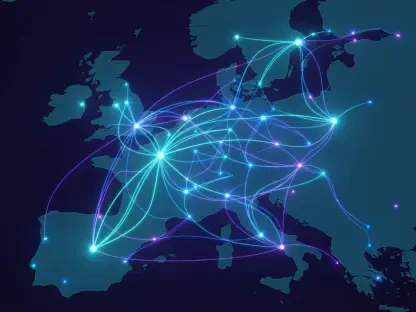

For decades, a digital request sent from a smartphone in Fortaleza to a server in Luanda often traversed the Atlantic twice, bouncing through Virginia or London before reaching its destination just across the water. The partnership between DE-CIX and CVTelecom established a direct “data bridge” that bypassed these traditional northern hubs. This corridor created a straight line between Lisbon and São Paulo, altering how three continents interact.
This initiative transformed the map from a triangle into a more efficient web, reducing the dependency on legacy routes. As data began flowing through this new connection, the South Atlantic emerged as a vital player in global telecommunications. This shift provided a much-needed alternative to the saturated cables of the North Atlantic.
Redefining the Digital Geography of the South Atlantic
A single byte of data traveling from Brazil to West Africa often took a detour through North America, covering thousands of unnecessary miles. The strategic collaboration between interconnection leaders addressed this by creating a direct pathway. By establishing this corridor, the project successfully streamlined communication between Latin America and Europe.
The digital map now reflects a more balanced distribution of traffic, moving away from a Euro-centric model. This evolution allowed regional hubs to flourish without being overshadowed by northern giants. Consequently, the South Atlantic has become a pivotal gateway for international data exchange.
The Push for Decentralized Global Connectivity
Modern internet traffic was long tethered to a handful of centralized hubs, a structure that created bottlenecks and increased latency. As West Africa and Latin America experienced rapid digital transformation in 2026, the reliance on indirect routing became a significant barrier. This project addressed the urgent need for a more resilient and distributed network architecture.
By leveraging Cape Verde’s position as a mid-Atlantic gateway, the corridor addressed the demand for localized routing. This movement toward decentralization ensured that global networks remained stable during peak usage. The distributed architecture also enhanced the security of international data flows.
Mechanics of the South Atlantic Data Corridor
The collaboration functioned as a reciprocal exchange of critical infrastructure and high-level interconnection services. CVTelecom provided the physical subsea cable capacity required to span the ocean, while DE-CIX implemented the necessary peering platforms. This integration enabled local carriers in West Africa to reach global markets seamlessly.
These technical improvements allowed data to bypass the congestion of traditional transit points. Carriers utilized the new capacity to offer more reliable services to their end users. The synchronization of hardware and software at the midpoint of the Atlantic was essential for this success.
Strategic Benefits for Cloud Providers and Enterprises
For businesses operating in the cloud, milliseconds matter; the new route offered a low-latency alternative vital for real-time applications. By establishing Cape Verde as a strategic midpoint, the corridor enhanced network redundancy for global enterprises. This regionalization of traffic improved performance and lowered costs for emerging markets.
Enterprises found that the direct path minimized the risk of packet loss and synchronization issues. This was particularly beneficial for sectors such as tele-health and financial services. The secondary artery for global data mitigated the operational risks inherent in centralized systems.
Expert Perspectives on Economic and Infrastructure Growth
Leadership from both organizations highlighted that digital sovereignty and economic development were tied to diverse connectivity paths. Industry experts viewed this move as a pivot toward a more inclusive global digital economy. The corridor was positioned as a vital catalyst for technological growth across West Africa.
The streamlined international services fostered by this corridor allowed local tech ecosystems to thrive. Experts noted that reducing the “digital distance” between continents encouraged foreign investment in regional data centers. This growth supported a broader move toward technological self-reliance for developing nations.
Strategies for Integrating into the New Atlantic Exchange
Organizations that capitalized on this infrastructure evaluated their traffic maps to identify latency gaps in the Southern Hemisphere. They adopted multi-hub connectivity strategies that utilized the Lisbon-São Paulo route to reach consumers faster. This integration proved essential for maintaining a competitive edge in a hyper-connected market.
Carriers leveraged the DE-CIX interconnection points to scale their reach through a single, streamlined point of entry. By embracing this decentralized model, enterprises optimized their network performance and prepared for surges in cross-continental demand. These strategies ensured that the benefits of the data bridge were fully realized.