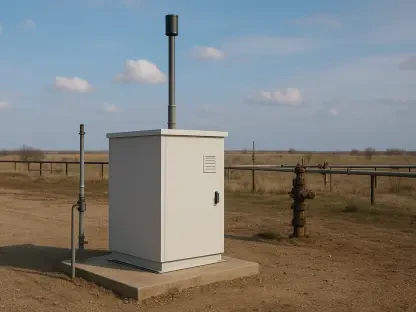

The arrival of fiber-backed internet in Surigao del Norte marks a critical technological milestone for residents who have historically struggled with unreliable and expensive mobile data. For too long, the Municipality of General Luna has operated in a state of digital isolation, where residents and business owners alike had to contend with cellular signals that were as unpredictable as the tides. This official introduction of SuperWiFi by World Mobile represents a fundamental shift in the regional telecommunications landscape, specifically targeting the digital divide that has hindered economic growth in remote island communities. By launching the first live implementation of the eSari-Sari program, the project establishes a community-centric distribution model that bypasses the limitations of traditional, centralized infrastructure. This initiative is not merely about providing faster browsing; it is about creating a robust, fiber-backed foundation that integrates these islands into the broader national economy through stable connectivity.
Bridging Connectivity Gaps in Key Economic Hubs
The initial rollout of this high-speed network has been strategically concentrated within four primary economic and social hubs in General Luna to maximize immediate utility for the population. By prioritizing the Farmers and Fish Market, the Boardwalk, the Town Center Church, and the Bravo Resort, the initiative ensures that the heartbeat of the community is digitally synchronized. These specific locations serve as the primary intersections for local commerce and international tourism, where the demand for bandwidth is consistently high throughout the year. Prior to this deployment, visitors and locals struggled to coordinate logistics or process digital transactions in these high-traffic areas, often leading to missed opportunities. The selection of these sites reflects a pragmatic approach to infrastructure development, focusing on the spaces where connectivity provides the most significant leverage for daily operations. This targeted deployment effectively transforms the busiest parts of the municipality into reliable digital corridors for everyone.
A particularly significant aspect of this project is its successful elimination of several notorious cellular dead zones that previously paralyzed digital communication in the area. In many of these identified zones, residents once had virtually no access to reliable internet, forcing them to travel significant distances just to send a message or access online banking services. With the activation of the SuperWiFi system, these areas now boast performance levels reaching up to 300 Mbps, a standard that is largely unheard of in rural Philippine island settings. This transition from total lack of signal to urban-grade performance marks a dramatic leap forward in technical capability for the province of Surigao del Norte. The impact of such speeds goes beyond mere convenience, as it allows for high-definition video streaming, seamless file transfers, and stable connections for remote work. By establishing these high-performance hotspots, the project has effectively equalized the digital playing field, allowing local residents to enjoy the same quality of service found in modern metropolises.
Empowering Communities Through Decentralized Infrastructure
The cornerstone of this technological expansion is the innovative eSari-Sari distribution program, which fundamentally alters the power dynamics of network management across the archipelago. Unlike traditional telecommunications models that rely on centralized corporate control, this system utilizes decentralized AirNodes hosted by local cooperatives and sari-sari stores, ensuring that the infrastructure is maintained by the people who use it most. This model creates a sustainable circular economy by keeping a portion of the revenue from data sales within the community, empowering local entrepreneurs to thrive. Furthermore, the SuperWiFi pricing structure is designed to be highly inclusive, offering rates approximately 80 percent lower than traditional mobile operators. The pay-as-you-go approach eliminates common barriers to entry such as long-term contracts or credit checks. For the unbanked population, the ability to pay in cash at host stores ensures that high-speed internet is treated as a basic public utility rather than a luxury.
The successful deployment of the network in Siargao established a clear roadmap for a nationwide rollout targeting over 2,000 locations across the Philippines. Following the initial achievements in Dapa and General Luna, the expansion moved into the Caraga and Region 10 areas, including Butuan City and Cagayan de Oro. Future projects like the eLGU Hex sought to integrate digital infrastructure directly with local government services, cementing high-speed internet as a fundamental utility for modern Filipino life. For future regional development, it was recommended that local municipalities continue to partner with decentralized providers to ensure infrastructure remained robust and community-owned. These steps proved that bridging the digital divide required not just new technology, but a fundamental rethink of how connectivity is owned and distributed at the grassroots level. This initiative ultimately demonstrated that geographic isolation was no longer a valid excuse for digital exclusion in the modern era of telecommunications.