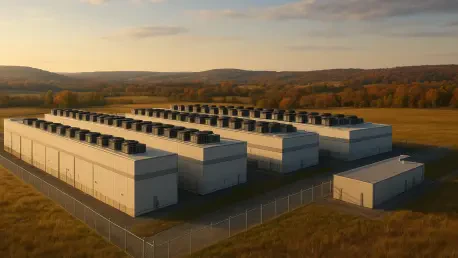

The digital landscape of the United States is currently undergoing a seismic transformation that prioritizes raw electrical power and regulatory speed over the traditional proximity to major urban population centers. In a remarkably short period, the geographic center of gravity for the internet has migrated from coastal tech hubs to rural outposts like Pecos, Texas, and Ellendale, North Dakota, where hundreds of billions of dollars in capital investment are fundamentally reshaping local economies. Statistically, this shift represents a profound political and structural reversal; before the initial generative AI surge, fifty-six percent of data center capacity was concentrated in states that leaned heavily toward the Democratic party. However, current construction data indicates that sixty percent of new capacity is now located in Republican-leaning states, a figure that jumps to a staggering ninety-two percent if the established hub of Northern Virginia is excluded from the broader national calculation.
Regulatory Speed: Energy Cost Advantages
One of the primary catalysts for this migration is the stark difference in regulatory environments between jurisdictions, where red states frequently offer streamlined permitting processes that allow for rapid infrastructure deployment. While coastal states like Oregon have implemented strict bans on new natural gas facilities, conservative-leaning states have taken a more permissive approach to ensure that utility companies can meet the massive energy demands of modern computation. For example, Mississippi recently passed legislation that grants utilities the authority to construct gas plants specifically for data center support without the burden of traditional public or regulatory reviews. This ability to bypass bureaucratic bottlenecks is essential for technology firms racing to expand their hardware fleets in a competitive market. By prioritizing speed to market, these states have positioned themselves as the most viable partners for the massive power-hungry campuses required to sustain the current wave of technological expansion.
Beyond the speed of construction, the ongoing operational costs of these facilities are heavily influenced by the price and availability of electricity, which remains the single largest expense for any data center operator. States such as Texas, Ohio, and Louisiana have successfully attracted major developers by offering industrial power prices that are significantly lower than those found in the Northeast or on the West Coast. The energy-intensive nature of generative AI processing means that even a minor difference in kilowatt-hour pricing can result in millions of dollars of savings over the lifecycle of a single facility. These states often benefit from a diverse energy mix and a political willingness to expand fossil fuel capacity alongside renewable sources to maintain a stable and affordable power grid. As a result, the financial logic of locating massive compute clusters in the heartland has become undeniable for firms managing tight margins and escalating resource requirements across their global infrastructure.
Technical Demands: Infrastructure Solutions
The historical requirement for data centers to be located near end-users was driven by the need for low latency in services like high-frequency trading, video streaming, and real-time cloud applications. However, the current focus on training massive artificial intelligence models has fundamentally changed this requirement, as training is a compute-heavy process that does not require instantaneous feedback to a consumer. Unlike a streaming service that must respond in milliseconds, an AI training run can occur over several months in a remote location without any negative impact on the final product. This decoupling from population centers allows developers to seek out areas where land is abundant and inexpensive, far away from the high real estate costs and zoning restrictions of major metropolitan areas. By utilizing these low-density regions, companies can build larger footprints than would ever be possible in suburban California or New York, facilitating the creation of the massive gigawatt-scale campuses now becoming common.
As the industry pivoted from the training phase to widespread implementation, developers increasingly looked toward modular and hybrid infrastructure to maintain their competitive edge. It was determined that the most effective strategy involved diversifying regional investments to include both massive rural training hubs and agile urban inference nodes. This transition required companies to prioritize flexible site selection and invest in advanced liquid cooling technologies to mitigate the heat generated by denser hardware configurations. By the time this trend solidified, successful firms had already secured long-term power purchase agreements and established stronger relationships with local utility providers to ensure grid stability. These actions provided a blueprint for navigating the complex intersection of digital growth and public resource management. Stakeholders who adopted these forward-thinking measures successfully insulated their operations from regulatory volatility and power shortages while addressing the high resource demands that initially defined the migration.