
Modern satellite constellations often face operational bottlenecks because traditional positioning methods require constant communication with specialized engineering teams located on the ground. Historically, determining a satellite’s exact position required a complex network of terrestrial antennas, dedicated teams of flight dynamics engineers, and constant communication links. This ground-heavy approach creates significant bottlenecks, particularly as the number of objects in orbit increases. However, recent breakthroughs in autonomous software are proving that satellites can now calculate their own trajectories with extreme accuracy, effectively managing their own journey through the stars without waiting for instructions from Earth. This shift represents more than just a convenience; it is a fundamental requirement for the scalability of the orbital economy as we enter the second half of the decade. As space becomes increasingly crowded, the ability for a spacecraft to know its place without terrestrial hand-holding determines its long-term viability.
Redefining Autonomy in Modern Space Operations
Decentralizing Mission Control: The Shift Toward Onboard Intelligence
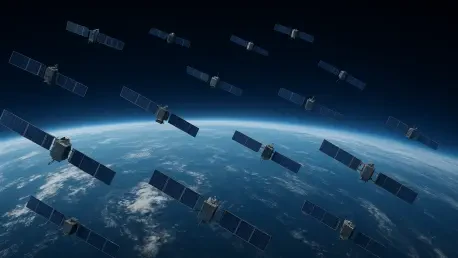
The transition toward a decentralized model of satellite management is necessitated by the sheer volume of assets currently entering low Earth orbit. In the past, a single satellite might have a dedicated team monitoring its health and orbital parameters around the clock, but this level of attention is impossible to scale for constellations comprising thousands of units. When an operator manages a massive fleet, the latency involved in sending raw telemetry to Earth, processing it through complex flight dynamics algorithms, and uploading the corrected trajectory back to the spacecraft becomes a significant liability. Such delays can impede the satellite’s ability to perform time-sensitive tasks, such as capturing high-resolution imagery of a localized event or executing an urgent collision avoidance maneuver. By embedding the intelligence required for precise orbit determination directly into the onboard processor, the spacecraft gains a level of agency that drastically reduces its reliance on ground station windows.
The Core Technology: Software-Defined Navigation Solutions
Central to this evolution is the emergence of software-only solutions like NaviCode Caravel, which utilize existing onboard hardware to achieve what was once thought to require specialized, heavy sensors. This software takes raw measurements from the Global Navigation Satellite System and processes them through sophisticated filters to produce high-fidelity positioning data in real time. This capability is especially transformative for the burgeoning sector of small satellites and CubeSats, which often lack the power budget or physical space for high-end navigation equipment. By shifting the heavy lifting from physical components to intelligent algorithms, these smaller platforms can now operate with the same precision as billion-dollar government assets. This democratization of high-precision navigation allows a wider array of commercial and scientific missions to undertake complex maneuvers and maintain strict orbital station-keeping, thereby maximizing the return on investment for space startups and research institutions alike.
Proving Precision in the Orbital Environment
Validating Performance: Insights From Recent In-Orbit Demonstrations
Validating these theoretical advancements requires successful execution in the unforgiving environment of space, where radiation and thermal extremes can impact software performance. A recent landmark demonstration involved the deployment of advanced navigation software aboard an orbital transfer vehicle to assess its real-world accuracy. The testing protocol was meticulously designed to ensure mission safety, beginning with exhaustive ground-based trials that utilized digital twins of the spacecraft’s computing architecture. These simulations confirmed that the software could handle the specific telemetry formats and processing constraints of the flight hardware without interfering with other critical systems. Only after this rigorous verification was the code uploaded to a satellite already in orbit. Once active, the software began processing live GPS signals to calculate the vehicle’s position with a level of granularity that was previously unattainable through autonomous onboard methods, demonstrating the reliability of software-based systems.
Achieving Accuracy: Decimeter-Level Precision in Space
The performance metrics gathered from this orbital demonstration surpassed industry expectations, revealing that decimeter-level accuracy is now achievable without terrestrial assistance. In several operational runs, the software produced positioning solutions with a formal uncertainty of just 5.2 centimeters, representing a significant leap forward in autonomous capability. To verify these findings, the onboard results were compared against highly accurate reference orbits generated by the European Space Agency’s industry-standard flight dynamics tools on the ground. The alignment between the onboard autonomous solution and the ground-truth data confirmed that the software could effectively replace traditional ground-based processing for many mission profiles. This level of precision is critical for operations such as autonomous docking, formation flying, and precise pointing of scientific instruments. It proves that with the right algorithmic approach, satellites can maintain laboratory-grade awareness of their trajectory while operating thousands of kilometers away from their human operators.
The Infrastructure of the New Space Economy
Leveraging Strategic Partnerships: The Role of the Space Cloud
The acceleration of these technological breakthroughs is deeply linked to the development of a robust space-based cloud infrastructure that simplifies the path to orbital validation. Traditionally, a software developer would need to wait years to secure a dedicated launch for testing a new algorithm, but the rise of orbital transfer vehicles and intelligence-node carriers has changed this dynamic. These platforms serve as flying laboratories, offering “software-as-a-service” capabilities that allow innovators to upload and test their code on existing, reliable hardware already in space. This model significantly lowers the financial and temporal barriers to entry, enabling a more agile development cycle that mirrors the rapid iteration seen in the terrestrial tech sector. By utilizing networked orbital nodes, companies can ingest real-time telemetry and refine their navigation models in situ, moving from initial concept to flight-proven status in a fraction of the time previously required by conventional space procurement processes.
Institutional Support: Academic Roots and Industrial Standards
Beyond the technical infrastructure, a strategic ecosystem of academic institutions and technology transfer hubs is fueling this wave of innovation. Many of the lead researchers behind modern navigation software bring decades of experience from prestigious missions to Jupiter, Saturn, and Mercury, applying deep-space expertise to the commercial challenges of Earth orbit. This academic foundation is bolstered by venture capital and regional aerospace hubs that focus on converting theoretical research into scalable commercial products. These partnerships ensure that the software is built to meet the rigorous safety and cybersecurity standards required for modern space traffic management. As international cooperation becomes more complex, having standardized, reliable, and autonomous navigation tools becomes essential for maintaining orbital safety. This collaborative environment not only fosters technical excellence but also creates a reliable supply chain for the software components that will define the future of satellite fleet management and global connectivity.
Future Applications and Market Evolution
Expanding Capabilities: A Roadmap for Next-Generation Navigation
Looking ahead, the successful deployment of autonomous orbit determination is merely the foundation for a much broader suite of self-driving capabilities that will revolutionize how we interact with space. The next phase of development involves integrating data from a wider variety of sources, including the European Galileo constellation and specialized augmentation systems, to enhance the resilience of positioning signals. Future software versions are expected to feature autonomous maneuver planning, which will allow satellites to detect potential collisions with orbital debris and calculate an avoidance path without human intervention. This proactive stance on orbital safety is becoming a necessity as the density of objects in low Earth orbit continues to climb. By combining high-precision positioning with intelligent decision-making, spacecraft will be able to manage complex mission profiles, such as servicing other satellites or assembling large structures in orbit, with minimal oversight from terrestrial mission control teams.
Future Insights: Market Evolution and Scalability
The broader market implications of this technology are set to transform industries ranging from telecommunications to environmental monitoring. High-precision navigation metadata allows Earth observation companies to geolocate images with unprecedented accuracy, enabling better tracking of climate changes, urban development, and agricultural yields. Furthermore, by automating the routine tasks of orbit maintenance and position reporting, satellite operators can redirect their resources toward higher-level mission objectives and data analysis. This shift reduces the operational costs of managing massive constellations, allowing for more competitive pricing in the global satellite services market. Ultimately, the transition to autonomous orbital navigation represented a critical turning point for the industry. It moved the sector toward a more sustainable and scalable model where the intelligence of the spacecraft matched the complexity of its environment. This development paved the way for a new generation of missions that operated with a high degree of independence.