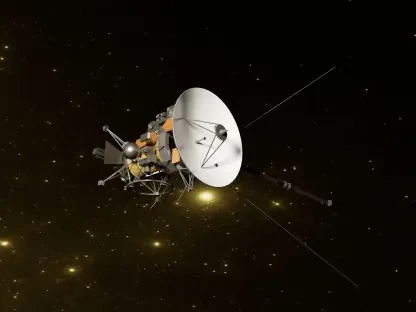

The longstanding physical barrier between celestial satellite networks and the pocket-sized smartphones used by billions of people has finally begun to dissolve as aerospace engineering merges with terrestrial telecommunications. For decades, satellite phones were niche, cumbersome bricks reserved for offshore mariners or remote explorers, but a radical shift in low Earth orbit (LEO) deployment is now bringing that same connectivity to unmodified consumer handsets. This transition represents more than a technical upgrade; it is a fundamental reconfiguration of the global internet, aiming to ensure that the dreaded “no service” notification becomes a historical relic rather than a daily frustration for travelers and rural residents.
Growth Trajectory and Market Implementation
The Shift Toward Mainstream Adoption: Spectrum and Coverage
Recent industry reports indicate a surge in investment as mobile network operators seek to eliminate coverage gaps that terrestrial infrastructure cannot reach. As we move from 2026 into the next few years, the focus has shifted from experimental testing to widespread commercial availability. Statistics from international regulatory bodies highlight that despite high urban penetration, nearly 15-20% of landmasses globally remain in cellular dead zones. This reality is the primary engine driving the urgent commercial demand for direct-to-device solutions, as carriers realize that ground-based towers have reached their economic and geographic limits.
Furthermore, data shows a growing trend of carriers pooling spectrum assets to create the necessary bandwidth for reliable satellite-to-phone links. Recent strategic realignments among major U.S. players demonstrate a move toward spectrum consolidation, which is essential for penetrating buildings and maintaining signal stability from hundreds of miles above the Earth. This pooling of resources allows for a more robust supplemental coverage layer, ensuring that even in the most isolated regions, a standard smartphone can maintain a basic connection for messaging and emergency services.
Real-World Applications: The Players Shaping the Sky
The “Big 3” carriers—AT&T, Verizon, and T-Mobile—have moved toward a unified framework to share intellectual property and spectrum, aiming to provide a seamless emergency and supplemental coverage layer for their collective user bases. This cooperative venture marks a rare moment of alignment among fierce competitors, born from the necessity to compete with non-traditional tech giants. By creating a shared infrastructure for satellite handoffs, these carriers hope to offer a consistent experience that prevents customers from switching to more technologically agile newcomers.
In contrast to the traditional carrier approach, SpaceX is aggressively commercializing its own services by leveraging its massive existing satellite constellation. By launching satellites equipped with advanced phased-array antennas, the company is bypassing terrestrial bottlenecks to offer text and voice services directly to unmodified handsets. Meanwhile, diversified market entrants like AST SpaceMobile and Amazon’s Project Kuiper are launching specialized hardware to secure a foothold. These companies are not merely following the trend; they are redefining it by attempting to deliver high-speed broadband from space, a feat that would fundamentally disrupt the current telecommunications hierarchy.
Industry Perspectives and Expert Insights
The Conflict: Innovation versus Incumbency
Industry analysts from firms like New Street Research suggest that current joint ventures among legacy carriers may be defensive maneuvers designed to protect market share against tech-heavy disruptors. There is a palpable tension between the old guard of telecommunications and the new wave of aerospace firms. While the carriers possess the customer relationships and the billing infrastructure, they lack the rapid-launch capabilities of an entity like SpaceX. This discrepancy has led to a strategic “circling of the wagons,” where legacy operators use their regulatory weight to slow the progress of satellite-first competitors.
Legal experts and observers have also raised the volume on the antitrust debate, arguing that the refusal of major carriers to grant Mobile Virtual Network Operator (MVNO) agreements to satellite firms constitutes anti-competitive behavior. If a satellite company cannot access the terrestrial network to provide a hybrid service, its utility is limited. This bottleneck is at the heart of recent filings with the Department of Justice, as the government weighs whether the collaboration between the Big 3 serves the public interest or merely serves to stifle a burgeoning industry that threatens the status quo.
Economic Feasibility: The Challenge of Scaling
Experts such as Armand Musey point out the massive capital expenditures required to build full-scale mobile networks, questioning whether satellite firms can manage the distribution and customer service scales of legacy carriers. It is one thing to launch a satellite; it is quite another to manage the data roaming, billing, and technical support for millions of individual subscribers. The economic burden of maintaining a dual-network presence is immense, and the industry is currently watching to see if the revenue generated from “dead-zone-free” premiums can actually offset the multi-billion-dollar launch costs.
The relationship between T-Mobile and its satellite partners provides a fascinating paradox for thought leaders. As initial exclusivity deals approach their end, the industry may move away from single-partner dependencies toward more fluid, cost-effective alliances. There is a growing realization that being tethered to a single satellite provider is a risky long-term strategy. Instead, the future likely holds a marketplace where carriers “hop” between different satellite constellations based on orbital availability, signal strength, and cost, much like they currently do with international roaming partners.
Future Outlook and Broader Implications
Global Seamless Connectivity: Breaking the Terrestrial Bound
The long-term vision involves a hybrid network where smartphones automatically switch between terrestrial 5G and satellite orbits without any user intervention. In this future, the concept of “no service” is finally rendered obsolete, providing a safety net for hikers, maritime workers, and residents of developing nations. However, this level of integration requires unprecedented cooperation on technical standards to ensure that a phone manufactured in one part of the world can talk to a satellite constellation managed by a different country.
Regulatory and political hurdles remain the most significant gatekeepers for this evolution. The trajectory of this technology will be heavily influenced by how federal agencies manage the political influence of major tech CEOs versus the established telecommunications lobby. Decisions made in the coming years regarding orbital slot allocations and interference mitigations will dictate whether the sky becomes an open highway for data or a congested mess of proprietary signals. International cooperation will be vital, as satellites do not respect national borders and must operate in a strictly governed electromagnetic environment.
Technological Evolution: Beyond Basic Messaging
While initial services focus on emergency texting and basic voice, the future promises high-speed data that could eventually support video streaming and complex applications from anywhere on the planet. To reach this stage, engineers must overcome significant technical challenges regarding latency and orbital congestion. As more companies launch thousands of small satellites, the risk of orbital debris increases, potentially threatening the very infrastructure that enables this connectivity. Sustainable space management is no longer a peripheral concern; it is a core requirement for the industry’s survival.
The social implications of ubiquitous connectivity are equally profound, offering a lifeline for disaster response and rural development. On the other hand, the trend risks creating market monopolies if only a few players can afford the entry price of a global satellite fleet. If the transition is not managed through rigorous international standards, the digital divide might simply move from the ground to the stars, where those without access to premium “celestial” tiers of service are left behind in an increasingly connected world.
Summary of Key Trends
The evolution of direct-to-device connectivity reached a critical juncture where the division between space and ground infrastructure ceased to be a hurdle for the average consumer. This shift was characterized by a high-stakes competition that forced traditional telecommunications giants to adopt more agile, collaborative strategies to fend off aerospace disruptors. As the technology matured, the focus moved away from simple survival toward a sophisticated integration of terrestrial and orbital assets, ensuring that safety and connectivity were no longer determined by the proximity of a cell tower.
Looking ahead, the most successful organizations will likely be those that prioritize open-access protocols and cross-platform compatibility over closed, proprietary ecosystems. Stakeholders should focus on establishing clear international frameworks for orbital traffic and frequency sharing to prevent the “tragedy of the commons” in low Earth orbit. By investing in multi-constellation hardware and lobby efforts for fair MVNO access, the industry can ensure that the next phase of global communication is both resilient and inclusive. The transition successfully turned a technical curiosity into a mandatory feature of modern life, setting the stage for a world where every square inch of the planet is finally within reach of the digital age.