
The transformation of the American industrial landscape has reached a pivotal juncture as the demand for artificial intelligence capabilities necessitates physical infrastructure of a scale once thought impossible. OpenAI and Oracle have officially commenced the construction of a massive, multi-billion-dollar data center campus in Saline, Michigan, representing a defining moment for the technological framework of the United States. This facility, colloquially known as “The Barn,” serves as a cornerstone of OpenAI’s ambitious “Stargate” initiative, a project designed to provide the immense computing power required to train and deploy the next generation of generative AI models. By combining the vast capital resources of these tech giants with the specialized industrial expertise of Detroit-based contractor Walbridge, the project aims to establish a new global standard for high-performance data processing. The integration of such massive power into the Midwest signals a permanent shift in digital distribution.
Technical Dimensions: Regional Economic Transformation
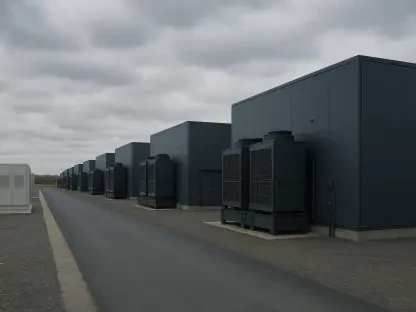
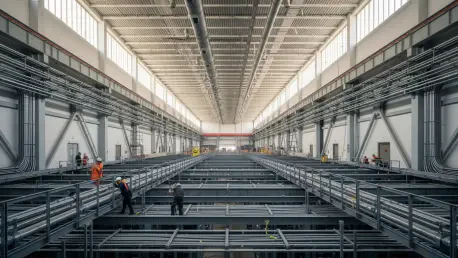
The physical footprint of the Saline campus is virtually unprecedented within the industrial construction sector, covering over 250 acres of land in Washtenaw County. With a total projected investment of approximately $16 billion, the site is being engineered to house three massive data center structures that will eventually deliver over 1 gigawatt of power to support advanced machine learning operations. Construction has progressed at a remarkably rapid pace, with all three primary data halls currently under various stages of development to meet the urgent global demand for specialized AI training systems. The first structure, a 550,000-square-foot facility, is already nearing completion, reflecting the prioritization of speed in a market where computing capacity is the most valuable commodity. This immense power requirement has necessitated specialized electrical infrastructure, ensuring that the facility can handle the heat and energy density characteristic of modern chips.
This development represents a historic economic pivot for Michigan, standing as the largest single private investment in the history of the state while diversifying its industrial base. Building on this momentum, the state is now aggressively positioning itself as a central node for the digital economy and critical high-tech infrastructure. The project leverages deep regional expertise through the involvement of local engineering firms and contractors, effectively transforming a landscape formerly defined by assembly lines into a modern powerhouse for data. This massive capital injection provides a substantial boost to the local economy, creating thousands of jobs while signaling to other firms that the Great Lakes region offers the necessary space and power for large-scale operations. By repurposing the state’s industrial legacy, the project demonstrates how traditional regions can successfully pivot to support digital needs.
Workforce Innovation: Strategic Financial Management
A distinctive element of this development is the pioneering approach to labor relations, which is governed by a first-of-its-kind project labor agreement involving 14 different skilled trade unions. This deep collaboration between the technology developers and North America’s Building Trades Unions ensures a consistent supply of approximately 700 highly trained union professionals who possess the expertise required for such a complex build. By prioritizing safety protocols and specialized technical training from the very beginning, the stakeholders have created a sustainable model for how the tech industry can work alongside organized labor to mitigate common construction risks. This partnership is designed to avoid the logistical delays and workforce shortages that often plague mega-projects of this scale, providing a blueprint for future infrastructure developments. The agreement also includes provisions for maintenance, ensuring that the local workforce remains integral.
The successful groundbreaking in Saline stands in sharp contrast to a broader industry currently struggling with significant supply chain disruptions and intense competition for limited energy resources. While many similar high-density projects across the United States have stalled due to local community opposition or financing hurdles, “The Barn” has successfully navigated these challenges through strategic partnerships with major financial entities. Collaborations with firms like Blackstone and Related Digital allowed the project to secure necessary funding and critical long-lead equipment early in the planning phase, keeping the timeline on track despite a volatile economic environment. This proactive financial planning has shielded the project from interest rate fluctuations and material shortages that have sidelined other developments. Furthermore, the involvement of institutional investors underscores the long-term viability of AI infrastructure.
Industry Implications: Long-Term Infrastructure Trends
As the initial phases of construction move toward completion, the Stargate campus in Michigan serves as a comprehensive blueprint for the future of technological expansion across the North American continent. Moreover, it demonstrates how massive private capital and cutting-edge artificial intelligence goals can be successfully integrated with traditional industrial expertise and robust regional labor strategies. This project not only sets the stage for future billion-dollar data center investments but also proves that the physical constraints of construction and energy availability are the new frontiers for the evolution of software. The transition toward gigawatt-scale campuses indicates that the next era of AI development will be defined as much by concrete and power grids as by algorithms and datasets. As other tech firms look to emulate this model, the focus will likely shift toward securing large parcels of land with access to reliable cooling sources.
The successful launch of this massive undertaking confirmed that the path to sovereign AI capabilities required a fundamental reimagining of how large-scale industrial projects were executed. Stakeholders recognized that the traditional silos between technology, labor, and local government had to be dismantled to achieve the speed and scale necessary for modern compute requirements. Moving forward, the industry learned that early engagement with energy providers and the adoption of standardized modular construction techniques were essential for maintaining momentum. The Saline project provided a clear lesson in the importance of aligning financial interests with community needs, ensuring that the infrastructure benefited the local population as much as the global technology ecosystem. As the first servers were installed, the focus shifted toward optimizing energy efficiency and exploring alternative power sources to sustain growth.