
Indonesia’s archipelagic geography presents a unique set of challenges that are currently being overcome by an unprecedented surge in telecommunications infrastructure investment and digital adoption. As the nation solidifies its position as a digital powerhouse in Southeast Asia, the demand for high-speed mobile data is transforming the physical landscape through the rapid expansion of telecom towers. This growth is not merely a response to consumer social media habits but is deeply rooted in the digital transformation of enterprise sectors and the governmental push for nationwide financial inclusion. With millions of citizens increasingly relying on mobile-first solutions for education, healthcare, and commerce, the pressure on network capacity has reached a critical tipping point. Consequently, the industry is witnessing a shift toward sophisticated, dense network architectures capable of supporting an increasingly data-hungry population.
Infrastructure Optimization: Urban Connectivity and Densification
Network Expansion: Accelerating 5G Deployment in Major Hubs
The transition toward 5G technology has moved from pilot programs in business districts to a comprehensive rollout across major metropolitan areas like Jakarta, Surabaya, and Medan. Telecommunications providers are prioritizing these high-density zones to satisfy the massive throughput requirements of modern applications, including cloud-based gaming and high-definition video streaming. To support this, tower companies are implementing small cell solutions and macro-tower upgrades that provide the necessary spectrum efficiency for mid-band frequencies. The volume of data traffic in these urban centers necessitates a granular approach to network design, where towers are no longer just passive steel structures but integrated nodes in a complex digital web. This densification strategy ensures that even in congested environments, users experience consistent latency and high-speed throughput while maintaining the stability of the broader metropolitan ecosystem.
Resource Management: Strategic Tower Sharing and Efficiency
Market dynamics are increasingly favoring independent tower companies over carrier-owned infrastructure, as mobile network operators seek to optimize their capital expenditures and focus on service delivery. This shift has led to a significant increase in the tenancy ratio, where multiple operators share a single tower to minimize operational costs and environmental impact. Strategic colocation is now the industry standard, allowing for a sustainable expansion model that avoids the redundancy of building multiple towers in the same vicinity. Furthermore, the use of advanced analytics in site selection has allowed these firms to identify high-demand areas with surgical precision, maximizing the return on every new asset deployed. By streamlining the permitting process and collaborating with local municipalities, the industry has accelerated the pace of construction to keep up with the soaring data appetite observed across the various provinces of the country.
National Connectivity: Digital Sustainability and Integration
Regional Inclusion: Enhancing Rural Access via Satellite
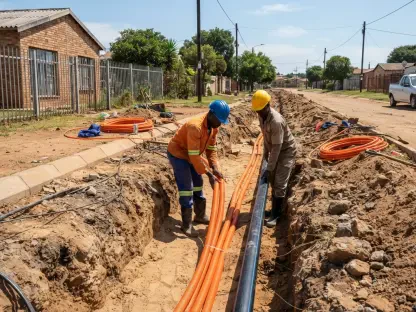
Bridging the digital divide between urban centers and remote regions remains a cornerstone of the national strategy, requiring a hybrid approach that combines physical towers with satellite backhaul. In the frontier regions, where laying terrestrial fiber is geographically prohibitive, the deployment of tower sites equipped with high-throughput satellite technology has become essential. This infrastructure provides a vital link for local economies, enabling digital banking and e-government services in areas that were previously underserved. At the same time, the aggressive fiberization of tower sites in suburban areas is providing the necessary backbone to handle the transition from 4G to 5G. By connecting these towers directly to fiber-optic networks, operators can reduce congestion and provide the stability required for mission-critical industrial applications. This balanced investment in remote and suburban areas ensures the digital economy remains inclusive and resilient.
Technical Evolution: Future-Proofing with Edge Computing
To ensure the long-term viability of the network, industry leaders prioritized the integration of renewable energy sources and localized data processing. They recognized that reducing physical distance between processing and the end-user was the only viable path to achieving the ultra-low latency promised by next-generation networks. Industry leaders successfully implemented decentralized data centers within tower compounds, which allowed for real-time processing of localized information. This shift supported the rise of autonomous logistics and smart city initiatives that defined the current landscape of the metropolitan digital experience. Furthermore, the prioritization of renewable energy sources mitigated the environmental footprint of these expanding networks. These strategic investments provided a robust foundation for scalability, ensuring that the infrastructure remained resilient against fluctuating energy costs and increasing data loads during peak times.