
As modern mobile carriers struggle to keep pace with the exponential rise in global data consumption throughout 2026, the deployment of artificial intelligence within wireless infrastructure has shifted from a visionary concept to a functional requirement for maintaining network integrity. Qiang Liu, an assistant professor at the University of Nebraska–Lincoln, is currently spearheading a transformative initiative designed to bridge the trust gap that currently hampers the full-scale adoption of AI-native telecommunications. Supported by a substantial $750,000 CAREER grant from the National Science Foundation, the research addresses a critical impasse where the potential for machine-led efficiency meets the practical reality of industry skepticism. While the theoretical benefits of autonomous network management are well-documented, many providers remain hesitant to relinquish control to automated systems that lack a proven track record of reliability. This project serves as a vital bridge, creating the necessary framework to ensure that AI-driven mobile networks are not only high-performing but also inherently safe for the millions of users who depend on them daily for communication.
Navigating Complexity: The Obstacles of Black Box Automation
The primary deterrent to the widespread implementation of automated network management is the unpredictable nature of complex algorithms when they are exposed to the volatile conditions of real-world traffic. Major telecommunications operators are frequently reluctant to integrate what they perceive as black box systems, which offer little visibility into their internal decision-making processes during critical periods of network congestion. This lack of transparency creates a significant risk profile, as a single algorithmic error during a peak demand event could lead to widespread service disruptions and catastrophic financial losses for the provider. Liu’s research focuses on dismantling these barriers by developing methods to make these opaque systems more predictable and accountable. By identifying the specific failure points within automated routines, the project seeks to transform autonomous agents from high-risk experimental tools into dependable components of the national infrastructure that can be trusted to maintain service continuity under any circumstances.
Beyond addressing safety concerns, the research aims to demonstrate how perfected AI algorithms can dramatically improve the return on investment for existing hardware. Instead of requiring a complete overhaul of physical components, the intelligent orchestration of current resources allows providers to maximize the throughput of their existing towers and base stations. This approach enables carrier networks to support a higher density of users with significantly increased speeds and lower latency, all while maintaining a level of stability that was previously impossible with manual or semi-automated configurations. By optimizing the interplay between software and hardware, the project highlights a path toward sustainable growth where efficiency is driven by algorithmic precision rather than just physical expansion. This focus on maximizing current assets ensures that the benefits of high-speed connectivity are accessible without the massive capital expenditures that often delay the deployment of new technological standards across diverse geographic regions.
Technical Foundations: Digital Twins and Transparent Architectures
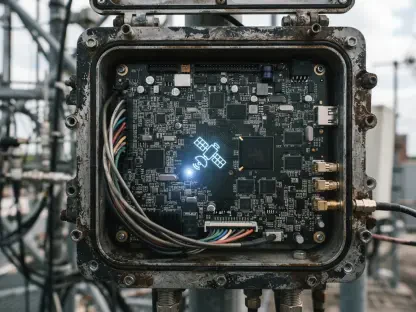
To establish a foundation for true network autonomy, the research team is utilizing sophisticated digital network twins that serve as virtual replicas of physical wireless systems. these digital environments allow for the rigorous testing and validation of AI behaviors in a controlled setting before any code is ever introduced to a live, operational network. By simulating a vast array of potential scenarios—ranging from sudden spikes in local user activity to unexpected hardware failures—researchers can observe how the automation responds and refine its logic accordingly. This safety-first approach ensures that when the technology finally makes the transition to real-world carrier environments, it is equipped to handle the complexities of the modern landscape without posing a threat to service stability. The use of digital twins effectively eliminates the trial-and-error phase that has historically made operators wary of adopting new software innovations, providing a reliable proof-of-concept for the industry.
Another cornerstone of the technical strategy is the advancement of Explainable AI, a framework designed to provide human engineers with clear and actionable rationales for every decision an automated system makes. When an autonomous network decides to reallocate bandwidth or shift traffic loads, the XAI system generates a report explaining the specific data points and logic that led to that specific action. This transparency is essential for building a collaborative environment where machine speed is tempered by human oversight, allowing engineers to verify the system’s logic and provide feedback that further refines performance. This bidirectional communication ensures that the network remains under the ultimate control of its human operators, fostering a sense of confidence in the automation’s ability to act as a partner rather than an uncontrollable agent. By making the “why” behind every move visible, the project creates a level of accountability that is necessary for the long-term success of AI-native mobile infrastructure.
Strategic Pathways: Workforce Development and Industry Evolution
The educational component of this initiative leverages the university’s private 5G network, known as Husker-Net, to provide students with an immersive learning environment that mimics professional carrier settings. By integrating this advanced infrastructure into the curriculum, the project allows both undergraduate and graduate students to engage in hands-on experimentation with the very technologies that are currently defining the 5G and 6G landscapes. Through the specialized Graduate Connect Program, students receive high-level mentorship and practical training that prepares them for leadership roles in the burgeoning telecommunications sector. This focus on workforce development ensures that the next generation of engineers is not only proficient in traditional networking concepts but also experts in the nuances of AI-driven orchestration. The university effectively serves as a talent pipeline, supplying the industry with skilled professionals who possess the technical literacy required to manage the increasingly complex systems that will define the rest of this decade.
The research team successfully demonstrated that bridging the digital divide required more than just hardware; it necessitated an immersive educational strategy that brought advanced technology to the most remote regions of Nebraska. By deploying virtual reality playgrounds and interactive simulations, the program established a sustainable model for engaging K-12 students who had previously been excluded from high-level STEM opportunities. Industry leaders eventually recognized that these outreach efforts were essential for cultivating a local workforce capable of managing autonomous networks. These sessions provided a blueprint for how academic institutions could partner with rural communities to ensure equitable participation in the digital economy. The initiative highlighted that future connectivity depended on the human talent developed today, rather than just the algorithms themselves. Consequently, the lessons learned from this project suggested that universal access must be paired with technical literacy to be truly effective.