
The modern American landscape is defined by an invisible yet indestructible web of connectivity that facilitates every interaction from high-frequency trading to remote surgical procedures. As the telecommunications sector reaches a state of total maturity in 2026, the distinction between a mobile provider and a home internet company has largely vanished into a unified architecture of fiber and spectrum. This transformation is driven by the realization that data consumption is no longer a periodic activity but a continuous environmental state, requiring networks that are both ubiquitous and infinitely scalable. The market leaders of today are those that successfully navigated the transition from being simple pipe providers to becoming the architects of a digital society. These entities have committed hundreds of billions of dollars to ensure that the infrastructure beneath our feet and in the air above us can handle the relentless demand for low-latency, high-bandwidth applications that define the current era.
The strategic landscape is currently dominated by a handful of giants that have moved beyond the initial 5G rollout phase into a period of deep, meaningful integration. This evolution is characterized by a “race to fiber,” where the density of a company’s underground glass-fiber network determines its ability to compete in the wireless space. We are seeing a market where the “Big Three” wireless carriers, the massive cable conglomerates, and the specialized infrastructure titans have entered a state of complex interdependence. Every byte of data transmitted over a smartphone eventually touches a fiber backbone or a leased tower, creating a commercial ecosystem where cooperation is just as vital as competition. As we evaluate the current top ten operators, it becomes clear that their dominance is rooted in their control over physical assets—the towers, small cells, and miles of fiber optic cabling that make the modern world function.
Leading the Charge in Wireless and Fiber Integration
Strategic Dominance of the Major Carriers
Verizon Communications currently maintains its position as the premier telecommunications entity in the United States by doubling down on a converged network strategy that prioritizes reliability over mere speed metrics. By 2026, the company has successfully integrated its acquisition of Frontier Communications, a move that fundamentally altered the competitive balance in the Northeast and beyond. This expansion allowed Verizon to secure a massive footprint of “last-mile” fiber, which serves a dual purpose: it provides high-margin residential broadband while simultaneously acting as the essential backhaul for its dense 5G Small Cell network. This synergy means that Verizon can offer a truly seamless handoff between mobile and home environments, ensuring that subscribers never experience a drop in throughput. The company’s focus on the “converged” leader model has proven that owning the physical infrastructure is the only way to guarantee the service quality demanded by high-value enterprise and consumer segments in a data-saturated market.
Building on this foundation, AT&T Inc. has emerged from its period of corporate restructuring as a streamlined and highly disciplined infrastructure powerhouse. After spending years divesting from its experimental media and entertainment ventures, the company has channeled all its resources into expanding its fiber-to-the-home network, which now reaches 28 million locations. This aggressive expansion is coupled with a sophisticated 5G mmWave deployment that targets high-traffic urban centers and industrial campuses. AT&T’s current strategy is rooted in the belief that the future of the enterprise market lies in private 5G networks and edge computing, where low latency is the primary differentiator. By focusing on the “bones” of the network, AT&T has managed to recapture the trust of corporate clients who require rock-solid stability for automated manufacturing and real-time logistics. This return to its telecommunications roots has allowed the firm to maintain a prestigious market share while improving its balance sheet through focused capital expenditure.
The Disruptive Expansion of Mobile First Networks
In contrast to the traditional approaches of its peers, T-Mobile US has leveraged its matured merger with Sprint to become the definitive leader in 5G availability and a major threat to traditional broadband providers. By 2026, T-Mobile has effectively utilized its superior mid-band spectrum holdings to blanket the country with high-speed wireless coverage that rivals wired connections in many suburban and rural areas. This technical advantage was the catalyst for its explosive growth in the Fixed Wireless Access market, where it now serves over 4.5 million households that previously had no choice but to use local cable monopolies. T-Mobile’s foray into the fiber market is a natural extension of this success, as it seeks to provide a holistic internet solution to its massive mobile subscriber base. This transition from a “pure-play” wireless carrier to an all-encompassing internet service provider demonstrates a shift in the industry where the delivery method—whether via airwaves or glass—matters less than the consistency of the user experience.
The success of T-Mobile is also a testament to the power of brand loyalty and simplified pricing structures in an industry often criticized for hidden fees and complex contracts. As the carrier expanded its reach, it forced its competitors to adopt similar “customer-first” strategies, leading to a general improvement in consumer satisfaction across the board. However, the true strength of T-Mobile in 2026 lies in its network capacity; with its Standalone 5G core fully operational, the company is now enabling advanced features like network slicing. This technology allows the carrier to reserve specific portions of its bandwidth for critical services, such as emergency responders or industrial IoT devices, without affecting the speeds of general consumers. This level of technical sophistication has allowed the firm to transition from a budget-friendly alternative to a top-tier premium carrier that competes directly with Verizon and AT&T for high-end corporate accounts and large-scale government contracts.
The Evolution of Broadband and Infrastructure
Scaling the Physical Backbone of the Internet
Comcast and Charter Communications, operating under the Xfinity and Spectrum brands respectively, represent the successful evolution of the American cable industry in the face of intense fiber and wireless competition. To maintain their dominance, these giants have accelerated the deployment of DOCSIS 4.0 technology, which allows their existing coaxial cable infrastructure to deliver symmetrical multi-gigabit speeds that rival dedicated fiber lines. This move was critical in 2026 to combat the churn caused by fiber-to-the-home rollouts and 5G home internet. Furthermore, both companies have pivoted toward a “wireless-first” growth strategy, leveraging their Mobile Virtual Network Operator agreements with Verizon to offer mobile services to their broadband customers. This “quad-play” bundling—combining internet, mobile, video, and security—has created a “sticky” ecosystem where customers are incentivized to keep their services under one roof for both convenience and significant cost savings.
This strategic shift has turned cable companies into some of the fastest-growing mobile providers in the country, despite not owning their own wireless towers. By 2026, the success of Comcast and Charter in the mobile space has fundamentally changed the competitive landscape, as they use their millions of public Wi-Fi hotspots to offload data traffic and keep costs low. This hybrid model, which blends traditional cable, mobile services, and advanced Wi-Fi networking, has allowed these firms to maintain a massive revenue base while expanding their reach into the enterprise sector. They are no longer just providers of television and internet; they are comprehensive connectivity partners for small businesses and residential consumers alike. Their ability to upgrade existing networks while simultaneously capturing mobile market share demonstrates the resilience of the cable model when backed by aggressive technological investment and smart partnerships.
Specialization in Data Transit and Edge Infrastructure
Beneath the consumer-facing layer of the industry lie the specialized infrastructure titans like Lumen Technologies and Zayo Group, which provide the high-capacity fiber routes that the rest of the world relies on. In 2026, Lumen has shifted its focus heavily toward the enterprise and public sector, managing a global fiber network that is essential for the movement of massive datasets. As artificial intelligence and machine learning become integrated into every aspect of corporate life, the demand for Lumen’s specialized fiber services has skyrocketed. These companies do not just provide “bandwidth”; they provide the low-latency pathways required for AI training and edge computing, where data must be processed near the point of origin rather than in a distant central cloud. This focus on “dark fiber” and specialized transport services ensures that the digital infrastructure of the United States remains fast enough to support the next generation of industrial applications.
Similarly, Zayo Group Holdings has solidified its role as the preferred partner for hyperscalers and large enterprises that require bespoke fiber solutions. The company’s extensive network of fiber route miles connects the data centers of the world, acting as the connective tissue for the global cloud. In 2026, the value of Zayo’s assets is higher than ever, as the physical geography of fiber routes becomes a competitive advantage in the race for digital supremacy. Because building new fiber routes is an incredibly expensive and time-consuming process involving complex permitting and massive labor costs, Zayo’s existing network serves as a powerful moat against new entrants. These infrastructure specialists operate out of the public eye, yet they are the ones who make it possible for a user in California to access data in a Virginia data center in a fraction of a second, proving that the physical backbone is just as important as the wireless interface.
Real Estate and Global Traffic Management
Foundations of Modern Connectivity
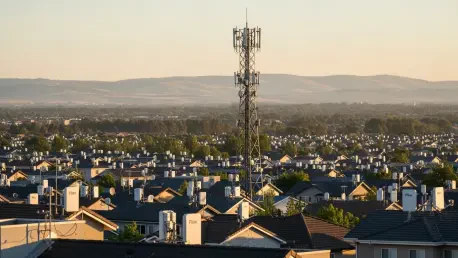
The physical world of telecommunications is anchored by real estate powerhouses like American Tower and Crown Castle, which own the actual towers and small cell sites that host the equipment of every major carrier. In 2026, these companies are recognized as the indispensable landlords of the digital age, as the densification of 5G networks requires a massive increase in the number of transmission sites. The transition to higher-frequency spectrum has necessitated the deployment of thousands of small cells on streetlights and utility poles, a process that these companies manage on behalf of the wireless providers. Because they own the permits and the physical structures in prime urban locations, American Tower and Crown Castle possess a level of market security that is nearly impossible to disrupt. Their business model is built on long-term leases that provide steady, predictable cash flows, making them the stabilizing force in an otherwise volatile technology sector.
Moreover, the role of these tower companies has expanded beyond just providing a place for antennas; they are now integrating “edge data centers” directly at the base of their towers. This allows for data processing to happen at the very edge of the network, significantly reducing the distance data has to travel and further lowering latency for end-users. In 2026, this integration of real estate and computing power is a key driver for applications like autonomous vehicle navigation and augmented reality, where every millisecond counts. By providing both the height for signals and the power for local processing, these firms have made themselves central to the “standalone” 5G ecosystem. Their success highlights a critical truth in the 2026 market: while software and services may get the headlines, the ultimate value of the telecom industry is increasingly tied to the physical ownership of the “dirt” and the steel that supports the digital cloud.
Navigating the Global Highway of Information
Rounding out the top tier of the industry is Cogent Communications, which operates as one of the world’s largest Tier 1 internet service providers. Cogent’s role is unique because it focuses almost entirely on the transit of data across the global internet backbone, maintaining peering arrangements with every major content provider from Netflix to Amazon. In 2026, Cogent is the primary highway for the massive flows of video traffic and cloud services that consume the majority of the world’s bandwidth. By keeping its costs low and its network highly efficient, Cogent provides the wholesale connectivity that allows smaller ISPs and large corporations to reach the rest of the global internet. The company’s influence is felt in the speed and reliability of every website and application, as it handles a significant percentage of total U.S. data traffic through its strategically located points of presence.
The interdependence between these ten giants creates a robust, self-sustaining ecosystem that has successfully closed the digital divide in many parts of the country. By 2026, the synergy between the tower owners, the fiber providers, and the consumer carriers has resulted in a landscape where 10 Gbps speeds are becoming the new standard for residential connectivity. This progress was not achieved through a single innovation but through the collective capital of these operators, who have turned connectivity into a public utility as essential as electricity or water. As we look at the state of the market, the primary challenge for the future is no longer about building the network, but about managing its immense complexity and ensuring that it remains secure from the ever-evolving threats of the digital age. The “Top 10” have effectively built the platform upon which the next century of American innovation will be constructed.
In the past years, the U.S. telecom industry was often viewed as a fragmented collection of service providers struggling to keep pace with demand, but by 2026, it has matured into a consolidated and highly efficient national asset. The successful integration of fiber and 5G has created a foundation that supports everything from the decentralized workforce to the explosion of generative AI applications. Looking forward, the next logical step for these operators is to focus on the democratization of high-speed access through the full utilization of the Broadband Equity, Access, and Deployment (BEAD) initiative. Companies should prioritize the expansion of their fiber networks into the remaining underserved areas to create a truly universal digital fabric. Furthermore, as the market reaches saturation, the focus must shift from customer acquisition to the development of value-added services such as integrated cybersecurity and private cloud management. By evolving from mere connectivity providers into comprehensive digital experience partners, these ten operators can ensure their continued relevance in an era where the network is the world.