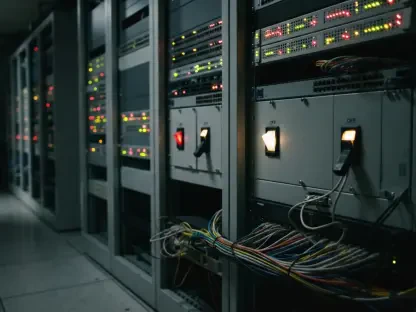

The rapid acceleration of generative artificial intelligence has fundamentally altered the global supply chain for critical hardware components, forcing a massive reallocation of silicon and high-performance memory from individual consumer devices toward massive hyperscale data centers. This systemic transition represents a significant departure from previous manufacturing cycles, as the sheer scale of compute requirements for training large language models consumes the lion’s share of available advanced chip capacity. Leaders like Nirav Patel from Framework have noted that this is not a temporary shortage but a structural transformation in the electronics industry. As cloud service providers secure bulk orders for specialized accelerators, traditional personal computer manufacturers find themselves competing for the same fundamental materials. This competition has induced a market-wide scarcity that challenges the long-standing assumption of cheap, readily available high-end local processing power for every individual user across the globe.
Supply Chain Pressures and Market Divergence
The Impact: Navigating the Global Capacity Crunch
The current imbalance between supply and demand has created a scenario where manufacturers are forced to navigate what Cisco CEO Chuck Robbins identifies as a persistent capacity crunch across the board. This environment requires a fundamental shift in how hardware costs are absorbed or passed down to the consumer, as the price of high-bandwidth memory and advanced storage modules continues to climb due to their necessity in server environments. Consequently, the industry is witnessing a strategic divergence where the traditional middle-ground PC is disappearing in favor of more specialized hardware. Companies must now choose between investing heavily in premium components to maintain local performance or shifting toward a more lightweight architecture that offloads heavy lifting to the cloud. This economic pressure is acting as a catalyst for a broader market evolution, where the value proposition of a laptop or workstation is no longer defined solely by its internal specifications but by its efficiency in a hybrid cloud ecosystem.
Maintaining the status quo in hardware procurement has become increasingly difficult as upstream suppliers prioritize high-margin AI chips over standard consumer-grade processors. This shift forces a total rethink of the lifecycle of personal devices, as the rapid pace of cloud-side innovation often outstrips the physical capabilities of older hardware fleets. As silicon vendors allocate their most advanced fabrication nodes to high-end enterprise accelerators, the consumer and standard business laptop segments are left to contend with the remnants of production capacity. This reality creates a distinct “fork” in the development of personal computing, where one path leads toward ultra-thin, cloud-dependent clients and the other toward powerful, AI-native workstations. The industry is effectively being split into two tiers, each serving different operational philosophies and budgetary constraints. This divergence is not merely a technical hurdle but a profound economic shift that determines which organizations can afford to maintain high-performance local computing resources.
Structural Changes: Innovation in Device Engineering
The push toward cloud-reliant devices represents a radical move toward minimizing local hardware costs while maximizing connectivity and service-based utility for the end user. By stripping away the need for expensive on-board graphics and massive local storage, manufacturers can mitigate the impact of the current chip shortage and provide more affordable access to modern computing power. This model assumes that the network is the computer, placing an immense burden on high-speed connectivity and low-latency infrastructure. For many users, this shift means a transition to devices that function primarily as sophisticated windows into powerful remote servers, where the actual processing of complex AI tasks happens miles away from the physical interface. This approach allows for a more flexible and scalable technology stack, though it introduces new challenges regarding offline functionality and the long-term cost of continuous subscription-based cloud services that replace one-time hardware purchases.
In direct contrast to the thin-client trend, industry giants such as HP, Lenovo, and Dell are doubling down on the development of AI-native endpoints equipped with powerful local processing. These machines are designed with integrated Neural Processing Units that allow for real-time intelligence and data handling without the latency or privacy concerns associated with sending every query to a remote data center. By maintaining high levels of local compute power, these manufacturers offer a solution for users who require data sovereignty and immediate responsiveness for creative or technical tasks. This “thick client” strategy acknowledges that while the cloud is powerful, there remains a critical need for local intelligence that can function independently of a network connection. The engineering of these devices focuses on balancing power consumption with extreme performance, ensuring that the next generation of mobile workstations can handle heavy AI workloads while still providing the battery life and portability expected by modern professionals.
Strategic Realignment for the Modern Enterprise
Fleet Management: Evaluating Hardware Locality
Enterprise IT leaders have reached a critical juncture where the management of device fleets requires a total reevaluation of how and where computing actually occurs. Decisions regarding hardware procurement are no longer based strictly on benchmarks or brand loyalty but on how a specific device fits into the broader organizational architecture of the company. With the rising costs of premium hardware, decision-makers must determine which roles within their workforce truly require high-performance local silicon and which can operate effectively on cloud-based systems. This strategic triage is essential for maintaining operational efficiency and budget control in an era where the components of a laptop are in direct competition with the components of a world-class AI supercomputer. The goal is to create a tiered infrastructure that balances the high cost of local power with the operational flexibility of the cloud, ensuring that every employee has exactly the tools they need to stay productive.
Navigating this complex environment involves more than just selecting a model from a catalog; it requires a deep understanding of how data flows through the organization and where potential bottlenecks exist. IT leaders are increasingly looking for hardware that offers modularity and longevity, allowing them to upgrade specific components rather than replacing entire fleets as AI requirements evolve. This shift in procurement philosophy mirrors the broader trends in sustainable technology, where extending the life of a device is both an economic and environmental necessity. Furthermore, the choice of hardware now reflects an organization’s stance on digital infrastructure alignment, as those who invest in local AI capabilities often do so to maintain a competitive edge in speed and security. The management of these sophisticated, integrated cloud-local ecosystems has become a core competency for modern IT departments, shifting the focus from simple maintenance to the strategic orchestration of diverse computing resources.
Data Sovereignty: Balancing Security and Performance
The transition toward AI-centric computing has brought concerns about data security and privacy to the forefront of the hardware selection process for modern businesses. Organizations that handle sensitive information are increasingly wary of relying entirely on cloud-based AI services, as the movement of proprietary data to external servers presents a significant risk for potential breaches or unauthorized access. By opting for AI-native endpoints with robust local processing power, companies can ensure that sensitive calculations and data manipulations remain within their own secure perimeter. This approach provides a layer of protection that is difficult to replicate in a purely cloud-dependent environment, making local AI a preferred choice for legal, financial, and healthcare sectors. The ability to run complex models locally also mitigates the risks associated with service outages or fluctuating cloud costs, providing a more stable and predictable environment for critical business operations and long-term planning.
Technology leaders concluded that the most effective way to address the infrastructure shift was to integrate a hybrid model that leveraged both local and remote resources. They recognized that the choice of hardware served as a foundation for broader organizational goals regarding expense management and digital security. Organizations adopted a policy of assessing specific workload requirements before committing to large-scale fleet renewals, ensuring that high-performance silicon was allocated where it provided the most value. This proactive approach allowed companies to maintain a competitive advantage while navigating the rising costs of the global capacity crunch. By focusing on integrated ecosystems rather than isolated devices, decision-makers ensured their infrastructure was resilient enough to handle the next generation of digital transformation. The final strategy involved a continuous review of hardware performance and security protocols to adapt to the ever-changing landscape of the global electronics market.