
The vast expanse of the global seafloor is crisscrossed by nearly a million miles of fiber-optic cables, a silent infrastructure that powers the modern digital age by carrying the weight of the world’s internet traffic. While these glass strands were meticulously engineered for high-speed data transmission, researchers have recently discovered that they possess an inherent sensitivity to the physical environment that rivals specialized scientific instruments. By repurposing this existing telecommunications network, geophysicists are transforming standard internet conduits into a massive, planet-wide seismic observatory. This shift represents a fundamental change in how humanity monitors the internal mechanics of the Earth, moving away from a reliance on expensive, isolated sensors toward a model of continuous, distributed observation. The sheer scale of this repurposed network provides a level of coverage that was previously impossible to achieve, particularly in the deep ocean, where traditional seismometers are notoriously difficult and costly to maintain over long durations.
Mechanics of Distributed Acoustic Sensing
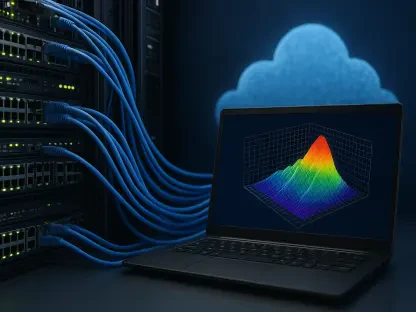
At the heart of this technological transformation is a process known as Distributed Acoustic Sensing, or DAS, which utilizes the physical properties of light within fiber optics to detect environmental changes. When a laser pulse is sent through a fiber-optic cable, it encounters microscopic imperfections in the glass that cause a small portion of the light to scatter back toward the source. If the cable is disturbed by a seismic wave, a slight temperature change, or even the movement of heavy machinery nearby, the physical strain on the fiber alters the phase of this backscattered light. An “interrogator” device connected to one end of the cable can analyze these minute shifts in the returning signal with incredible precision. This allows scientists to pinpoint the exact location and intensity of the vibration along the entire length of the cable. Effectively, every few meters of a hundred-mile-long cable becomes a virtual sensor, providing a high-density stream of data that far exceeds the capabilities of traditional point-based monitoring systems.
The implementation of DAS technology offers a significant economic and logistical advantage because it leverages infrastructure that is already in place. Instead of deploying thousands of individual seismic stations, which require independent power sources and data transmission links, researchers can simply attach an interrogator to a dark fiber—a portion of the cable not currently being used for data. This approach has already demonstrated its worth in high-risk zones; for example, a project in Iceland utilized local fiber networks to provide a critical 26-minute early warning before a volcanic eruption near Grindavík. Such a lead time is invaluable for emergency services and evacuation efforts. Furthermore, experiments conducted by teams at Caltech have shown that a single 62-mile stretch of cable can generate data equivalent to 10,000 traditional seismometers. This density of information allows for the creation of highly detailed 4D maps of the subsurface, revealing how seismic energy moves through different geological layers in real time.
Expanding Seismic Monitoring to the Lunar Frontier
The success of terrestrial fiber-optic sensing has naturally sparked interest in applying similar principles to extraterrestrial environments, specifically the lunar surface. As space agencies prepare for sustained human presence on the Moon, understanding lunar seismicity is becoming a top priority for ensuring the safety of future habitats and infrastructure. Unlike Earth, the Moon does not have tectonic plates; however, it experiences “moonquakes” caused by the gravitational pull of Earth, impacts from meteorites, and extreme thermal expansion and contraction during the transition between lunar day and night. Researchers at Los Alamos National Laboratory have proposed unspooling long stretches of fiber-optic cable across the lunar regolith to create a widespread seismic net. This would provide a much more comprehensive view of the Moon’s internal structure than the limited number of seismometers left behind during the Apollo missions, which ceased operation decades ago and provided only a narrow window into the Moon’s geological life.
Deploying a DAS system on the Moon presents unique engineering challenges, yet the potential scientific rewards are immense. Because the Moon lacks an atmosphere and a liquid core like Earth’s, seismic waves travel differently through its interior, often ringing for long periods due to the highly fractured and dry nature of the lunar crust. A fiber-optic array could capture these subtle signals across a broad area, helping scientists determine the thickness of the crust and the exact composition of the lunar mantle. This data is essential for identifying stable locations for permanent bases, as even minor quakes could pose risks to pressurized structures over time. By utilizing a lightweight and durable medium like fiber-optic cable, mission planners can deploy a vast sensing network without the heavy payload requirements associated with hundreds of individual mechanical sensors. This integration of telecommunications and geology represents a streamlined approach to planetary exploration, where the same lines that connect future lunar colonies will also keep watch over the ground beneath them.
Future Applications and Geological Insights
The integration of fiber-optic sensing into global and lunar monitoring systems suggests a future where infrastructure is inherently “aware” of its physical surroundings. On Earth, this technology is being adapted to monitor various environmental factors beyond just earthquakes, including the flow of glaciers, the stability of permafrost, and even the health of urban infrastructure like bridges and tunnels. In the Canary Islands, submarine cables have successfully detected both local tremors and distant oceanic quakes, proving that the deep-sea network can serve as a global early-warning system for tsunamis. This dual-use capability—where a single asset provides both high-speed connectivity and vital scientific data—maximizes the value of massive investments in global cabling. As the technology matures, the focus will likely shift toward refining the algorithms used to process the staggering amount of data generated by these virtual sensors, employing machine learning to distinguish between routine background noise and significant geological events.
Looking forward, the development of standardized protocols for “science-ready” cables could ensure that every new internet link installed on the ocean floor or on a lunar outpost is equipped for seismic observation from the start. Governments and private telecommunications companies should collaborate to integrate DAS interrogators into landing stations and lunar hubs, creating a seamless interface between commercial and scientific interests. For the scientific community, the next step involves expanding these networks into previously unmonitored regions, such as the polar ice caps or the deep trenches of the Pacific, to fill critical gaps in our understanding of planetary dynamics. By embracing this model of distributed sensing, humanity can build a more resilient society that is better prepared for the inevitable shifts in the ground below. The transition from passive cables to active sensors marks the beginning of an era where the very tools we use to communicate also serve as our most sensitive windows into the hidden movements of the worlds we inhabit. In the years following 2026, the refinement of these systems provided the necessary data to safeguard both terrestrial cities and the first generation of lunar explorers.