
Vladislav Zaimov is a distinguished telecommunications specialist with a deep focus on enterprise network resilience and the complex risk management strategies required for vulnerable satellite infrastructures. As the Federal Communications Commission moves to overhaul its spectrum-sharing framework, Zaimov’s insights provide a critical bridge between legacy regulatory hurdles and the high-speed future of orbital connectivity. In this discussion, we explore the transition from rigid 1990s power limits to dynamic, performance-based standards that promise to reshape the global digital landscape.
Traditional spectrum sharing relies on static power limits established in the 1990s. How does switching to performance-based criteria like Adaptive Coding and Modulation change day-to-day operations for satellite engineers, and what specific technical hurdles arise when implementing these modern standards?
Moving away from the static Equivalent Power Flux Density (EPFD) limits is a massive shift that requires engineers to pivot from rigid hardware constraints to more fluid, software-defined environments. In day-to-day operations, this means utilizing Adaptive Coding and Modulation (ACM) to dynamically adjust signal strength and data rates in real-time based on atmospheric conditions or local interference levels. The implementation process begins with a granular assessment of the link budget, followed by the deployment of intelligent algorithms that can throttle modulation schemes on the fly without dropping the connection. It is a complex technical dance that replaces a “one-size-fits-all” power cap with a nuanced system that squeezes every bit of performance out of the available spectrum while ensuring no signal overflows into forbidden territory.
Modernizing these sharing rules is expected to unlock a seven-fold increase in space-based broadband capacity. Can you break down the specific infrastructure upgrades needed to capture this growth and explain how a $2 billion economic impact translates to lower monthly bills for rural households?
To actually realize that seven-fold increase in capacity, we are not just looking at software updates; we are talking about a complete refresh of how ground stations and user terminals process high-throughput signals. When we discuss a $2 billion economic impact, it is not merely an abstract figure for industry stakeholders; it represents the massive efficiency gains that allow providers to serve thousands more customers using the same orbital hardware. For a family in a rural area, this means the high cost of bandwidth “scarcity” effectively disappears, allowing operators to pass those savings down through competitive, affordable pricing plans. It represents the difference between a sluggish, expensive connection that feels like a relic and a robust service that finally closes the digital divide for remote communities.
Historically, strict protections for Geostationary (GSO) systems have limited the power levels of Non-Geostationary (NGSO) constellations. What are the long-term consequences of this “overprotection” on broadband latency, and how do performance-based rules provide a more balanced environment for both types of satellite operators?
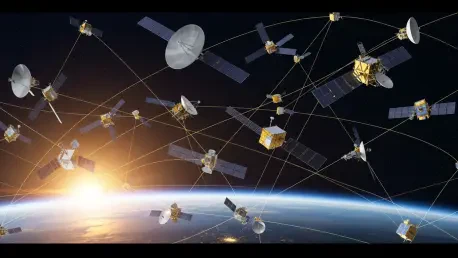
The overprotection of GSO systems has essentially acted as a glass ceiling, forcing modern NGSO constellations to operate with “one hand tied behind their back” regarding power and signal clarity. Because of those 1990s-era rules, users have frequently suffered through unnecessary latency spikes and throttled speeds that simply do not reflect what today’s advanced satellite technology is capable of delivering. By moving to performance-based rules, we shift away from protecting an old way of doing business and toward a level playing field where both GSO and NGSO systems can coexist based on actual, measured performance. This balanced approach ensures that no single technology stifles another, allowing for a much richer ecosystem of low-latency services that are essential for real-time applications like video conferencing and distance learning.
Future spectrum sharing will likely rely on voluntary, private agreements between satellite companies rather than rigid government mandates. How do these good-faith negotiations typically unfold, and what metrics should be used to ensure that interference remains minimal while maximizing total network throughput?
These good-faith negotiations are where the real engineering innovation happens, as companies sit down to share detailed orbital data and interference models that a government agency simply could not mandate on a blanket basis. We are moving away from rigid, “thou shalt not” rules and toward collaborative data-sharing where operators agree on specific interference thresholds that protect the integrity of both networks. The key metrics involve real-world signal-to-noise ratios and actual throughput benchmarks rather than theoretical power flux density limits that were calculated in a laboratory decades ago. It is a much more agile way to manage the orbital environment, ensuring that two massive constellations can occupy the same frequency bands without drowning each other out in a sea of electronic noise.
New technical frameworks aim to deliver faster speeds and greater reliability to remote areas. Beyond simple internet browsing, what specific industries in these regions stand to gain the most from this increased capacity, and what anecdotes can you share regarding the limitations of current space-based speeds?
Beyond just basic browsing, industries like precision agriculture and remote mining are on the verge of a total transformation thanks to this increased capacity and reliability. I have seen cases where a remote health clinic had to choose between downloading a large medical image or maintaining a live video consultation—a frustrating and potentially dangerous trade-off caused by restricted bandwidth. With these new rules, we are moving toward a reality where those life-saving data transfers happen in seconds rather than minutes, and heavy machinery in a mine can be operated remotely with zero lag. It is about more than just “faster” internet; it is about providing a reliable backbone for local economies that have been held back for years by the lag and limitations of legacy satellite systems.
What is your forecast for space-based broadband?
I expect we are entering a “golden age” where space-based broadband finally becomes indistinguishable from terrestrial fiber in terms of the everyday user experience. Within the next few years, as these modern rules take hold, we will see the $2 billion in projected benefits manifest as a surge in new satellite-to-cell services and ubiquitous global connectivity that reaches the most forgotten corners of the planet. The transition from 1990s-era restrictions to performance-based agility will spark a wave of innovation that we are only just beginning to imagine today. It is a thrilling time to be in this field, as we watch the technical barriers of the past crumble to make way for a truly connected world.