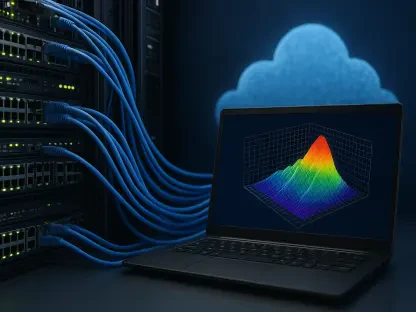

The rapid proliferation of data-intensive applications has pushed the existing architectural boundaries of the global internet to a critical breaking point where traditional routing can no longer keep pace. While the current model relies on centralizing complex computations in massive data centers, the physical distance between users and these hubs introduces unavoidable latency that cripples real-time artificial intelligence. To address this fundamental limitation, a transformative research project led by Dr. Rhongho Jang at Wayne State University is exploring the integration of Graphics Processing Units directly into network routers. This shift aims to evolve routers from passive traffic directors into active, intelligent participants in the data processing cycle. Supported by a prestigious National Science Foundation CAREER award, this five-year initiative seeks to redefine how vision-inspired generative inference occurs at the edge of the network, potentially eliminating the bottlenecks that have long hindered the deployment of high-performance AI services in suburban and rural digital environments.
Redefining the Architecture of Edge Intelligence
Bridging the Gap Between Routing and High-Performance Computing
The primary technical challenge in modern networking involves the inefficient handoff between high-speed data transmission and the heavy computational requirements of artificial intelligence. Traditional routers are designed for throughput and packet switching, lacking the hardware specialized for the matrix mathematics required by modern generative models. By embedding GPUs into these nodes, the research creates a unified environment where data can be analyzed as it traverses the network path. This integration requires a complete overhaul of how memory is managed between the network interface and the processing core. Building a high-throughput pipeline necessitates that the router can offload specific tasks to the GPU without creating internal congestion. This method effectively turns the network into a distributed supercomputer, where the intelligence is baked into the wires themselves, allowing for a level of responsiveness that was previously impossible when relying on round-trip communication with distant cloud servers.
Furthermore, this architectural evolution focuses on optimizing the shared memory space to ensure that the transition of data packets into AI-ready vectors is instantaneous. In a typical scenario, the overhead of moving data from a network card to a separate server introduces micro-delays that aggregate into noticeable performance drops. The integrated approach leverages vision-based sketching techniques to vectorize network traffic in real-time, allowing the system to categorize and process information based on visual patterns rather than just text-based headers. This vision-inspired approach allows the hardware to “see” the shape of the data flow, identifying priority packets and security threats through high-speed visual inference. As these integrated units become more common between 2026 and 2030, the reliance on centralized processing will likely diminish, fostering a more resilient and decentralized internet infrastructure that prioritizes local processing power over massive, power-hungry centralized data hubs.
Advancing Generative Inference Through Vision-Inspired Models
Generative inference at the network edge presents a unique set of obstacles, particularly concerning the limited power and space available within standard router enclosures. The research addresses this by implementing specialized generative models that are optimized for the specific constraints of in-network hardware. Unlike general-purpose AI, these models are tailored to handle telemetry data and traffic patterns, providing a predictive layer to network management. By utilizing vision-inspired sketching, the system can compress vast amounts of traffic data into manageable vectors that the integrated GPU can process without overheating or exhausting its memory bandwidth. This allows the router to generate immediate responses to changing network conditions, such as dynamically rerouting traffic to avoid congestion or adjusting bandwidth allocation for high-priority surgical or industrial teleoperation tasks that require zero-latency feedback.
Beyond simple traffic management, these generative models serve as a foundation for a more proactive approach to cybersecurity and system health. Traditional firewalls and intrusion detection systems are often reactive, identifying threats only after they have matched a known signature or exhibited suspicious behavior over time. An integrated GPU allows for the continuous execution of complex generative algorithms that can simulate potential attack vectors in real-time, identifying anomalies that would be invisible to standard processors. This creates a self-healing network environment where the infrastructure can anticipate and mitigate distributed denial-of-service attacks or sophisticated malware injections before they penetrate the deeper layers of the system. This proactive stance represents a significant shift in digital defense, moving away from perimeter-based security toward an inherent, intelligent immunity that resides within the routing hardware itself.
Strategic Impact on Security and Educational Growth
Strengthening Cyber Defenses via Intelligent Infrastructure
The integration of high-performance computing into the core of the internet’s delivery systems provides an unprecedented opportunity to modernize cybersecurity protocols. Current security frameworks often struggle with the sheer volume of encrypted traffic, which requires significant computational power to inspect without slowing down the user experience. By leveraging the parallel processing capabilities of GPUs within the router, the network can perform deep packet inspection and behavioral analysis at line speed. This capability ensures that security does not become a bottleneck for performance, a common trade-off in existing network designs. The research emphasizes the use of these intelligent systems to detect sophisticated threats that leverage AI themselves, effectively creating an automated defense layer that can counter machine-speed attacks with machine-speed responses, safeguarding sensitive data across the global digital landscape.
Moreover, the transition to intelligent infrastructure facilitates a more granular level of control over data privacy and sovereignty. When processing occurs at the local router level, sensitive information does not necessarily need to be transmitted to a central cloud provider for analysis. This localized approach minimizes the “attack surface” of the data, as it remains within a more controlled and immediate geographic or institutional perimeter. This is particularly relevant for sectors like healthcare and finance, where data residency requirements are stringent. By providing the hardware necessary for local AI inference, these GPU-integrated routers empower organizations to maintain high levels of functionality while adhering to complex regulatory standards. This development signals a move toward a more fragmented yet secure internet, where intelligence is distributed strategically to protect the end-user while maintaining the high speeds required for modern digital life.
Cultivating Expertise for a Data-Driven Economy
A critical component of this research initiative involves the educational advancement of the next generation of computer scientists and engineers. As the internet shifts toward a more computationally active model, the skills required to maintain and innovate within this space are changing rapidly. The grant supports the development of a curriculum that merges traditional networking theory with modern artificial intelligence and GPU programming. This ensures that students are not just learning how to manage current systems but are equipped to lead the transition into the intelligent infrastructure of the future. By involving students directly in the research of vision-inspired generative inference and in-network computing, the project bridges the gap between theoretical academic study and the practical needs of a global economy that is increasingly reliant on real-time data analysis and secure communication.
Building on this educational foundation, the project fosters a collaborative environment where cross-disciplinary expertise is the standard rather than the exception. Engineers must now understand the nuances of neural network weights just as well as they understand routing protocols and hardware thermal limits. This holistic approach to tech education prepares the workforce for a market where the boundaries between hardware, software, and networking have permanently blurred. As these students transition into the professional world between 2026 and 2031, they will carry the insights gained from this research into the private sector, driving further innovation in edge computing and cybersecurity. This commitment to human capital ensures that the technical breakthroughs achieved in the lab have a lasting impact on society, fueling a cycle of continuous improvement in the digital tools that define modern existence.
The successful implementation of GPU-integrated routers requires a shift in how network architects approach hardware procurement and software deployment. Organizations should begin evaluating their current edge infrastructure to identify locations where latency-sensitive AI tasks are most frequently offloaded to the cloud. By prioritizing the upgrade of these specific nodes to intelligent routing hardware, businesses can drastically reduce operational delays and improve the user experience for real-time applications. Furthermore, IT departments must invest in training programs focused on the intersection of AI and networking, as the management of these hybrid systems demands a more diverse skill set than traditional network administration. Future developments will likely focus on standardizing the communication protocols between different manufacturers of integrated routing units to ensure global interoperability. Moving forward, the industry must emphasize the creation of open-source frameworks for vision-based traffic sketching, allowing for a collaborative approach to securing and optimizing the intelligent internet.