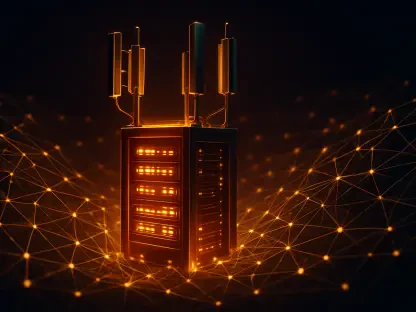

The mobile industry is witnessing a seismic shift as the traditional boundaries between telecommunications hardware and high-performance computing continue to dissolve into a single, unified architecture. Future 6G networks will rely on a foundation of shared accelerated computing to manage both

TELUS has entered the Brazilian digital economy by focusing on niche sectors such as digital health and strategic business-to-business partnerships. This entry signals a broader transformation within the Brazilian telecommunications landscape, which has evolved into the most sophisticated and

To protect its market share against price-sensitive subscribers, the conglomerate is looking to capture distinct budget demographics without diluting its flagship premium pricing. This tactical evolution by Virgin Media O2 represents a calculated response to a landscape where household budgets are

The transition of satellite connectivity from a niche emergency tool to a standard consumer expectation has forced traditional rivals into an unprecedented era of cooperation. As the digital divide shifts from terrestrial cables to the vacuum of low-Earth orbit, the European telecommunications

The Intersection of Silicon Architecture and Next-Generation Connectivity The invisible tug-of-war for wireless dominance is currently being fought not just across airwaves, but within the microscopic architecture of the silicon chips powering modern base stations. As the telecommunications

Analysis of current network status reveals a stark contrast between Spectrum's internal 'operational' designation and the surge of total service loss reported by customers in the St. Louis metropolitan area. This disparity often creates significant confusion for residential and business users who
1 2 3 4 5 6 7 8 9 10 11 12 13 14 15 16 17 18 19 20 21 22 23 24 25 26 27 28 29 30 31 32 33 34 35 36 37 38 39 40 41 42 43 44 45 46 47 48 49 50 51 52 53 54 55 56 57 58 59 60 61 62 63 64 65 66 67 68 69 70 71 72 73 74 75 76 77 78