
The telecommunications landscape has reached a point of unprecedented complexity where traditional instruction manuals and static video tutorials no longer suffice for maintaining the intricate web of modern connectivity. As 5G-Advanced and early 6G infrastructures demand localized precision and rapid troubleshooting, industry leaders like Verizon and Deutsche Telekom have pivotally transitioned toward integrated artificial intelligence and immersive training environments. This shift is not merely a technological upgrade but a fundamental redesign of how human capital interacts with high-frequency hardware and software-defined networks. By merging generative AI with augmented reality, companies are now able to place a virtual expert alongside every field technician, effectively closing the massive skill gap that has historically plagued the sector during rapid rollouts. This evolution reflects a broader trend where the physical and digital training realms dissolve into a singular, responsive ecosystem that prioritizes real-time knowledge transfer over rote memorization.
Transforming Field Operations: Real-Time Guidance Systems
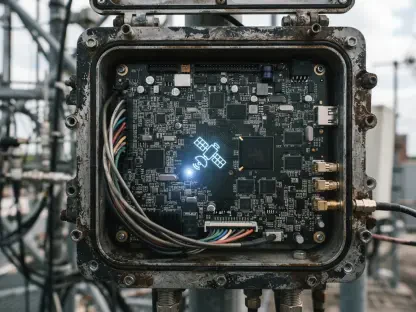
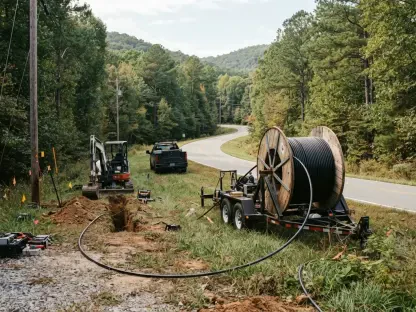
Field technicians often face daunting challenges when repairing subterranean fiber optic cables or configuring massive MIMO antenna arrays atop urban skyscrapers under severe time constraints. To address these hurdles, major carriers have deployed heads-up displays that overlay digital schematics onto physical equipment in real-time, guided by sophisticated AI vision systems. These systems identify specific components and highlight the exact connection points required, significantly reducing the likelihood of human error during complex installations. For instance, when a technician encounters an unfamiliar hardware revision, the AI can instantly retrieve the specific maintenance history and manufacturer specifications, projecting them directly into the user’s line of sight. This immediate access to contextual data ensures that even junior staff can perform at the level of seasoned veterans, effectively democratizing expertise across the entire technical workforce. The result is a dramatic decrease in mean time to repair and a higher first-time fix rate.
Moreover, the integration of haptic feedback and spatial audio within these training modules allows technicians to practice delicate procedures in a risk-free virtual environment before stepping into the field. This immersive approach mimics the physical resistance of cables and the auditory cues of functioning hardware, creating a high-fidelity simulation that builds muscle memory and situational awareness. AI algorithms track every movement and decision made during these sessions, providing personalized feedback and identifying specific areas where a trainee might need additional practice or theoretical knowledge. By analyzing biometric data such as eye-tracking and heart rate, the system can even gauge a technician’s stress levels, adjusting the difficulty of the simulation to ensure optimal learning conditions. This data-driven methodology ensures that by the time a worker reaches a remote cell site, they have already mastered the task hundreds of times in a controlled, digital twin environment, which ultimately safeguards both personnel and equipment.
Future-Proofing the Workforce: Strategic Action and Insights
Organizations that successfully adopted these immersive frameworks realized that the initial investment in high-fidelity hardware and AI architecture was quickly offset by reduced operational costs and increased employee retention. Leaders prioritized the development of interoperable platforms that allowed training data to flow seamlessly between field operations and corporate strategy departments, creating a unified view of workforce readiness. They also recognized the importance of ethical data usage, ensuring that the tracking of employee performance within virtual environments was transparent and aimed at professional growth rather than punitive measures. By fostering a culture of continuous, technology-enabled learning, these companies positioned themselves as desirable employers in a competitive labor market, attracting top-tier talent eager to work with cutting-edge tools. The transition demonstrated that the human element remained the most critical asset in the telecom chain, provided it was supported by the right digital infrastructure.
Decision-makers moved beyond static training cycles and implemented adaptive learning pathways that evolved in tandem with the individual’s career progression and the company’s technological roadmap. They established dedicated centers of excellence to oversee the integration of emerging XR technologies, ensuring that new training modules were always aligned with the latest 6G standards and edge computing capabilities. To maintain this momentum, stakeholders focused on building partnerships with hardware manufacturers to develop lighter, more ergonomic wearable devices that could be worn comfortably for entire shifts in diverse environmental conditions. Investing in robust cybersecurity measures to protect the vast amounts of proprietary training data became a top priority, as did the creation of standardized protocols for virtual collaboration across global teams. These strategic actions ensured that the workforce was not only prepared for the challenges of today but was also agile enough to pivot as the next generation of connectivity solutions emerged.