
The labyrinthine network of independent fiber providers crisscrossing the British landscape has long resembled a digital Wild West, where disconnected pockets of connectivity left service providers stranded in a sea of technical incompatibility. For years, the rapid proliferation of alternative networks promised a golden age of high-speed internet, yet the reality proved far more complex for businesses trying to navigate the fractured infrastructure. Instead of a seamless national grid, the market split into dozens of localized islands, each operating with bespoke hardware and unique management protocols that often hindered widespread adoption.
AllPoints Fibre Networks (APFN) has stepped into this breach, positioning itself as the critical consolidator capable of weaving these disparate threads into a singular, cohesive utility. Operating as a wholesale-only platform under the umbrella of Fern Trading and Octopus Energy Group, the organization focuses on the massive task of unifying disparate fiber footprints. By eliminating the friction between infrastructure owners and retail internet service providers, the company is fundamentally altering how digital services reach the consumer across the country.
Beyond the Patchwork: Why the UK’s Fiber Market Demands a Unified Front
The British fiber sector reached a tipping point where extreme fragmentation began to stifle the very competition it was meant to encourage. While the abundance of alternative networks drove local innovation, the lack of a central coordination point created massive barriers for retail providers who could not afford the overhead of integrating with dozens of different networks.
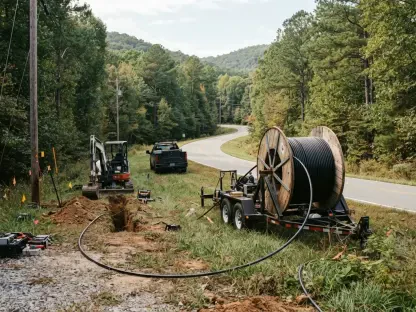
Moving toward a consolidated model allows for a more efficient allocation of capital across the digital landscape. Instead of redundant builds where multiple companies dig up the same street, the focus has shifted toward maximizing the utilization of what has already been laid. This strategic pivot ensures that the infrastructure serves the public interest by providing a stable foundation.
The Strategic Importance: Bridging the Gap Between Legacy Assets and Modern Demand
Bridging the divide between aging legacy systems and the insatiable demand of modern data consumption requires more than just new cables; it demands a radical rethink of network philosophy. Legacy assets often carry the burden of outdated management software that cannot keep pace with the real-time requirements of today’s economy.
This strategic alignment is vital as consumer expectations for high-speed reliability continue to escalate. By serving as an intermediary, APFN allows existing fiber lines to be repurposed into a high-functioning wholesale asset, effectively future-proofing the early investments. This approach ensures that the gap between rural and urban performance narrows significantly.
Constructing a High-Capacity Wholesale Powerhouse: Through 100G Infrastructure
Building a wholesale powerhouse requires an underlying architecture that can handle the massive throughput of an entire nation’s internet traffic without flinching. To achieve this, the company bypassed industry standards of 10-gigabit speeds, opting instead to establish a high-capacity core that prioritizes 100G data rates.
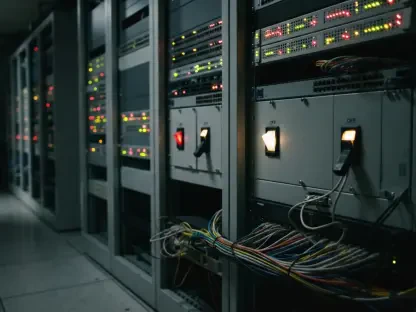
Utilizing advanced hardware from industry leaders ensures the infrastructure avoids the traditional bottlenecks that plague older networks. This massive leap in capacity means that retail partners can offer premium tiers of service without worrying about physical layer congestion. The focus on 100G hardware represents a shift from short-term savings to long-term reliability.
Expert Perspectives: Replacing “Technical Spaghetti” With the Aquila Platform
The technical evolution of the network involved a daring “rip and replace” strategy, where “technical spaghetti”—the convoluted, homegrown systems of merged companies—was completely discarded. Industry experts noted that trying to patch together disparate IT stacks would have led to a permanent state of operational inefficiency and failure.
Instead, the team implemented the Aquila platform, a sophisticated management layer designed to provide total visibility through a single interface. This transition relied on standardized APIs that act as a universal translator for different network functions. This move transformed the business from a traditional telecom firm into a modern, agile technology platform.
Implementing a Standardized Integration Framework: For Scalable ISP Growth
For an internet service provider, the primary obstacle to growth has always been the high cost and technical difficulty of expanding into new territories. APFN solved this by introducing a standardized integration framework that operates on an “integrate once” principle, allowing for immediate access to the entire footprint.
This framework empowers providers to focus on customer acquisition and service innovation rather than the minutiae of network engineering. As the market continues to consolidate, the ability to scale rapidly across different regions becomes a major competitive advantage. The standardization of these processes ensures that the fiber market functions like a true utility.
The successful consolidation of these diverse fiber assets provided a clear roadmap for the digital future. By focusing on a wholesale-only model, the industry moved away from the inefficiencies of fragmentation toward a streamlined, automated ecosystem that benefited both providers and consumers. The implementation of high-capacity hardware and standardized digital interfaces simplified the landscape, allowing for more aggressive growth and more reliable service delivery nationwide.
Stakeholders in the digital economy recognized that the next phase of development required a commitment to total automation and the removal of technical friction. Moving forward, the focus shifted toward integrating smaller local networks into this unified backbone to ensure no region was left behind. By embracing these standardized frameworks, the market created a resilient foundation that supported the growing data needs of a modern society while providing a blueprint for utility-scale digital infrastructure across the globe.