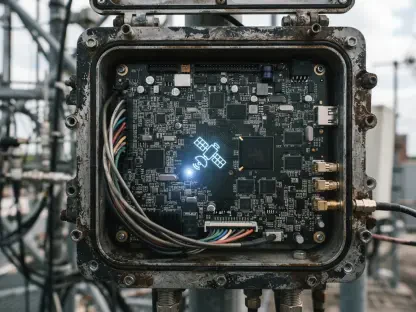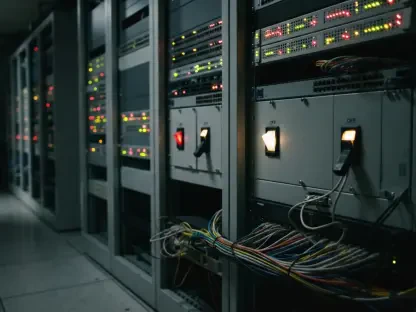

The digital ghost of a plastic brick with a green-tinted screen still haunts the collective memory of the mobile age, yet the company that built it is currently forging a legacy that has almost nothing to do with consumer electronics. While the technology world remains fixated on silicon chips and generative software, a fundamental shift occurred in how physical reality is managed. The era of connectivity as a simple commodity ended, replaced by a demand for a seamless, “nervous system” that coordinates ports, power grids, and autonomous factories. Nokia’s recent maneuvers suggested it was no longer content being a mere equipment vendor; it aimed to become the essential substrate upon which the next industrial civilization is built.
Beyond the Handset: The Quiet Architecture of a Global Rebirth
Modern commerce functions through a series of invisible handshakes that dictate the movement of millions of tons of cargo and kilowatts of power. The devices that once defined Nokia’s legacy—the indestructible handsets of the early 2000s—have long since vanished from the pockets of consumers, yet the firm is positioning itself to occupy a far more vital space: the very synapses of global commerce. By moving away from the visible hardware of the past, the organization focused on the deep-layer infrastructure that allow a warehouse to think and a port to breathe.
This transition represented a strategic gamble on the permanence of the physical world. While software giants competed for digital attention, the real bottleneck for progress resided in the latency between a command and a mechanical response. Building the infrastructure to bridge this gap meant moving beyond the simplistic role of a service provider. Instead, the focus shifted toward creating a resilient architecture that could withstand the messy, high-stakes demands of heavy industry and global logistics. The goal was to build a foundation that felt as natural and reliable as the human nervous system itself.
The Stagnation of Consumer Telecom and the Industrial Opportunity
For years, the telecommunications sector remained trapped in a cycle of incrementalism, chasing faster download speeds for consumer devices while mobile operators morphed into low-growth utilities. This “telecom silo” hit a ceiling as hyperscale cloud providers captured the lion’s share of the value in the technology stack. The saturation of the consumer market forced a realization that the next phase of growth would not come from another social media app, but from the massive, untapped frontier of industrial digitization.
The industrial economy—spanning manufacturing, mining, and logistics—required a different type of connectivity than a smartphone. The real-world need for deterministic wireless systems, which provide guaranteed latency and security for heavy machinery, represents a market that dwarfs traditional consumer mobile revenue. This shift from “enterprise connectivity” to “industrial orchestration” became the primary driver behind the current transformation of infrastructure providers who sought to move up the value chain toward operational dominance.
The Unified Infrastructure Era and the Convergence of Systems
The global economy entered what is best described as the Unified Infrastructure Era, where previously separate sectors like energy, communications, and AI inference merged into a single operational fabric. In this new paradigm, the network is not just a pipe for data; it is the coordination layer for physical reality. An autonomous port, for instance, requires more than just a 5G signal; it requires a deep integration of sensors, edge computing, and real-time AI to prevent collisions and optimize throughput without human intervention.
This necessity drove a move away from “software-only” AI solutions toward a physical-first approach. By focusing on the “edge” of the network—the exact point where digital commands meet physical execution—companies bridged the gap between abstract intelligence and tangible production. The goal was no longer just to move information, but to manage the physical state of a factory floor or a power grid in real-time. This ensures that digital insights translate immediately into mechanical efficiency, creating a world where atoms and bits operate in perfect synchronicity.
Expert Perspectives on the Departure from Telecom Orthodoxy
The appointment of Emma Falck to lead Nokia’s Mobile Infrastructure business was perhaps the most significant signal of this strategic pivot. Moving away from traditional telecom veterans, the company tapped an expert in operational technology from Siemens, a move that CEO Justin Hotard championed as essential for the company’s future. Hotard repeatedly characterized connectivity as a foundational utility, comparable in importance to water or electricity, necessitating a leader who understood the grit of industrial operations rather than just the nuances of spectrum auctions.
Industry analysts noted that AI without integrated physical infrastructure was merely software floating above an inadequate foundation. By placing leadership with deep roots in complex industrial systems and computational physics at the helm, the focus shifted from selling radios to managing the intricate coordination of global supply chains. This departure from orthodoxy reflected a broader understanding that the future of networking lies in its ability to operate as a cohesive, intelligent entity rather than a collection of disparate hardware components.
Strategies for Transitioning to an AI-Native Industrial Framework
Transitioning to an industrial nervous system required a framework that prioritized the hard substrate of technology. Successful organizations adopted an edge-first strategy, ensuring that AI processing power was located where physical operations occurred to eliminate latency. Furthermore, they moved toward a model of deterministic networking, where the reliability of the connection was treated with the same rigor as an industrial safety protocol. This involved integrating operational technology with information technology to create a unified management layer across all assets.
The final evolution involved a shift from data transport to data orchestration, ensuring that every sensor, machine, and worker functioned as part of a self-healing system. This approach allowed for a level of adaptability that was previously impossible in rigid industrial environments. Future considerations necessitated a focus on modular hardware that could be upgraded via software, ensuring that the physical nervous system remained relevant as AI capabilities continued to evolve. By centering these strategies, the groundwork was laid for a world where connectivity and production were indistinguishable, finally proving that the most vital technologies were often those that remained completely invisible.