
The integration of telecommunications and cognitive computing has reached a definitive tipping point where network speed no longer serves as the primary metric for technological success. Rather than focusing on raw throughput, 6G represents a paradigm shift toward an environment where connectivity, sensing, and intelligence operate as a unified, invisible fabric. This review examines how the next generation of wireless technology moves beyond the app-centric model to create a world where digital intelligence is not just accessible but inherently present in every physical interaction.
Defining the 6G Paradigm: A Shift Toward Ambient AI
The core of 6G lies in the concept of ambient intelligence, which departs from the episodic nature of current mobile internet usage. While 5G focused on enabling high-speed video and reliable industrial connections, 6G aims to transform the network itself into a distributed cognitive engine. This transition means the environment becomes an intuitive assistant, capable of understanding context and anticipating needs without explicit user commands.
This shift signifies a fundamental move away from the traditional model of pulling a device from a pocket to engage with a digital service. Instead, the network provides a continuous stream of awareness that links physical spaces with digital logic. This ensures that intelligence is not a destination found within an application but a persistent layer of the human experience that adapts as users move through different locations.
Technical Foundations: The 6G Ecosystem
Integrated Sensing and Distributed Computing
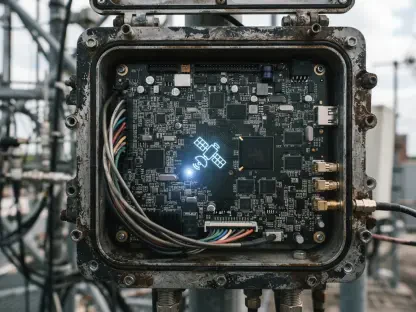
One of the most radical technical improvements in 6G is the integration of physical sensing directly into the radio interface. By using high-frequency signals to map the physical environment, the network gains spatial awareness, allowing it to “see” objects and movements with high precision. This capability bridges the gap between digital data and physical reality, enabling devices to interact with their surroundings more effectively than ever before.
To maintain the fluidity of these interactions, compute resources must be distributed across a multi-tier architecture involving the cloud, the edge, and the device itself. This decentralization prevents the bottlenecks associated with centralized processing, ensuring that latency remains low enough for real-time responsiveness. By moving intelligence closer to the user, the 6G ecosystem supports a seamless flow of data that feels instantaneous and organic.
Enhanced Uplink Capacity and Spectrum Architecture
Supporting the next generation of visual interaction requires a massive increase in uplink performance, particularly for high-fidelity video streaming. Future use cases, such as “see what I see” collaborative tools, demand consistent bandwidth that current 5G networks struggle to maintain under heavy loads. A more robust spectrum architecture is necessary to manage the massive data throughput required for these continuous, high-definition streams.
Specialized Hardware: On-Device AI Orchestration
At the hardware level, the smartphone is evolving into a central hub or orchestrator for a broader ecosystem of peripherals. Specialized components, such as the Hexagon NPU, allow for sophisticated local processing that reduces the reliance on constant cloud communication. This local intelligence ensures that sensitive data stays on the device while providing the processing power needed to manage inputs from smart glasses, earbuds, and other wearable sensors simultaneously.
Emerging Trends: Interaction and Connectivity
The way users interact with digital systems is undergoing a significant transformation as manual typing gives way to more natural inputs. Voice commands, physical gestures, and real-time video analysis are becoming the primary methods of communication with the network. This evolution suggests that the future of connectivity is focused on reducing the friction between human intent and machine execution.
Furthermore, the trend toward invisible technology indicates that the most successful 6G implementations will be those that the user hardly notices. As the smartphone transitions from being the primary screen to a background orchestrator, connectivity becomes a subtle utility. This allows for a multi-device experience where information is delivered through the most appropriate medium, whether that is an audio prompt in an earbud or a visual overlay on a pair of smart glasses.
Real-World Applications: Practical Implementation
In high-bandwidth scenarios, 6G enables augmented reality experiences that are indistinguishable from the physical world. Continuous AI-assisted streaming allows professionals in fields like medicine or engineering to share their perspective with remote experts in real time, with virtually zero lag. These implementations demonstrate that 6G is not just about faster downloads but about enabling new forms of human collaboration and presence.
The wearable market is also seeing a massive shift as smart glasses and advanced earbuds leverage integrated cellular connectivity to adapt to environmental changes. In a smart city context, the network can adjust lighting or provide navigation cues based on a user’s specific location and historical preferences. These environments respond to human presence automatically, creating a specialized experience that requires no manual intervention or app navigation.
Technical Hurdles: Market Obstacles
Despite the potential, the road to a fully functional 6G environment is paved with significant infrastructure challenges. Replacing or upgrading global network hardware to meet the demanding uplink and latency standards requires an unprecedented capital investment. These massive overhauls must be balanced with the need for energy efficiency, as the increased density of 6G cells could lead to significantly higher power consumption if not managed correctly.
Regulatory and standardization efforts also present a complex hurdle, particularly regarding global spectrum allocation. Coordinating between various international bodies like the 3GPP is essential to ensure that 6G remains a unified global standard rather than a fragmented series of regional technologies. Additionally, the market must overcome the high cost of hardware integration, which could slow the consumer transition from familiar app-centric devices to new AI-centric ecosystems.
The Future Outlook: A Foundation for the AI Revolution
The roadmap for 6G indicates that the industry is moving toward a timeline where pre-commercial devices will emerge by 2028. This will lead to early network deployments in 2029, setting the stage for a decade defined by ambient intelligence. These milestones are critical for developers who need stable platforms to build the next generation of autonomous environments and highly responsive digital assistants.
Breakthroughs in low-latency processing are expected to be the final piece of the puzzle, allowing the AI revolution to reach its full potential. As 6G becomes the foundational layer for society, it will alter the fundamental way humans interact with digital intelligence. The network will eventually serve as a silent partner in daily life, providing the data and processing power necessary to sustain a truly autonomous and connected world.
Final Assessment and Conclusion
The transition toward 6G ambient intelligence represented a departure from the incremental upgrades of previous cellular generations. By focusing on the convergence of sensing and computing, the industry successfully shifted the focus from the device to the environment. This evolution transformed the network into a cognitive resource that supported a multi-device ecosystem, where the smartphone acted as a silent orchestrator rather than a primary interface.
The implementation of these technologies provided the necessary framework for a world where digital assistance was persistent and context-aware. While the infrastructure requirements were substantial, the move toward specialized hardware and distributed computing solved many of the latency issues that had previously limited mobile AI. These advancements laid the groundwork for a future where connectivity was no longer a tool to be used, but a fundamental part of the physical world.
Ultimately, 6G proved to be the invisible layer required for the broader AI revolution to take hold across all sectors of society. It moved the needle from simple connectivity to a sophisticated state of environmental consciousness. By 2029, the successful deployment of early networks had already begun to redefine industrial and social advancement, proving that the true value of 6G lay in its ability to disappear into the background while providing unparalleled intelligence.