
The sudden failure of a mechanical drag chain within a high-throughput distribution center often triggers a cascade of operational delays that can cost thousands of dollars per minute in lost productivity. For decades, the industrial sector accepted these mechanical failures as an unavoidable tax on mobile automation, tethering high-speed machinery to the physical limitations of copper and fiber optic cabling. However, the paradigm is shifting toward a wireless-first architecture that prioritizes data integrity and mechanical freedom over traditional wired reliability. Ruggedized wireless terminals are designed specifically to bridge the gap between fixed control infrastructure and highly mobile robotic platforms, effectively erasing the physical constraints that have long hindered the growth of smart factories. By replacing trailing cables with high-speed, transparent data links, facilities can now scale their operations without the constant fear of mechanical wear-and-tear or signal degradation. This transition is not merely a matter of convenience; it represents a fundamental modernization of how machines communicate in the most demanding physical environments on earth. As the industry moves through the current fiscal cycle, the focus has pivoted from wondering if wireless is stable enough to wondering how quickly it can be deployed across every mobile asset. The elimination of physical tethers allows for a level of design flexibility that was previously unthinkable, enabling engineers to rethink the very layout of production floors and logistics hubs to maximize every square foot of available space.
Engineering Reliable Connectivity: The Bridge to Modern Systems
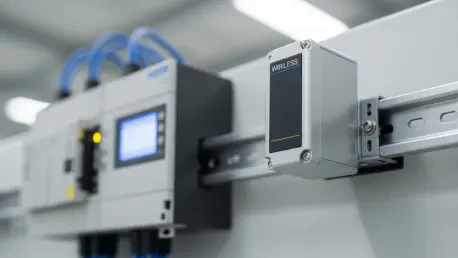
At the core of this technological evolution is the development of specialized communication terminals that function as a transparent bridge between programmable logic controllers. These devices are engineered to support standard interfaces such as RS485 and RS232 without altering the underlying data packets, which means that engineers can swap physical cables for wireless links without the need to rewrite thousands of lines of complex control logic. This plug-and-play capability is essential for modernizing legacy systems where the software investment is too significant to risk during a hardware upgrade. By maintaining protocol transparency, these wireless solutions ensure that time-sensitive commands for motion control and sensor feedback arrive at their destination with the same precision as they would over a high-quality physical wire. This seamless integration allows for the rapid deployment of mobile units, as the communication layer remains consistent regardless of the physical movement of the machine. The result is a highly reliable digital nervous system that supports the complex choreography of modern industrial robotics without the lag or jitter typically associated with consumer-grade wireless technologies.
Beyond the internal software compatibility, these wireless terminals are constructed to survive the grueling physical conditions of a factory floor or a heavy construction site. Encased in rugged metal housing with high electromagnetic interference resistance, they are capable of operating reliably amidst the intense electrical noise generated by high-powered motors and industrial welders. Manufacturers have integrated advanced features like built-in watchdog circuits to prevent system crashes and wide-voltage inputs to accommodate the fluctuating power supplies often found in mobile machinery. These design choices provide the robust physical foundation necessary for mission-critical industrial tasks where a single second of lost communication could lead to a catastrophic mechanical collision. The hardware is often rated for extreme temperature ranges, ensuring that whether a terminal is mounted on a furnace-adjacent robotic arm or a refrigerated warehouse pallet jack, the data remains consistent and the connection stays active. This level of physical hardening distinguishes industrial wireless solutions from standard office networking equipment, providing the peace of mind required for full-scale autonomous operations in the most hostile environments.
Optimizing Warehouse Efficiency: Removing Mechanical Constraints
In the fast-paced world of modern e-commerce, Automated Storage and Retrieval Systems (AS/RS) serve as the vital backbone of operational efficiency and customer satisfaction. Traditionally, the stacker cranes used in these systems relied on heavy mechanical drag chains to house data cables, but these chains frequently failed as operating speeds increased to meet rising demand. The friction and weight of these mechanical components not only led to frequent wear but also limited the maximum speed and throughput of logistics hubs, creating a bottleneck that physical upgrades could not easily solve. By removing these cumbersome chains and replacing them with a master-slave wireless configuration, logistics operators have unlocked a new tier of performance. Establishing a dedicated serial link between a ground station and the moving crane eliminates the primary source of communication failure while simultaneously reducing the mechanical load on the crane’s drive motors. This setup allows for real-time motion control with minimal latency, ensuring that every movement of the retrieval system is precise and coordinated, even at the high velocities required for contemporary order fulfillment schedules.
The operational impact of this transition is immediately visible in the performance metrics of facilities that have embraced the shift to wireless communication. Logistics centers reporting a switch to these advanced terminals have seen stacker crane speeds increase by up to 15% due to the total removal of mechanical cable drag and the associated weight reduction. Furthermore, with communication stability reaching near-perfect levels, the costly downtime once associated with snapping cables or tangled chains has been virtually eliminated, allowing for 24/7 continuous operation without the need for frequent mechanical inspections. The reduction in maintenance requirements means that technical staff can focus on optimizing throughput rather than performing repetitive repairs on worn-out cable carriers. This increase in reliability also extends the lifespan of the mobile machinery itself, as the lack of physical resistance from heavy cables reduces the strain on internal components and drive systems. As these facilities continue to push the limits of speed and volume, the reliance on wireless data transmission has become the standard for any operation looking to maintain a competitive edge in a saturated market.
Advancing Subterranean Engineering: Resilience in Harsh Environments
Tunnel Boring Machine (TBM) operations present some of the most challenging environments for any electronic communication system due to the extreme conditions found deep underground. Equipment in these settings must contend with high humidity, abrasive dust, and the constant need to extend communication lines as the machine advances through the earth, often kilometers away from the surface. Relying on armored cables in these subterranean settings is not only prohibitively expensive but also creates significant safety risks, as workers must frequently enter high-risk zones to repair or splice broken lines that have been crushed by moving debris. To solve these persistent issues, engineers have deployed multi-tier wireless architectures that utilize relay nodes to maintain a strong signal over several kilometers of tunnel. This portal-to-machine network adapts organically as the tunnel grows, using automatic routing algorithms to ensure the TBM stays connected to the surface control center without human intervention. This approach removes the need for manual cable extensions, significantly speeding up the construction timeline and reducing the physical labor required to maintain connectivity in dangerous areas.
The results from major city metro projects demonstrate that wireless technology significantly enhances both the productivity and the overall site safety of massive infrastructure developments. Monthly fault-related downtime has dropped by over 90% in several documented cases, allowing TBMs to maintain a much more consistent tunneling schedule without the interruptions caused by cable failures. By removing the physical tether, project managers have created a more resilient and flexible working environment that can thrive despite the harsh conditions found in subterranean work zones. The wireless nodes are often designed with high-gain antennas to penetrate the dense structural materials and maintain a clear line of communication even around the curves of the tunnel. This reliability ensures that critical telemetry data from the boring head is transmitted back to the engineers in real-time, allowing for immediate adjustments to the machine’s path or pressure settings. This level of control is vital for preventing surface subsidence and ensuring the structural integrity of the tunnel, proving that wireless solutions are not just about speed, but about the safe and successful completion of complex engineering feats.
Strategic Financial Adoption: The Economics of Going Cordless
From a financial perspective, the argument for widespread wireless adoption is overwhelming, with modern installations often costing only 30% of a traditional wired setup. These substantial savings come from a combination of lower initial capital expenditure on expensive armored cables and a drastic reduction in the specialized labor costs required for complex wiring projects. Installing a wireless terminal on a standard industrial rail takes only a few minutes and requires minimal tools, whereas laying kilometers of high-performance cabling can halt production for days and require a large team of specialized technicians to manage the installation. This rapid deployment capability allows companies to realize a return on investment much faster than previously possible, as the time between procurement and full operational status is significantly shortened. Additionally, the ongoing operational costs are lowered because there are no physical cables to wear out, snap, or require periodic replacement, leading to a much more predictable and manageable maintenance budget over the long-term lifecycle of the equipment.
As industrial automation continues to evolve, the consensus among systems engineers is that wireless is no longer a niche luxury but a primary standard for mobile data transmission. The global demand for protocol transparency and scalable, self-healing networks is driving a new era of interconnectivity across all manufacturing sectors, from automotive assembly to pharmaceutical packaging. By embracing these cord-free solutions, industries are achieving a level of agility and reliability that was previously impossible under the physical and financial constraints of traditional wiring methods. The ability to quickly reconfigure a production line or add new mobile robots to a fleet without worrying about the underlying cable infrastructure provides a competitive advantage that is essential for surviving in a volatile global economy. Furthermore, the data gathered by these wireless terminals can be easily integrated into broader industrial internet of things (IIoT) platforms, providing management with deeper insights into machine performance and facility health. This transition represents a shift from reactive maintenance to proactive optimization, where every asset is connected and every movement is tracked to ensure maximum efficiency.
A Strategic Roadmap for Industrial Connectivity
The transition to industrial wireless systems provided a clear path for facilities to overcome the mechanical failures that once plagued high-speed automation. Organizations that adopted these ruggedized terminals found that they significantly reduced their reliance on expensive, high-maintenance cabling systems. The shift facilitated a more flexible approach to facility design, allowing for the rapid expansion of mobile fleets without the need for intensive infrastructural overhauls. Project managers observed that the initial investment in wireless hardware was recovered quickly through the reduction in labor costs and the elimination of downtime-related losses. This evolution changed the way engineering teams approached system design, placing a higher priority on data transparency and protocol independence. By integrating these solutions, companies effectively future-proofed their operations against the physical limitations of legacy hardware. The data showed that the move away from mechanical drag chains was not just a trend but a necessary step for any facility aiming to achieve 24/7 autonomous operation.
To maximize the benefits of this technology, industrial leaders focused on conducting comprehensive site surveys to identify potential sources of interference before deployment. They prioritized the selection of hardware that offered high-gain antennas and robust metal shielding to ensure signal stability in high-noise environments. Engineers worked to integrate these wireless links into their existing supervisory control and data acquisition systems, ensuring that telemetry remained consistent across the entire network. This proactive approach allowed for a smoother transition and helped teams avoid the common pitfalls associated with substandard networking equipment. By treating wireless connectivity as a core component of the mechanical design rather than an afterthought, industries reached a new level of operational resilience. These strategic steps ensured that the communication layer remained the strongest link in the automation chain, rather than the weakest. The results established a new baseline for performance, proving that the removal of the physical tether was the key to unlocking the full potential of mobile industrial robotics.