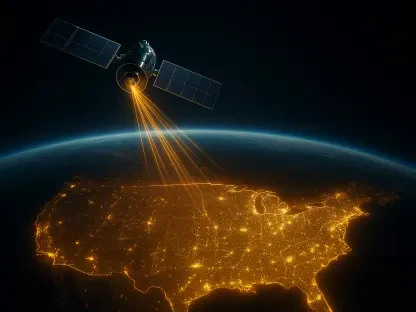

Global telecommunications carriers are transforming their core infrastructure into distributed computing hubs to manage the real-time demands of physical artificial intelligence. This shift represents a move away from traditional connectivity where networks merely served as tunnels for data, evolving instead into a cohesive nervous system for the physical world. As robots and autonomous vehicles proliferate across urban landscapes, the demand for ultra-low latency has rendered centralized cloud models insufficient. Physical AI depends on the ability to perceive and react to environmental changes in a fraction of a second, which necessitates moving computational power to the edge of the network. By embedding high-performance processors within base stations, carriers are providing the brains that allow machines to navigate complex scenarios without bulky hardware. This creates a seamless loop of data and action, enabling machines to function as part of a larger, intelligent whole.
Urban AI: Localized Edge
In the United States, T-Mobile has led the way by piloting a platform in San Jose that utilizes operating agents installed within base stations. This architecture allows for real-time traffic management where AI analyzes sensor data locally to adjust traffic lights or reroute vehicles instantly, bypassing the delays of central data centers. By processing information at the source, the network reduces the time it takes for an autonomous system to receive an instruction. This is crucial for urban environments where a delay of a few milliseconds can be the difference between a smooth flow of traffic and a collision. The integration of these operating agents marks a transition from reactive networks to proactive intelligence hubs. These hubs do not just pass messages; they make decisions based on the physical context of the devices they serve, ensuring the city remains fluid and safe for all.
Beyond traffic adjustments, this localized approach enables collaborative intelligence. When multiple autonomous entities occupy the same space, they must synchronize their movements with accuracy. The telecommunications network acts as the orchestrator, receiving telemetry from every device and issuing coordinated commands that prevent congestion. This eliminates the need for each machine to carry the massive processing power required to model the entire environment. Instead, the network provides a shared cognitive map, allowing smaller robots to operate within the city. This model of distributed AI ensures that as the number of connected devices grows, the infrastructure can scale without a corresponding increase in latency. It is the backbone of an autonomous urban ecosystem where the network is the primary actor, managing the physical interactions of thousands of independent units.
Industrial AI: Integration
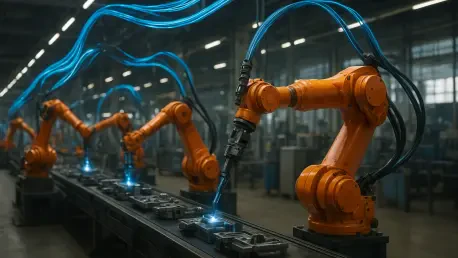
In the industrial sector, Japanese carriers such as SoftBank and NTT are leveraging these networks to revolutionize manufacturing. SoftBank’s approach focuses on Multi-access Edge Computing, which allows multiple robots to be upgraded via software updates on the network rather than through hardware replacements. This flexibility ensures that factories can adapt to new production requirements. Meanwhile, NTT is utilizing its IOWN optical technology to connect remote data centers to factory floors with minimal latency, creating a single neural network that manages precise industrial tasks without expensive onboard semiconductors. By offloading the computational burden to the network, manufacturers have reduced the cost of individual robotic units while increasing capability. The network has essentially become a virtualized controller that oversees every movement on the line with precision.
The global effort to integrate AI into the core of telecommunications signified a fundamental shift in the industry business model. Rather than merely selling bandwidth, carriers positioned themselves as the control towers of the physical world, managing the complex interactions of autonomous systems. To navigate this transition, companies prioritized the deployment of private 5G networks that synchronized mobile robots with conveyor systems in automated lines. This strategy addressed the immediate need for reliability in high-stakes environments. Stakeholders recognized that the future of smart cities depended on a synthesis of connectivity and distributed AI. Ultimately, the competition among carriers moved beyond coverage and focused on performance. Moving forward, industrial leaders adopted integrated network strategies to ensure their autonomous assets remained both agile and interconnected.