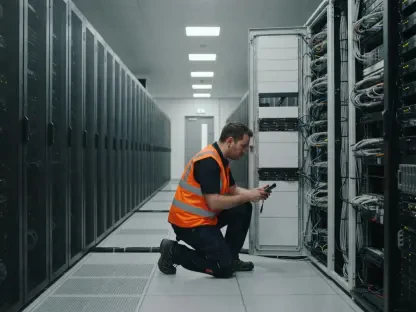

South Korean telecommunications leaders are currently pivoting toward the enterprise market to solve monetization challenges associated with high-performance 5G infrastructure. This strategic shift comes as KT Corporation celebrates its fifth year of commercialized 5G Standalone (SA) operations, a milestone that underscores the company’s position as the nation’s architectural pioneer. While the global industry initially struggled with the transition from hybrid systems, KT’s early commitment to a pure 5G core has provided a wealth of operational data that its competitors are only recently beginning to match. The decision to move away from Non-Standalone (NSA) architecture, which utilizes 4G LTE as a signaling anchor, was a calculated risk aimed at unlocking the true potential of the fifth-generation standard. By operating independently of legacy infrastructure, KT has been able to refine low-latency applications and network management techniques that are essential for today’s digital landscape. This five-year journey reflects a broader narrative of technical persistence, where the goal was not just to offer faster downloads, but to build a responsive, intelligent network capable of supporting the high-density demands of a modern smart economy. As the market matures, this head start has allowed for a deeper understanding of how to manage complex traffic patterns and deliver specialized services that traditional networks simply cannot accommodate.
Technical Architecture: Proprietary Innovations and Core Management
The technical foundation of this five-year leadership period is built upon a sophisticated suite of 47 proprietary and standardized technologies specifically designed to optimize the standalone environment. These innovations are strategically distributed across three critical domains: the core network, base stations, and device interfaces. The core network, often described as the brain of the telecommunications system, houses over half of these technical advancements, enabling sophisticated session management and data path routing. By decentralizing data-processing functions across major regional hubs throughout South Korea, KT has created a network that can dynamically adjust to user locations and specific service requirements in real time. This architectural flexibility differs significantly from the more rigid configurations of legacy systems, allowing for a level of responsiveness necessary for emerging technologies like autonomous robotics and high-fidelity remote sensing. Furthermore, the integration of 20 distinct base station technologies ensures that the radio access network can communicate with the 5G core with maximum efficiency, minimizing the signaling overhead that often plagues hybrid networks. This holistic approach to infrastructure ensures that every component of the signal path is optimized for the unique characteristics of the high-frequency 5G spectrum.
Technical Evolution: Reaching the VoNR Milestone
A crowning achievement in this technical evolution is the full-scale commercialization of Voice over New Radio (VoNR), a technology that represents the final piece of the 5G puzzle. In earlier iterations of mobile connectivity, even devices connected to a 5G network were forced to fall back to LTE frequencies to handle voice calls, a process that frequently resulted in a noticeable drop in data throughput and increased latency. VoNR eliminates this bottleneck by keeping both voice and data sessions entirely within the 5G frequency range, ensuring that high-speed data remains consistent even during active conversations. This capability is more than just a convenience for smartphone users; it serves as a rigorous stress test for the network’s overall continuity and stability. Maintaining clear voice quality alongside high-bandwidth data transmission requires a highly tuned core network that can prioritize different types of traffic without interruption. For KT, the successful deployment of VoNR across millions of devices has validated its core network strategy, proving that its infrastructure can handle the most demanding multitasking scenarios without relying on the safety net of 4G LTE. This transition to a pure 5G voice standard has set a benchmark for the industry, pushing other carriers to accelerate their own network upgrades to remain competitive in a voice-and-data-heavy market.
Historical Context: The Bold Move toward Battery Efficiency
Looking back at the historical context of the 2021 launch, the industry landscape was marked by significant skepticism and divergent strategies. While KT’s domestic rivals initially chose to delay their standalone transitions, citing a lack of immediate consumer benefits, KT moved forward with a campaign focused on efficiency and longevity. One of the most compelling arguments for the switch to SA was the tangible improvement in device battery life. Because standalone-connected smartphones do not need to maintain dual signals with both 4G and 5G towers, the energy consumption of the internal modem is drastically reduced. Independent testing conducted by the Telecommunications Technology Association confirmed that this architectural change could extend the operating time of a standard flagship smartphone by nearly 9%, translating to more than an hour of additional daily usage. In an era where mobile users are increasingly dependent on power-hungry applications, this efficiency gain served as a primary hook to justify the early network migration. Despite criticisms from competitors who argued that the peak download speeds of SA did not vastly exceed those of previous systems, KT maintained that the true value of the technology lay in the purity of the connection and the long-term potential for low-latency features that hybrid networks could never truly master.
Operational Stability: Prioritizing Low Latency over Peak Speed
The focus on architectural purity has allowed KT to cultivate a network environment where low latency is a native feature rather than an occasional optimization. While initial consumer feedback focused on speed benchmarks, the company was documenting the stability benefits that come from removing the LTE signaling anchor. In a standalone network, the time required to establish a data session is significantly shorter, and ping rates—critical for online gaming and real-time financial transactions—are much more consistent. This consistency is a byproduct of the 5G core’s ability to handle a massive number of simultaneous connections without the interference or handover delays associated with switching between 4G and 5G layers. By sticking to its SA strategy through the early years of the decade, KT built a stable foundation that could eventually support millions of subscribers without the growing pains experienced by carriers that attempted more rapid, later-stage migrations. This commitment to the standard also meant the company was the first to experience and solve technical edge cases that only appear when a network is under heavy, real-world loads. These lessons learned in the field have since become part of the company’s intellectual property, giving it a distinct advantage in network reliability that is now being leveraged to attract high-value corporate clients.
Ecosystem Development: Overcoming Initial Hardware Hurdles
One of the most daunting challenges faced during the solo operation of the Standalone network was the lack of a comprehensive hardware ecosystem. In the early stages, global manufacturers were hesitant to invest significant resources into tuning modem firmware for a network standard utilized by only a single carrier in the South Korean market. This created a difficult scenario where the network was ready for high-performance use, but many flagship devices required specific software updates to unlock their full SA capabilities. KT executives have since noted that the first few years were characterized by extensive trial and error, as they worked closely with device engineers to debug signaling issues and optimize power management protocols. This collaborative effort was essentially a pioneering mission for the entire industry, as KT was forced to establish the testing parameters and performance benchmarks that would later become standard for other carriers. The persistence of its engineering teams eventually led to a breakthrough where SA support became a default feature for new releases, rather than a specialized update. This shift was critical for the widespread adoption of the technology, as it ensured that consumers could enjoy the benefits of the new network architecture without having to jump through technical hoops or deal with hardware incompatibilities.
Hardware Maturity: Reaching a Critical Mass of Devices
As the market stands today, the SA hardware landscape has matured into a robust and diverse ecosystem. The numbers tell a story of rapid expansion, with over 8 million SA-supported devices now active on KT’s network and dozens of distinct smartphone models fully compatible with the latest Standalone features. This includes the vast majority of flagship devices released recently, as well as an increasing number of mid-range and budget-friendly options that bring 5G SA to a broader audience. The availability of VoNR-supported units has also reached critical mass, with millions of users now benefiting from the seamless voice-and-data integration that KT worked so hard to perfect. This scale is important because it creates a feedback loop for developers and service providers to design applications that specifically target the low-latency and high-reliability characteristics of the Standalone network. The maturity of the ecosystem has also simplified the process for international travelers and roaming partners, as the South Korean SA standard is now well-aligned with global best practices. By clearing the hardware hurdle through years of independent effort, KT has effectively paved the way for the rest of the domestic market to transition to Standalone services with minimal friction, although it remains the only provider with a multi-year track record of managing such a large and diverse device pool.
Strategic Implementation: The Role of Network Slicing
The strategic implementation of network slicing has emerged as the defining feature of KT’s current infrastructure management, allowing the provider to move beyond a generic approach to mobile connectivity. Network slicing enables the creation of multiple virtual networks over a single physical 5G infrastructure, each tailored with specific performance parameters to meet the needs of different user groups. For example, one slice can be optimized for ultra-low latency to support autonomous vehicles, while another provides guaranteed high bandwidth for high-definition video streaming or virtual reality applications. This capability is fundamentally impossible on older NSA or 4G networks, which treat all data traffic with the same priority regardless of the application’s requirements. By utilizing the 5G core’s native ability to segment resources, KT can ensure that mission-critical services are never compromised by congestion on the general consumer network. This architectural shift represents a transition from a commodity-based service to a value-based service, where the network itself becomes a programmable platform. For the telecommunications industry, this is a revolutionary development because it allows carriers to monetize specific performance tiers and reliability guarantees, creating a more sustainable business model in an era where data consumption continues to grow.
Practical Applications: Enhancing Public Safety Through Slicing
The practical utility of network slicing has been demonstrated through several high-profile deployments during major public events across South Korea. During high-density gatherings like the fireworks festivals in Seoul and Busan, where hundreds of thousands of people converge in a small geographic area, traditional networks often become paralyzed by the sheer volume of signaling traffic. KT has successfully mitigated this issue by deploying dedicated network slices specifically for public safety and emergency communications. These slices remain completely isolated from public network congestion, ensuring that wireless CCTV feeds and emergency responder devices maintain clear and uninterrupted connections. This capability was put to the test during regional fire service trials, where the network proved its ability to handle mission-critical communication for first responders in real-time. By proving that the standalone network can function as a reliable backbone for public safety, KT has positioned its infrastructure as an essential component of urban management and disaster response strategies. This focus on reliability under extreme conditions has helped build a level of public and governmental trust that is difficult to replicate through marketing alone. It also serves as a powerful case study for corporate clients who require guaranteed uptime for their own critical operations.
Enterprise Solutions: Driving Innovation with App Slicing
In the current market, KT is increasingly pivoting its focus toward the enterprise sector as the primary engine for future growth and monetization. A key component of this strategy is the development of App Slicing technology, a collaborative effort with global tech giants to bring network slicing directly to individual applications on a single device. This technology allows a corporation to route professional applications through a secure, dedicated network slice while personal apps continue to use the standard public internet connection. This dual-mode functionality addresses one of the most persistent security challenges in the modern workplace: the Bring Your Own Device (BYOD) trend. By separating work and personal traffic at the network level, companies can enforce strict security protocols on corporate data—such as blocking camera access or restricting file transfers within the business slice—without interfering with the user’s personal privacy or apps. This level of control is highly attractive to government agencies, financial institutions, and large-scale manufacturing firms that require both mobility and ironclad security. KT’s pilot programs in this space have shown that the standalone network can function as a private 5G service for any company, effectively turning the entire national infrastructure into a secure extension of their corporate headquarters.
Monetization Strategies: Solving the Utility Trap
The push toward enterprise solutions is also a direct response to the utility trap that has plagued telecommunications providers globally. While the technical superiority of 5G Standalone is undeniable, the average consumer is often hesitant to pay a premium for features like lower latency or VoNR, which are often perceived as subtle improvements. For many smartphone users, as long as video streams without buffering and social media feeds load quickly, the underlying network architecture is secondary. This has made it difficult for carriers to increase average revenue per user in the consumer segment. However, in the business-to-business and business-to-government sectors, these technical nuances represent tangible economic value. For a factory using automated guided vehicles, a few milliseconds of latency can be the difference between a smooth production line and a costly collision. For a hospital performing remote diagnostic imaging, the reliability of a dedicated network slice is a prerequisite for patient safety. By marketing these guaranteed performance metrics to corporations, KT can command a premium that is not feasible in the general consumer market. This strategy allows the company to leverage its five-year head start in SA operations to win over clients who prioritize proven stability and a deep portfolio of operational case studies over newer market entrants.
Market Shifts: Competitive Entry and Industry Consensus
The landscape has undergone a major shift as the rest of the South Korean telecommunications industry finally adopted the standalone standard. With the recent entry of major competitors into the SA space, the market has finally reached a consensus that this architecture is the necessary foundation for all future mobile services. While this increased competition might seem to threaten KT’s dominance, the company has instead used the opportunity to reinforce its position as the market’s most experienced provider. KT executives have frequently pointed out that their rivals’ transition has likely been smoother because of the path KT cleared over the past five years, particularly in terms of device optimization and core network stabilization. This narrative of the experienced pioneer is a powerful marketing tool, especially when targeting enterprise clients who are wary of the growing pains associated with new network deployments. Instead of competing solely on speed or price, KT is competing on the depth of its operational database and its long-term reliability metrics. This industry-wide shift also benefits KT by finally creating the all-SA environment that was missing in the early part of the decade. As all three major carriers move to the same standard, device manufacturers and app developers are even more incentivized to create SA-exclusive features.
Future Foundations: Building the Path toward 6G
Beyond the current competition, the five-year investment in standalone architecture is widely viewed as the essential groundwork for the eventual transition to 6G technology. Industry experts agree that the next generation of mobile connectivity will not be a separate system, but rather an evolution built directly upon the foundation of the 5G standalone core. By mastering the complexities of a pure, cloud-native 5G core today, KT is positioning itself at the forefront of the upcoming 6G era, which is expected to integrate artificial intelligence directly into the network’s management layer. The operational knowledge gained from managing millions of SA connections and thousands of network slices provides a strategic asset that cannot be easily replicated by starting from scratch. These lessons in dynamic resource allocation and AI-driven traffic management are the exact skills required to navigate the even more complex landscape of the next decade. Furthermore, the infrastructure currently in place is designed to be future-proof, allowing for software-defined upgrades that can bridge the gap between 5G and early 6G trials. For KT, the goal was never just to win the 5G race, but to ensure that the company remains the architectural leader of the entire digital ecosystem for the foreseeable future, treating the standalone network as a living laboratory for innovation.
What are the main benefits of 5G Standalone for the average user?
For the typical smartphone user, the most immediate and noticeable benefit of a standalone network is a significant improvement in battery life. Because the device no longer needs to maintain simultaneous connections to both 4G and 5G signals, the modem draws less power, often resulting in about an hour of extra usage time per day. Additionally, users experience more stable data speeds during voice calls thanks to Voice over New Radio (VoNR) technology. In older network configurations, making a phone call often caused the data connection to drop to slower speeds, which could interrupt background downloads or slow down web browsing. With SA, the high-speed 5G connection remains fully active throughout the call. Finally, the network offers more consistent latency, which is particularly beneficial for mobile gamers who need stable ping rates to stay competitive. While these changes might seem incremental, they collectively provide a smoother and more reliable mobile experience that feels more complete than the hybrid systems used in the early stages of the 5G rollout. This consistency ensures that the device performs as advertised under various usage conditions.
Why did KT’s competitors wait so long to adopt SA technology?
The delay in adoption by other major carriers was largely a strategic decision based on the maturity of the device ecosystem and the perceived return on investment. In the early years of the 5G rollout, the vast majority of smartphones were optimized for non-standalone networks, which were easier to deploy because they used existing 4G infrastructure as a foundation. Competitors argued that since SA did not provide a massive jump in peak download speeds, the significant cost of building a dedicated 5G core network was not yet justified for the general consumer market. They preferred to wait until a wider variety of SA-compatible handsets were available and the business cases for advanced features like network slicing were more clearly defined. By waiting, these carriers avoided the early trial-and-error phase that KT endured, allowing them to enter the market only after technical standards and device firmware had stabilized. However, this cautious approach also meant they missed out on years of live network data and the opportunity to establish themselves as primary innovators in the standalone space. This created a knowledge gap that KT has worked to maintain as a competitive advantage.
How does network slicing actually work in a real-world scenario?
Network slicing is best understood as a way of carving out specific lanes on a digital highway for particular types of traffic. In a standard network, all data—from a simple text message to a critical medical data transmission—competes for the same bandwidth and resources. During a crowded event, this can lead to traffic jams where nothing moves quickly. With network slicing, a carrier can reserve a specific portion of the network’s capacity for a particular purpose, such as emergency services or a specialized business application. This slice has its own dedicated resources and is completely unaffected by traffic on the rest of the network. For example, during a major city festival, while thousands of people struggle to upload photos to social media, a slice dedicated to the police and fire departments remains perfectly clear, allowing them to stream high-definition video from surveillance drones without any lag. This ability to guarantee performance for specific users makes the network much more versatile and reliable for mission-critical tasks that cannot afford even a momentary slowdown. It transforms the network from a basic pipe into an intelligent, customizable resource.
What is Voice over New Radio and why is it important?
Voice over New Radio, or VoNR, is the technical standard that allows voice calls to be handled entirely by the 5G network without relying on older 4G LTE technology. It is a critical milestone because it represents the full independence of the 5G architecture. Without VoNR, a 5G phone is essentially a hybrid device that uses 5G for data but must switch back to 4G every time a call is made or received. This switching process can cause a slight delay in call connection and, more importantly, forces the data connection to slow down to 4G speeds for the duration of the call. By implementing VoNR, KT has ensured that the high-bandwidth, low-latency benefits of 5G are available at all times, regardless of whether the user is browsing the web, gaming, or talking on the phone. This is particularly important for professionals who may need to participate in high-quality video conferences while simultaneously downloading large files or using cloud-based productivity tools. It also simplifies the network’s internal management, as the carrier no longer needs to coordinate complex handoffs between two different generations of mobile technology for every phone call.
Industry Outlook: Strategic Next Steps and Solutions
The strategic path forward for the telecommunications sector relies on the successful integration of these standalone capabilities into the broader industrial fabric. To capitalize on the groundwork laid over the past five years, organizations have prioritized the adoption of network slicing to solve specific operational bottlenecks, such as high-density connectivity and mission-critical security. The pivot toward the enterprise market confirms that the future of telecom revenue will come from customized, logical networks rather than flat-rate consumer plans. The industry is focused on refining App Slicing and other B2B tools to provide seamless, secure environments for a mobile-first workforce. The transition also highlights the necessity of deep collaboration between carriers and hardware manufacturers, ensuring that all flagship devices are optimized for standalone features from day one. As the industry looks toward the 6G era, the emphasis is shifting to building AI-native networks that can autonomously manage resources and predict traffic surges. These steps provide a definitive solution to the monetization challenges that once shadowed the early 5G rollout, turning a technical achievement into a sustainable and high-value economic engine for the digital age. This evolution ensures that the network remains a resilient and adaptable platform for ongoing technological progress.