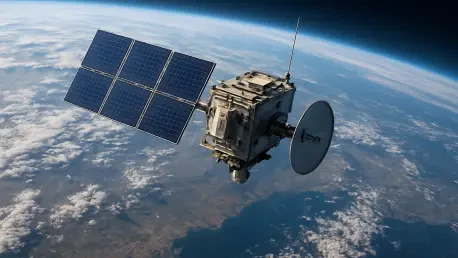

The rapid expansion of the satellite IoT market signals that the technology has moved past the experimental stage to become an essential tool for global industry. This evolution represents a departure from the days when satellite communication was a prohibitively expensive fallback reserved for only the most critical emergency services or remote maritime operations. Today, the landscape is defined by a massive surge toward nearly 200 million connections by 2035, driven by a new generation of Low Earth Orbit constellations that offer lower latency and more affordable data plans. As industries increasingly demand real-time visibility across their entire supply chains, the historical boundaries between terrestrial and space-based networks have begun to dissolve. This shift is not merely about adding more nodes to a network; it is about the fundamental democratization of global data access. For the first time, the ability to monitor an asset in the remotest corner of the globe is as technically feasible as tracking a truck in a major city.
The Core Drivers: Closing the Gaps in Global Coverage
Closing the gaps in global coverage is the primary catalyst for the current investment surge in non-terrestrial networks. While traditional 5G and cellular infrastructure have made incredible strides in urban densification, they remain economically unviable for the vast majority of the planet’s surface. These connectivity deserts—comprising vast agricultural regions, dense forests, and open oceans—represent significant blind spots for modern enterprises that rely on data-driven decision-making. By leveraging satellite IoT, companies are finally able to bridge these gaps, ensuring that remote sensors and mobile assets remain within the digital fold. This capability is particularly transformative for the agricultural sector, where precision farming requires constant data flow from moisture sensors and autonomous machinery located miles from the nearest cell tower. The reliability of these connections ensures that operational downtime is minimized and resource allocation is optimized.
As the satellite market continues its upward trajectory, the automotive sector is emerging as the most significant driver of connection volume. Projections indicate that connected vehicles will represent more than half of all satellite IoT links by the middle of the next decade. This trend is fueled by the automotive industry’s push for advanced driver-assistance systems and the eventual rollout of fully autonomous capabilities that require non-stop communication for safety and software updates. When a vehicle leaves a well-mapped urban area and enters a rural highway, the transition from cellular to satellite must be instantaneous to maintain critical safety features like emergency braking alerts or real-time navigation adjustments. Manufacturers are now viewing satellite connectivity as a core component of the vehicle’s safety architecture rather than a premium feature for high-end models. This massive scale is expected to drive down hardware costs, making the technology accessible for mass-market vehicle fleets globally.
Strategic Implementation: The Move Toward Integrated Ecosystems
For original equipment manufacturers, the move toward 200 million connections requires a fundamental rethink of industrial design and product engineering. Integrating satellite capabilities is not as simple as swapping a cellular modem; it involves addressing unique physical constraints such as antenna placement and specialized power management to ensure a clear line-of-sight. Simultaneously, connectivity providers are evolving to meet the demand for a simplified user experience through unified platforms that manage both cellular and satellite links. These integrated service plans feature seamless roaming between terrestrial and non-terrestrial networks, treating satellite as a standard component of the global connectivity stack. By making the deployment of a satellite-enabled device as straightforward as using a standard SIM card, providers are removing the final barriers to entry for large-scale enterprise adoption. This synergy between hardware design and service delivery is essential for the market to reach its potential.
Success in this rapidly expanding landscape required a sophisticated approach to application engineering and a deep commitment to operational fit. Organizations that focused on balancing the trade-offs of satellite use, such as latency and data payload limits, against the absolute necessity of universal coverage found the greatest returns. System integrators prioritized the development of low-cost hardware and unified management software to pave the way for a world where geography no longer limited the capabilities of an IoT device. Leaders in the field moved beyond simple tracking to embrace advanced data analytics that utilized the constant stream of information to drive predictive maintenance and supply chain optimization. The industry demonstrated that the path to 200 million connections was paved by those who viewed connectivity as a holistic utility rather than a collection of disparate technologies. Industry veterans emphasized that future initiatives required the standardization of satellite protocols.