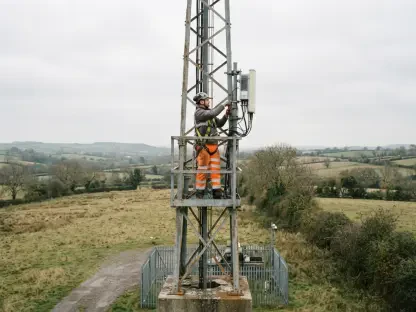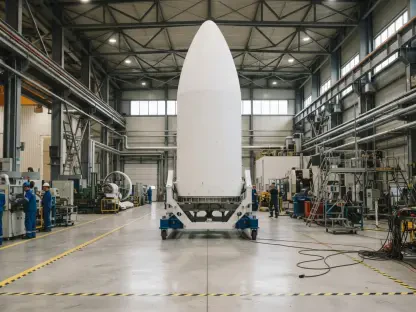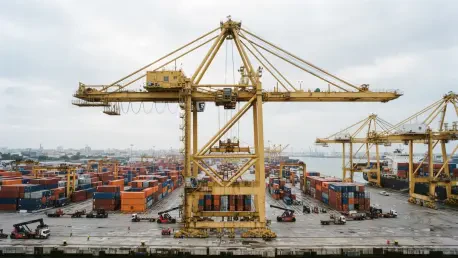

The seamless integration of high-bandwidth connectivity and industrial operations has transitioned from a competitive advantage to a fundamental necessity for global trade hubs seeking to maintain relevance in a rapidly evolving market. At the heart of this shift is the Thames Freeport initiative, where Verizon Business has finalized one of the most comprehensive private 5G network installations across Europe. This digital foundation spans five major industrial hubs, including DP World London Gateway, DP World Logistics Park, Ford Dagenham, and two essential sites at the Port of Tilbury. By moving away from traditional public networks and embracing a localized, high-performance infrastructure, these sites have redefined the capabilities of logistics and manufacturing. The implementation represents a decisive move toward a unified digital ecosystem that supports various stakeholders, ensuring that the region remains at the forefront of global logistics through increased speed and operational reliability.
The Architecture of Modern Connectivity
Decentralized Control: A New Industrial Standard
A primary technical differentiator of this massive deployment is the use of a decentralized architecture that provides each of the five locations with its own independent network core. This specific design choice ensures that each business hub can maintain strict control over its internal data and operational workflows without being vulnerable to wider network fluctuations. At the Port of Tilbury, which serves as a vital junction for over 135 supply chain companies, the 5G network was deployed to monitor cargo handling meticulously while simultaneously enhancing worker connectivity across the site. Meanwhile, the Ford Dagenham facility utilized the connectivity to focus on robotics and production monitoring, aiming to streamline the manufacturing process for a more efficient output. This separation of network management allows for highly customized environments where latency-sensitive applications can thrive, providing a level of reliability that was previously unattainable through conventional connectivity solutions.
Infrastructure Excellence: Implementing the Nokia Digital Automation Cloud
The underlying infrastructure driving these advancements relies on the Nokia Digital Automation Cloud and MX Industrial Edge technology, which provides a scalable and robust platform for industrial use cases. This technology stack enables the deployment of autonomous systems and sophisticated asset tracking that can manage thousands of moving parts across a sprawling port or factory floor. By leveraging the edge computing capabilities of the MX Industrial Edge, these hubs can process data closer to the source, significantly reducing the time required for automated systems to react to changing environmental conditions. This technical foundation is not merely about faster internet; it is a dedicated industrial platform designed to support physical AI and large-scale automation. The ability to integrate high-density sensor networks and real-time video analytics allows for a granular level of oversight that ensures safety and efficiency remain paramount as the complexity of logistics operations continues to grow within the regional trade corridor.
Enhancing Productivity and Regional Growth
Operational Breakthroughs: AI and Real-time Logistics
Practical results of this technological leap are already visible through the specialized Thames Freeport Connectivity Innovation Lab, where early trials have validated the impact of advanced connectivity. One of the most significant achievements involved the use of artificial intelligence to detect damage on vehicles and trailers with a degree of accuracy that surpasses traditional manual inspection methods. This automated approach not only saves time but also ensures a more objective and consistent standard of quality control across the logistics chain. Furthermore, the introduction of digital truck processing trials aimed to mitigate gate congestion at busy terminals by providing real-time visibility into vehicle movements. By analyzing flow patterns and identifying bottlenecks before they cause delays, terminal managers can optimize the arrival and departure schedules of transport fleets. These innovations are paving the way for more complex simulations, such as the use of natural language processing tools to analyze operational data.
Strategic Outcomes: Economic Impacts and Future Simulations
The regional revitalization effort reached a significant milestone starting in 2026, as the partnership between Verizon and Thames Freeport successfully secured over £2.13 billion in private investment. This massive infusion of capital supported the creation of 1,400 jobs and solidified the region as a primary destination for high-value industrial activities. Stakeholders focused on a long-term strategy that aimed to attract an additional £4.9 billion in investment while doubling the trade capacity of the area through 2045. The implementation of digital twins for cargo simulation and predictive maintenance became the standard for preventing equipment failure and optimizing throughput. Industry leaders adopted these technologies to ensure that the logistics ecosystem remained resilient against global supply chain disruptions. By prioritizing a unified digital infrastructure, the project established a blueprint for how complex industrial transformations could drive economic growth and operational excellence in a globalized economy.